

Activated Carbon Company Guide to Making the Right Choice
2026-08-18
Finding the right activated carbon company isn't just about comparing iodine numbers or mesh sizes. It's about knowing which supplier will still be responsive when your discharge limits tighten or your feedstock changes. Most guides stop at the technical data sheet; this one goes further into the questions that separate a dependable vendor from an expensive experiment. Whether you're replacing an underperforming carbon or designing a new treatment system, the decision you make now will quietly shape your operating costs for years. We've watched too many teams default to the cheapest quote or the loudest sales pitch, only to re-buy activated carbon six months later. If you'd rather get it right the first time, start with the framework below. And if you want a partner that treats your application as an engineering challenge, not just a purchase order, Tundrr is ready to help.
Why Your Current Supplier Might Be Costing You More Than You Think
The invoice total is never the full story. A supplier who quotes slightly lower unit prices can quietly drain your budget through rework caused by inconsistent batches, emergency air freight when a shipment misses its date, or the hours your team spends chasing order updates. Those costs rarely show up in a spreadsheet, but they land in your P&L anyway.
There's also the erosion of your own reputation. If late or defective materials force you to push back delivery promises to your customers, you're not just paying for a replacement order—you're paying in trust that takes years to rebuild. A dependable supplier protects that trust; a problematic one makes it an ongoing gamble.
Switching suppliers feels risky, but staying put can be more expensive in the long run. It's worth auditing not just the unit price, but the total cost of serving your customers: returns, delays, re-inspections, and the mental load on your operations team. Often the supplier that looks cheaper on paper is the most expensive one in practice.
The Real Difference Between Coconut, Coal, and Wood-Based Carbon
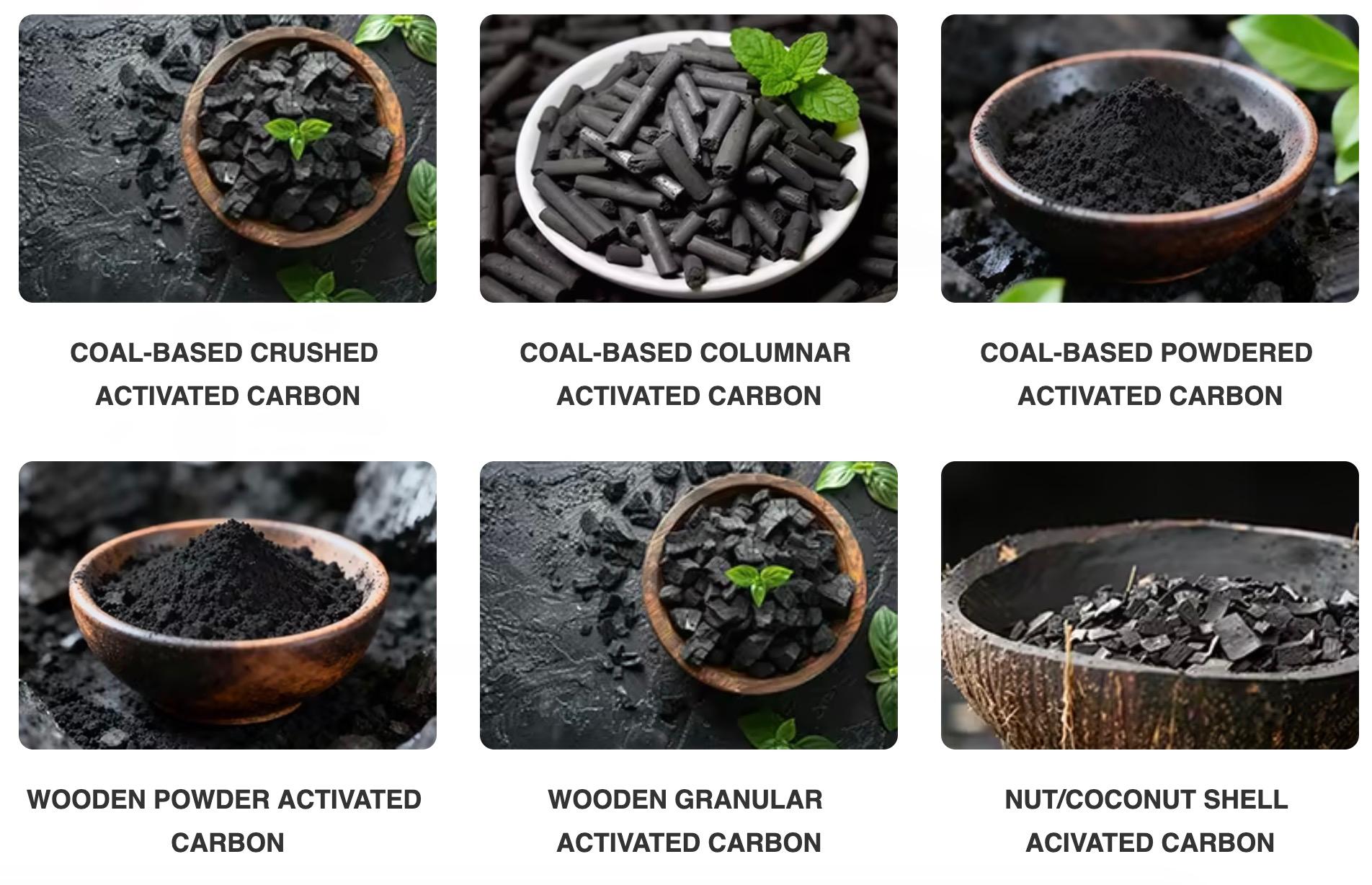
Most people assume all carbon is the same until they compare coconut shell, coal, and wood side by side. Coconut-based carbon tends to have a higher proportion of micropores, which makes it particularly effective at trapping smaller contaminants like volatile organic compounds. Coal-based carbon, in contrast, brings a broader mix of pore sizes and usually costs less, but its higher ash content and lower hardness can lead to more dust and shorter service life in demanding water treatment. Wood-based carbon often shines in applications where a large surface area for decolorization or removal of larger molecules is needed, though it may lack the mechanical toughness of coconut shell.
The sourcing also shapes how each type behaves outside the lab. Coconut shell carbon is prized for its renewability and relatively low environmental footprint, since it repurposes agricultural waste. Coal-based carbon depends on mined feedstock, and its performance can vary widely depending on the coal rank and activation process. Wood-based carbon offers a middle ground in some ways, but its lower density and softer structure mean it breaks down faster under repeated backwashing. That is why many point-of-use filters and air purification systems lean toward coconut shell, while large municipal plants may still favor coal for budget reasons.
Choosing among them is not about finding a single best material, but about matching the pore structure, hardness, and impurity profile to the specific job. If you are filtering drinking water for a household, the micropore advantage and low dust of coconut shell often justify the extra cost. For industrial decolorization or treating high volumes of wastewater, coal-based carbon might be the pragmatic choice. Wood-based carbon remains useful for niche tasks like removing tannins or certain odors, but it rarely competes with coconut shell when long-term durability matters.
How to Match Carbon Specifications to Your Exact Application
Matching activated carbon to a specific process rarely works by picking the highest iodine number or the largest surface area from a datasheet. The real starting point is understanding the size, polarity, and concentration of the molecules you need to remove, plus how long the carbon will be in contact with the stream. A powder that works beautifully for decolorizing a viscous syrup can clog a compact gas-phase filter, while a granular product sized for deep-bed water treatment may leave fine particulates in a pharmaceutical batch. Instead of comparing generic grades, write down the target impurity's molecular weight and solubility, then ask for pore volume in the 1–2 nm range if you are dealing with small dissolved organics, or look for mesopore capacity when tackling larger color bodies or natural organic matter.
Flow rate and contact time are just as important as the carbon's adsorptive properties. In a rapid liquid stream, a fine powder might reach equilibrium quickly but create pressure drop problems, whereas a hard granular carbon with a slightly lower total capacity can outperform it simply because it stays put and avoids channeling. For gas-phase applications, ask for working capacity under your humidity and temperature conditions, not the dry-basis number printed in the brochure. If the stream contains multiple contaminants, run a small column test with the actual fluid rather than relying on single-solute isotherms; competitive adsorption often cuts effective capacity by 30–50 percent. A pilot trial with two or three candidate carbons will reveal which one holds up over repeated regeneration cycles or long service intervals.
Don't overlook ash content, hardness, and particle shape when the carbon has to survive backwashing, thermal reactivation, or catalytic side reactions. A low-ash coconut-shell carbon may be ideal for point-of-use drinking water filters, but a bituminous coal-based product with higher mechanical strength often lasts longer in industrial wastewater columns. If you are removing trace metals or acting as a catalyst support, ask the supplier about surface oxygen groups and impurities that can leach into your process. The best match comes from sharing a complete water or gas analysis with the manufacturer and requesting a sample that fits your exact bed depth, flow velocity, and regeneration method—not from modifying your system to fit an off-the-shelf grade.
Red Flags to Watch for When Vetting a Manufacturer
A price that undercuts every other quote by a wide margin rarely comes without hidden costs. Ask for a detailed cost breakdown: raw material grade, surface finish tolerance, packaging spec, and lead time buffer. If the manufacturer avoids giving numbers or keeps repeating that they can “match any target price,” that is a clear signal they may substitute cheaper inputs or cut corners later.
Certifications matter only if they can be verified. Request the actual certificate numbers and check them against the issuing body’s public database. Blurry scans, expired dates, or a refusal to provide the factory audit report are all reasons to walk away. Also compare the sample you approved with the first mass production batch; if the weight, texture, or stitching already differs, the gap will likely widen, not narrow.
Pay attention to how they handle disagreements. A manufacturer that becomes defensive or goes silent when you ask about a delayed shipment or a rejected batch is showing you their conflict style. Healthy suppliers propose corrective actions, share root cause analysis, and adjust process controls. Unhealthy ones demand full payment before inspection or suggest bypassing the contract to “save time.”
Beyond Price: The Hidden Costs of Cheap Activated Carbon
A low sticker price often conceals a much shorter service life. Bargain activated carbon typically has a lower iodine number and a wider pore distribution that favors large molecules but misses the smaller contaminants you actually need to remove. As a result, the bed exhausts in weeks instead of months, forcing you to buy replacement media two or three times as often. When you add freight, handling, and the labor to swap out spent carbon, that initial savings evaporates quickly.
Beyond replacement frequency, inconsistent quality from batch to batch can create compliance nightmares. One shipment might meet spec, the next might leach fines or fail to hit breakthrough targets, leaving your discharge or emissions vulnerable. If a regulator flags an exceedance, the cost of fines, retesting, and emergency carbon changeouts dwarfs any upfront discount. Cheap material also tends to produce more dust, which clogs downstream filters and drives up maintenance hours.
The hidden costs extend to disposal and energy. Low-grade carbon often cannot be economically reactivated, so you pay to landfill it or incinerate it as hazardous waste. Even while in service, its lower activity means you may need a deeper bed or higher pressure drop to achieve the same removal, which increases fan or pump energy consumption. A smarter metric is cost per kilogram of contaminant removed over the carbon's entire life, not price per ton on the purchase order.
A Simple Framework for Comparing Quotes Without Getting Overwhelmed
Most people get stuck because they try to weigh fifteen different factors at once. Strip it back to three columns: what's included, when it'll be done, and the total cost after any add-ons. That alone eliminates half the confusion before you even start comparing side by side.
Write each quote on its own index card or a single row in a spreadsheet, then force yourself to mark only the differences that actually change your decision. If two vendors offer nearly identical delivery times, that variable doesn't need your attention. Focus on the gaps—those are what you're really paying for.
A common trap is getting hooked on the lowest headline price while ignoring things like support, revisions, or warranty terms. Put those under a "hidden costs" note and decide upfront how much each one is worth to you. Once you have a clear value for each difference, the choice usually makes itself.
FAQ
Start by pinning down your exact contaminant and flow rate. A good supplier will ask about your process conditions before recommending anything—if they jump straight to a product, that's a red flag.
A lot. Coconut shell, coal, and wood-based carbons behave differently. For small molecule adsorption, coconut shell often wins; for larger organics or decolorization, coal or wood might be better. Ask which raw material they use and why.
Ask for iodine number, molasses number, and hardness. Iodine tells you about micropore volume, molasses about mesopore capacity, and hardness affects how much dust you'll deal with. Don't settle for just vague quality claims.
Look for batch-to-batch consistency data and ask if they offer pilot testing. A company that can send you a sample for a side-by-side trial is usually more confident in their product than one that only gives a brochure.
Rarely. Low price often means lower activity or higher ash content, so you use more to get the same job done. Calculate cost per volume treated, not just cost per pound.
Some spent carbon can be thermally reactivated, which cuts long-term cost and waste. Not all companies offer this, and it only works for certain contaminants. Ask upfront if reactivation is possible for your spent carbon.
Both can work, but pay attention to lead time, shipping reliability, and technical support. A local supplier might cost more per pound but save you money if you need quick replacement or troubleshooting.
NSF/ANSI 61 for drinking water, ISO 9001 for quality management, and maybe halal or kosher if it touches food. But certifications alone don't guarantee performance—always request a certificate of analysis with each batch.
Conclusion
Choosing an activated carbon supplier often starts with a familiar assumption: the cheapest quote or the longest-standing vendor is the safest bet. That mindset quietly drains budgets. A supplier who doesn't ask about your specific contaminant profile, flow rates, or regeneration needs may be selling you a generic product that underperforms, forcing more frequent changeouts and higher disposal costs. Meanwhile, the raw material matters more than most realize. Coconut-shell carbon offers high hardness and micropore volume ideal for low-concentration organics and drinking water, while coal-based grades handle larger molecules and higher capacities in industrial air streams. Wood-based carbon brings a different pore structure suited to decolorization and certain liquid-phase applications. Matching these specs to your exact application isn't a technical luxury; it's the difference between reliable compliance and constant troubleshooting.
Vetting a manufacturer requires looking past polished brochures. Watch for inconsistent iodine numbers, vague ash or moisture claims, missing traceability on raw materials, and reluctance to share batch-level test data. Cheap carbon often hides costs in faster saturation, higher pressure drop, more downtime, and even liability if impurities leach into your process. Instead of drowning in quote spreadsheets, build a simple comparison framework: standardize the specifications you actually need, request performance curves under your operating conditions, and weigh total lifecycle cost rather than upfront price. A supplier who walks through this process with you is worth far more than a low bid that quietly eats into your margins.
Contact Us
Contact Person: Ellen Zhang
Email: [email protected]
Tel/WhatsApp: +86(21) 2287 6756
Website: https://www.tundrr.com/en/