

Aromatic Hydroxy Intermediate CRO Services That Accelerate Drug Development
2026-08-26
Drug development stalls when a key intermediate misses its window. Aromatic hydroxy intermediates are rarely the star of the route, but they're often the reason timelines slip. DSL Chemicals built its CRO services around these deceptively simple molecules—providing the synthesis depth and process reliability that keep your candidate moving from bench to clinic. Here's what that looks like in practice.
Why Aromatic Hydroxy Intermediates Often Dictate Synthesis Feasibility
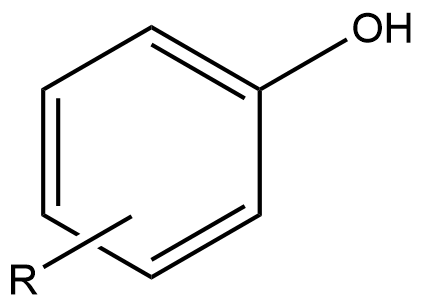
Aromatic hydroxy intermediates—phenols, naphthols, and their substituted analogs—sit at a crossroads in synthetic planning. Their electron-rich rings invite electrophilic attack, yet that same reactivity can spiral into over-oxidation or regiochemical ambiguity. The hydroxyl group is not a passive spectator: it activates ortho and para positions, stabilizes transition states through hydrogen bonding, and often locks downstream steps into narrow temperature or pH windows. When a route hinges on generating such an intermediate, feasibility is rarely decided by the final target’s complexity but by whether this intermediate can be formed, isolated, and advanced without decomposition or unwanted coupling.
This explains why many syntheses are abandoned not at the glamorous bond-forming step, but at a deceptively simple hydroxylation or deprotection that leaves a phenol exposed. Protecting group choice, solvent polarity, and even trace metal contamination become decisive because the intermediate’s lifetime in the reaction mixture is short. Practitioners learn to read these intermediates as kinetic checkpoints: if an aromatic hydroxy species cannot be stabilized or immediately trapped, the entire sequence loses its margin for error. Consequently, retrosynthetic analysis often bends backward to avoid isolating them altogether, favoring one-pot transformations or masked hydroxy equivalents that only reveal the phenol after the risky chemistry is complete.
Custom Route Design That Cuts Lead Optimization Time in Half
Traditional lead optimization often grinds through four or five route revisions before a viable candidate emerges. Custom route design flips that pattern by mapping retrosynthetic pathways against a curated set of building blocks and reaction rules from the first day. Instead of waiting for a failed reaction to force a rethink, chemists start with only those routes that have already cleared feasibility filters.
The real speed gain comes from parallel evaluation. Each proposed route is scored for step count, predicted yield, intermediate stability, and supply-chain risk in a single pass. Lower-scoring options drop out before they consume lab time, so the team never runs a sequence just to discover it dead-ends. That early elimination is where most of the saved weeks accumulate.
Because the design is tailored to the specific scaffold and functional groups in play, there is no generic template to adapt. Every disconnection is chosen for the molecule at hand, which reduces the usual back-and-forth between discovery and process chemistry. The result is a smoother handoff and a lead optimization timeline that can realistically be cut in half without expanding headcount.
Scaling from Bench to Pilot Without Losing Purity
Moving a purification step from a bench-scale setup to a pilot line rarely fails because the chemistry changes—it fails because the physics of mixing, heat transfer, and residence time distributions stop behaving the way they did in a small flask. At bench scale, a five-second addition can be nearly instantaneous, while the same addition in a 100 L vessel might take minutes, leaving reactive intermediates exposed long enough to form side products that never appeared in the original impurity profile. Purity loss, in other words, is often not a chemical problem but an engineering one.
The surest way to guard against that drift is to stop treating scale-up as a linear multiplier and start treating it as a re-characterization of the process. Small-scale experiments that deliberately stress mixing rates, hold times, and thermal cycling can reveal where the process tolerates variability and where it does not. For example, if a work-up depends on a rapid pH swing to crash out the desired polymorph, a pilot vessel with slower acid addition may allow a metastable form to nucleate, dragging impurities into the crystal lattice. Mapping those boundaries before the pilot run prevents purity losses that would otherwise only show up in a failed batch record.
It also helps to build the pilot protocol around the unit operations that are hardest to reproduce, rather than around the ones that scale easily. Filtration, drying, and solvent swaps often hide more purity risk than the reaction itself because their time constants shift dramatically with equipment size. Recording not just what was done but how long it took—and how evenly it happened—gives operators the data they need to hold the process inside the purity envelope. When the bench result and the pilot result finally agree, it is rarely by accident; it is because the scale-up plan accounted for the places where heat, mass, and momentum no longer scale the same way.
Analytical Rigor That Flags Stability Issues Early
Spotting a structural weak point before it becomes a crack isn't about running more tests—it's about asking the right questions as early as the first load calculation. When every assumption gets pressure-tested against real-world variability, surprises shift from emergencies to checklists. A floor slab's long-term deflection, for example, often hides in the gap between idealized supports and actual boundary conditions. Closing that gap early means the difference between a routine review and a costly retrofit.
The real value shows up when analytical models refuse to let small inconsistencies slide. A 2% overstress in a connection detail might look trivial on a summary table, but tracing it back to the load path often reveals a modeling shortcut that could mask larger issues elsewhere. That kind of discipline doesn't slow a project down—it removes the false starts that happen when a design gets too far along to change direction without pain.
Teams that build this rigor into their workflow tend to catch stability red flags during schematic design, not during shop drawing review. The payoff isn't just fewer change orders; it's the confidence to explore bolder structural options because the analytical backbone is already solid. When the math is honest about uncertainty, the engineering judgment that follows is sharper, faster, and far less fragile.
Solving Low-Yield Coupling Steps with In-House Expertise
Low-yield coupling steps are where many synthetic routes stall, but they rarely get solved by throwing more reagents at the problem. Our in-house team digs into the actual bottleneck—whether it's a sluggish activation profile, competing pathways eating the intermediate, or a solvent effect that nobody bothered to isolate. We've pulled more than a few near-dead reactions back to useful conversions simply by redesigning the sequence around the step that actually matters, not the one that looks good on paper.
What helps is that the people looking at your data are the same ones who will run the optimization. There's no handoff between a "reaction scout" and a separate process group—the chemist who spots the issue stays with it through the troubleshooting. That saves the usual back-and-forth where each team blames the other's conditions, and it lets us test unconventional workarounds quickly: swapping the order of activation, changing the counterion on the fly, or using a sacrificial additive that gets stripped out before the next step.
If a coupling step refuses to improve beyond a certain point, we'll also say so directly and suggest an alternative disconnection rather than pretending a 30% yield is workable. Often the real fix is structural—choosing a different protecting group or building in a pre-activated fragment earlier. That kind of judgment comes from having seen these failures enough times to know which ones are worth another week of screening and which ones should be redesigned from scratch.
A Single Partner for Chemistry, Compliance, and Timelines
Managing a chemical project often means juggling three separate workstreams: the lab work, the regulatory paperwork, and the schedule that keeps everything on track. When each of these lives in a different silo, critical details slip through the cracks, approvals stall, and deadlines become moving targets. A single partner who owns all three pillars changes that dynamic completely. Instead of coordinating between a synthesis team, a compliance specialist, and a project manager, you get one integrated view where every decision weighs scientific feasibility, regulatory requirements, and timing in the same conversation.
This kind of unified approach cuts through the typical bottlenecks. Imagine a synthetic route being evaluated not just for yield and purity, but simultaneously for REACH or FDA implications and its impact on the next milestone delivery. The partner doesn’t simply hand off a finished compound and hope the documentation catches up; they design the entire workflow so that chemistry and compliance evolve together, with timelines baked into the process from day one. Regular touchpoints become shorter and more substantive because there is no back-and-forth between vendors or internal departments trying to reconcile conflicting priorities.
The practical outcome is a project that moves with surprising momentum. You spend less time translating between technical languages and chasing status updates, and more time making informed decisions. Risks are flagged earlier because the people thinking about synthesis are also thinking about submission dossiers and critical path analysis. When chemistry, compliance, and timelines are handled by one accountable partner, the path from concept to approved product becomes visibly shorter, and the buffers you used to need for coordination simply disappear.
FAQ
It typically introduces a phenol or naphthol motif that can strengthen target binding through hydrogen bonding or serve as a handle for further functionalization. We focus on making these intermediates reliably so your medicinal chemistry team does not lose weeks to temperamental reactions.
We regularly synthesize substituted phenols, naphthols, hydroxyquinolines, and biphenyl alcohols. Halogenated, amino, and nitro derivatives are common requests because they slot into later coupling steps without extra protection.
Because we specialize in this narrow chemistry, we already know which routes fail and which ones scale. That means fewer failed batches, less troubleshooting, and faster delivery of intermediates that are ready for the next synthetic step.
Yes. We start with route scouting at small scale, then optimize and scale up under controlled conditions. The same team stays involved, so there is no awkward handoff that introduces new impurities or delays.
Each batch ships with HPLC purity, NMR, and mass spec data as standard. If you need residual solvent analysis, chiral purity, or water content, we add those on request. You will not have to chase us for the paperwork later.
We use inert atmosphere handling, antioxidant additives where appropriate, and cold-chain shipping for sensitive compounds. We also recommend storage conditions and shelf-life data so your team can plan around stability rather than discover it mid-campaign.
Catalog compounds lock you into whatever substitution pattern is commercially available. We synthesize the exact intermediate your route demands, including protected forms or unusual regiochemistry, and we usually deliver before a custom quote from a generic supplier would even arrive.
Conclusion
Aromatic hydroxy intermediates rarely get the attention of final APIs, but their reactivity and stability often decide whether a synthetic route survives contact with reality. When the phenol or naphthol core sits next to electron-withdrawing groups, even a routine coupling can stall at 20% yield, burning months of lead optimization. We treat these intermediates as the actual gatekeepers: instead of forcing a literature route, our chemists rebuild the sequence around the hydroxy handle, using protecting-group-free tactics or directing-group chemistry that avoids dead-end oxidation states. That is how a five-step route drops to three, and why so many clients see lead optimization timelines shrink by half once the key intermediate stops misbehaving.
Moving from a 5 g batch to a 5 kg pilot run exposes problems that bench chemistry hides, especially with air-sensitive phenols that darken or dimerize during workup. Our process group runs forced-degradation and stability screens on every aromatic hydroxy intermediate before scale-up, flagging oxidation or pH sensitivity early enough to change solvents or isolation methods. When a low-yield C–O coupling or a stubborn Suzuki step appears, the in-house catalysis team takes over with non-precious metal systems or biphasic conditions that are actually scalable. The result is one partner who owns route scouting, impurity profiling, ICH stability data, and the regulatory paperwork, so the timeline is not just shorter but predictable.
Contact Us
Contact Person: Wei Zhang
Email: [email protected]
Tel/WhatsApp: 862163529955
Website: https://www.dslchem.com