

Best Pharmaceutical Excipient Silica: Enhancing Drug Formulation Performance
2026-05-27
Every tablet, capsule, and powder relies on precise formulation for optimal performance. But what if a single ingredient could dramatically improve disintegration, flow, and stability? Enter high‑purity silica from Zhonglian—a pharmaceutical excipient redefining industry standards. Discover how this best‑in‑class silica enhances drug delivery and manufacturing efficiency.
How Silica Transforms Poorly Soluble Drugs into Effective Therapies
Many drug candidates with promising therapeutic potential never reach patients because they dissolve so poorly that the body cannot absorb them effectively. Silica-based carriers offer a clever way around this problem. By loading such drugs into mesoporous silica nanoparticles, their effective surface area increases drastically, turning a crystalline, water-repellent compound into a readily dispersible form that the gastrointestinal tract can take up with ease. The rigid pore walls keep drug molecules separated and prevent them from re-aggregating, preserving a high-energy amorphous state that dissolves orders of magnitude faster than the original crystal. Without altering the drug’s chemical structure, silica simply reorganizes how it interacts with water, unlocking bioavailability that would otherwise be unattainable.
What sets silica apart from many other excipients is its tunable pore architecture and surface chemistry. By adjusting pore size, internal volume, and surface silanol groups, formulators can fine-tune the loading efficiency and release profile of a drug to match specific therapeutic needs. For compounds that require rapid onset, the carrier can be designed to release its payload within minutes; for those needing sustained release, diffusion through narrow, winding pores can prolong delivery over hours. Silica also protects sensitive molecules from premature degradation in the stomach, releasing them only where absorption is optimal. This level of control transforms erratic, diet-dependent absorption into a predictable and reliable pharmacokinetic profile, turning a poorly soluble compound into a practical medicine.
The Surprising Link Between Flowability and Dose Uniformity
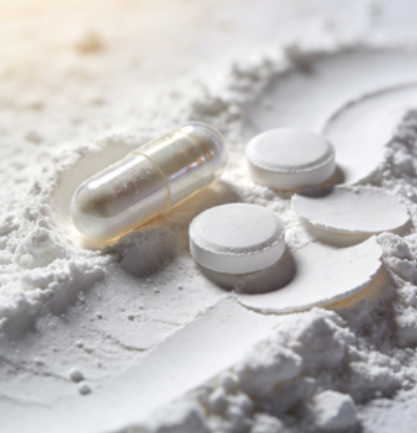
At first glance, powder flowability and dose uniformity might seem like separate concerns in pharmaceutical manufacturing—one governs how easily a powder moves through equipment, while the other ensures each tablet or capsule contains the right amount of active ingredient. Yet they are deeply connected in ways that often catch formulators off guard. When a powder blend doesn’t flow consistently, it can lead to segregation, uneven die filling, or fluctuations in tamping force, all of which directly undermine dose uniformity. What’s surprising is that even a blend that appears homogeneous at rest can produce unacceptable variation during high-speed production simply because of subtle flow inconsistencies.
The link becomes clearer when you consider the mechanics of common filling systems. In a force-fed rotary tablet press, for example, the powder must flow evenly into each die cavity at speeds that can exceed 100,000 tablets per hour. Poor flowability causes intermittent bridging or rat-holing in the hopper, irregular fill density, and weight variability that can surpass pharmacopeial limits. Coatings or glidants might improve flow, but they can also introduce new segregation risks if particle size or density differences are amplified. The trick is finding a balance where flow-enhancing adjustments don’t inadvertently compromise the very uniformity you’re trying to protect.
Why Colloidal Silicon Dioxide Remains the Industry's Silent Workhorse
Ask any formulator about the ingredients they couldn't live without, and colloidal silicon dioxide rarely tops the list. Yet this unassuming powder—often making up less than two percent of a product—performs a silent balancing act that few other additives can match. It prevents clumping in powdered drink mixes, keeps tablet presses running smoothly, and stabilizes suspensions in liquid medicines without altering taste or appearance. Its versatility lies in a simple paradox: the particles are tiny enough to coat larger granules, yet they create an open, airy structure that resists compaction. This dual nature means it can both free-flow and hold its ground, depending on what the process demands.
Industries have come to rely on it not because it’s flashy, but because it simply works across an astonishing range of conditions. In food manufacturing, it saves hours of downtime caused by caking on conveyor belts; in pharmaceuticals, it ensures each capsule contains a uniform dose. Even in cosmetics, it lends a silky texture to loose powders without the heavy feel of talc. The reason it stays in the background is precisely its strength—it integrates so seamlessly that finished products never betray its presence. Newer engineered nanoparticles may grab headlines, but colloidal silicon dioxide remains the pragmatic choice, trusted across decades and regulatory landscapes for its predictable, repeatable performance.
From Powder to Patient: Silica’s Role in Preventing Degradation
In the journey from raw excipient to final dosage form, silica stands as a quiet sentinel against the forces that threaten a drug’s integrity. Its high surface area and porous structure act like a microscopic sponge, soaking up moisture that would otherwise kickstart hydrolysis or encourage microbial growth. By adsorbing water molecules and creating a dry microenvironment around sensitive active ingredients, silica significantly slows down the chemical reactions that lead to potency loss. This protective embrace begins long before the patient ever opens the bottle, ensuring that each tablet or capsule retains its labeled strength from the moment it leaves the production line.
Beyond moisture scavenging, silica’s role in preventing degradation extends to its ability to stabilize amorphous forms of drugs. Many modern pharmaceuticals suffer from poor water solubility, and converting them into a high-energy amorphous state can improve absorption—but that state is thermodynamically unstable and prone to recrystallization. When mesoporous silica is used as a carrier, the drug molecules are confined within nanopores, which restricts their molecular mobility and inhibits the nucleation needed for crystal growth. This physical immobilization keeps the drug in its more soluble, bioavailable form for far longer than would otherwise be possible, effectively preserving both efficacy and shelf life.
Perhaps most remarkably, silica works in ways that the patient never perceives but always benefits from. In blister packs and bottles, silica gel packets or canisters continue the fight against humidity during storage and transportation, especially in climates where heat and dampness are unavoidable. Even in the body, certain types of silica are now being explored to protect sensitive biologics from enzymatic degradation until they can reach their target site. From powder blend to patient’s bloodstream, silica’s understated presence is a critical line of defense, ensuring that the medicine delivered is the medicine intended—stable, active, and ready to heal.
Navigating the Grades: Which Silica Type Fits Your Formulation?
Silica isn't just silica—it's a family of materials with distinct personalities shaped by particle size, porosity, and surface treatment. From the free-flowing, ultra-fine powders that vanish into liquids to the structured, reinforcing particles that build viscosity and tensile strength, each grade brings its own toolkit. Understanding these nuances means you don't just pick a silica; you pick a partner for your product's rheology, clarity, or matting needs. Think of it as matching the right key to a lock—the wrong choice can jam the mechanism, while the perfect one opens a world of performance.
Fumed silica, with its chain-like aggregates, excels at thickening and thixotropy, giving coatings that effortless brushability and then a stubborn refusal to drip. Precipitated silica, on the other hand, often shines as a reinforcing filler in elastomers or as a gentle abrasive in toothpaste, its more rounded particles offering a different sort of touch. Surface treatments further complicate the choice—a hydrophobic grade can repel moisture in a sealant, while a hydrophilic one disperses readily in water-based systems. The trick is to map your formulation's terrain: is it the high-gloss transparency of a clearcoat or the soft-focus matte of a luxury finish? That dictates whether you need a fine, transparent grade or one with larger aggregates designed to scatter light.
Beyond the technical specs, the selection process is also about balancing trade-offs. A high-surface-area silica might deliver impressive reinforcement but could demand more mixing energy and risk agglomeration if not properly dispersed. A low-oil-absorption grade makes handling easier but might not impart the same degree of flatting. Real-world testing often reveals surprises—what looks ideal on a data sheet can behave unexpectedly when confronted with resin compatibility or the shear of a production mixer. That's why the smartest formulators treat silica selection not as a quick pick from a catalog, but as an iterative dialogue between material properties, processing conditions, and the final experience they want to create.
Beyond Anti-Caking: Modern Applications of Pharma-Grade Silica
Pharma-grade silica has long been valued for preventing powder clumping, but its role in contemporary drug development extends far beyond simple anti-caking. Its exceptional surface area and adsorption capacity now make it a crucial tool for stabilizing amorphous active pharmaceutical ingredients, which are often chosen for their enhanced solubility but carry a high risk of recrystallization. By immobilizing these sensitive molecules within its porous structure, silica helps maintain the desired solid-state form for months or even years, directly improving shelf life and consistent dosing.
Another emerging use is in the creation of powdered inhalation formulations. Here, fine silica particles serve as carriers that improve the flow and dispersion of micronized drugs, ensuring they reach deep lung tissue without excessive aggregation. Co-processing silica with active compounds can also modify drug release profiles—a technique gaining traction in the design of multiparticulate systems and orally disintegrating tablets, where rapid wetting and disintegration are paramount. Its ability to absorb liquid ingredients like volatile oils or low-melting-point drugs further expands its utility, transforming sticky or oily substances into free-flowing powders ready for capsule filling or direct compression.
Looking beyond the tablet core, pharmaceutical-grade silica is now instrumental in film-coating processes. When incorporated into coating formulations, it acts as an anti-tacking agent that prevents coated tablets from sticking together during the curing phase, while simultaneously reducing moisture vapor transmission and protecting sensitive actives from environmental degradation. This multifunctionality has led to its adoption in everything from moisture-sensitive pediatric granules to advanced bi-layer tablets, where silica’s presence at the interface can prevent cross-contamination between incompatible layers. What once played a quiet supporting role is increasingly becoming a key enabler of next-generation dosage forms.
FAQ
Silica is highly valued for its versatile functionality—it acts as an anti-caking agent, glidant, and moisture adsorbent, all of which improve powder flow, prevent clumping, and protect moisture-sensitive actives, leading to more consistent tablet production and extended shelf life.
By coating powder particles, silica reduces interparticle friction and cohesive forces. This creates a smoother, more uniform flow into dies, which helps maintain precise dosing, reduces weight variation, and prevents sticking to equipment surfaces.
Its high surface area and porous structure allow it to adsorb ambient moisture preferentially, keeping the active pharmaceutical ingredient dry without chemically interacting. This physical sequestration of water prevents hydrolysis or degradation while ensuring the drug remains fully available for absorption.
Fumed silica is extremely fine and fluffy, offering superior anti-caking and thickening at lower concentrations, while precipitated silica has larger particles and higher bulk density, often used where less intense flow enhancement is needed or as a carrier for liquid actives. Choice depends on formulation requirements like compressibility and loading.
Yes, silica can be used to adsorb drug molecules onto its surface in an amorphous state, preventing recrystallization and maintaining higher energy forms. This effectively stabilizes supersaturated solutions or solid dispersions, boosting dissolution rates and bioavailability without the need for additional polymers.
Particle size directly influences surface area and packing behavior. Nano-sized silica fills voids between larger excipient particles, reducing friction without compromising blend uniformity. Overly fine grades may cause dusting or segregation, while coarse grades might not provide adequate glidant action, so matching size to the blend’s granulometry is essential.
Its high dispersibility aids rapid disintegration by wicking saliva into the tablet matrix, and its anti-caking effect ensures a smooth, non-gritty mouthfeel. Additionally, silica can stabilize the porous structure during storage, preventing collapse that would slow dissolution.
Silica designated for pharmaceutical use must comply with pharmacopeial standards (e.g., USP-NF, Ph. Eur.) ensuring purity, heavy metal limits, and microbial safety. It is generally recognized as safe for oral administration within specified limits, and manufacturers provide comprehensive drug master files to support regulatory filings.
Conclusion
In the quest to transform poorly soluble active compounds into reliable therapies, pharmaceutical-grade silica has emerged as a cornerstone excipient that punches far above its weight. By adsorbing drug molecules onto its vast, high-energy surface, colloidal silicon dioxide effectively stabilizes amorphous dispersions, preventing recrystallization and dramatically improving dissolution rates—an essential step for compounds that would otherwise languish in the gut. This same material, often unseen, orchestrates a surprising dance of powder flow that directly impacts dose uniformity; its nano-sized particles coat larger granules, reducing interparticulate friction and eliminating the erratic flow that leads to weight variation in tablets and capsules. It is the silent workhorse in countless formulations, operating behind the scenes without fanfare, yet its absence would derail entire manufacturing lines and compromise patient safety.
Beyond its well-known role as an anti-caking agent, modern pharma-grade silica acts as a moisture scavenger that shields sensitive drugs from hydrolytic degradation, preserving potency from production through to the patient’s hand. Choosing the right grade—whether fumed or precipitated, hydrophilic or hydrophobic—demands a careful match with formulation needs, as each type fine-tunes characteristics like bulk density, absorption capacity, and pH. Innovations now extend silica’s utility into taste masking, controlled release, and even as a stabilizer in complex biologics. Far from a simple additive, silica weaves itself into the fabric of drug performance, ensuring that a laboratory promise becomes a consistent, life-improving reality for patients across the globe.
Contact Us
Contact Person: Levin Wang
Email: [email protected]
Tel/WhatsApp: 8618668999988
Website: https://www.silicaplant.com/