

Best Plastic Push Pull Connector Options for Secure and Durable Connections
2026-11-18
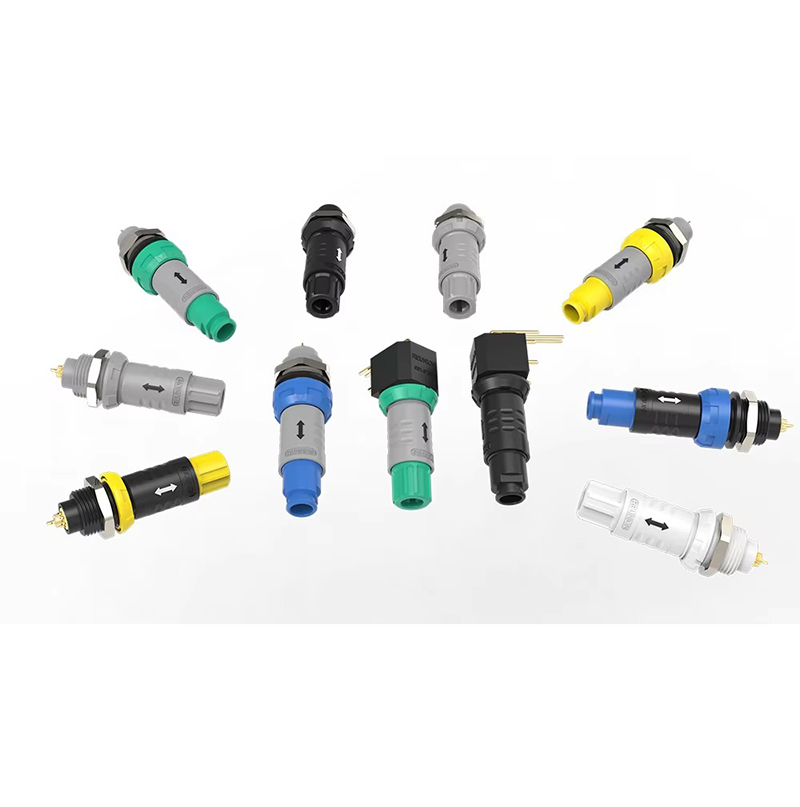
A loose connector can turn a reliable system into a troubleshooting nightmare. But with the right plastic push pull design, you get far more than a simple click. In the following guide, we break down the options that actually hold up under real-world strain, temperature shifts, and repeated handling. Along the way, you will also see why REUNION has become a name engineers keep reaching for when secure, durable connections matter more than quick fixes.
When a Plastic Connector Is Actually the Stronger Choice
The assumption that metal automatically outperforms plastic falls apart in high-vibration settings. A stamped or machined metal connector can develop stress fractures after thousands of load cycles, especially where wires tug at the contact point. Engineered thermoplastics such as glass-filled nylon and PBT flex slightly and recover, spreading localized stress instead of concentrating it. In applications like under-hood sensor wiring or handheld power tools, that behavior often gives a well-designed plastic housing the longer service life.
Chemical exposure tells a similar story. Salt spray, cleaning agents, and agricultural chemicals chew through platings and trigger crevice corrosion on metal shells, while many reinforced thermoplastics remain stable without protective coatings. A connector exposed to washdown routines or coastal air can stay dimensionally tight in plastic, whereas a plated metal version may need replacement after a few seasons. The absence of a galvanic reaction with aluminum or steel enclosures also protects the surrounding assembly.
There is also the overlooked advantage of part consolidation. A single molded plastic body can integrate alignment ribs, latching features, strain relief, and wire guides that would require several separate metal stampings, screws, or grommets. Fewer components mean fewer tolerance stack-ups and less hardware to loosen over time. In weight-sensitive equipment like drones, portable monitors, and battery packs, that reduction in mass and assembly complexity frequently makes plastic the more robust choice.
How Nylon and Polypropylene Bodies Change the Failure Equation
Metal valve bodies usually fail through corrosion, fatigue, or erosion, so the design math leans heavily on yield strength and cycle life. Nylon and polypropylene shift that logic almost immediately. Their failure modes are tied to moisture uptake, creep under continuous load, and heat deflection. A polypropylene body that feels rigid on a bench can relax around a fitting after a few hundred thermal cycles, producing a leak path that no amount of initial torque can fix. Nylon absorbs enough water in humid service to swell slightly and lose a meaningful share of its tensile strength, which changes the safety factor long before a crack ever appears.
These materials also redraw the boundaries around chemical attack. Instead of pitting or wall thinning, you get environmental stress cracking, softening, or hydrolysis at stress concentrations. Polypropylene handles many acids well but becomes brittle with certain oxidizers, while nylon can degrade in strong acids or hot water over time. The failure equation no longer treats the body as a passive pressure vessel. The polymer, the joint design, the gasket compression, and the surrounding atmosphere all interact in ways that demand longer test windows and more conservative temperature derating.
Perhaps the biggest change is that short-term burst pressure becomes a poor predictor of service life. With nylon and polypropylene, the useful number is long-term hydrostatic strength at a specific temperature, combined with how much creep the body can tolerate before sealing surfaces move. Thread engagement, insert depth, and pipe support matter more because the body itself flexes. A valve that survives a bench test can still fail in the field if the installed stresses concentrate around a boss or a sharp corner. That forces designers to think in terms of time, temperature, and sustained strain rather than a single pressure rating.
The Locking Detail Most Buyers Overlook Until a Leak Appears
Most people twist a lid, hear a click, and assume the seal is doing its job. The problem is rarely the gasket itself—it's the way the locking tabs pull the lid down. If the tabs apply uneven pressure, one side bites harder than the other, and that slight tilt leaves a gap just wide enough for moisture to creep through once the container gets jostled in a bag or exposed to a temperature change.
A quick check is to close the lid empty, then run a fingertip around the seam where the lid meets the rim. You're feeling for a consistent ledge. If one section sits proud or dips inward, the lock isn't seating the gasket evenly. Over time, the same uneven load deforms the gasket, so by the time you notice the leak, tightening the latch only makes it worse because the seal is already crushed on one side.
Listen for the sound of the lock as it closes, too. A crisp, uniform snap on both sides usually means the hooks are fully engaged. A dull or single-sided click often means the lid is resting on the gasket but not compressing it. That is the kind of detail that never shows up in a product photo, yet it decides whether the item stays dry on day one or turns into a slow seep three months later.
Pressure and Temperature Limits That Matter More Than Brand Names
Most equipment failures don't start with a logo wearing off. They begin when a seal hardens under heat it was never rated to handle, or a fitting cracks because someone assumed all stainless steel behaves the same at -40°F. The real conversation happens in the margins of a spec sheet: a pump that runs fine at 150 PSI but turns unpredictable at 220, a valve that seals perfectly until the thermal cycling starts. Those numbers define whether a part survives a weekend shutdown or becomes the reason for one.
Brands matter only after the operating window is respected. A premium name won't save an O-ring from steam exposure if the compound isn't built for sustained moisture and temperature swings. What separates reliable installations from constant rework is a plain understanding of the service envelope — the combination of pressure spikes, ambient heat, and fluid chemistry that acts on every component. Once that envelope is clear, choosing a part becomes less about loyalty and more about matching material ratings to actual duty cycles.
Focusing on limits also changes how you read failure. A leaking connection at 180°F usually isn't a manufacturing defect; it's a mismatch between the chosen polymer and the true operating temperature. Similarly, a burst hose at 300 PSI usually points to a system surge, not a weak brand. When maintenance teams shift their attention from labels to load ranges, downtime drops and the remaining brand preferences become a matter of logistics, not survival.
Why Some Push-Pull Fittings Feel Right on the First Try
Most push-pull fittings are judged within the first two seconds. The ones that feel right don't rely on a tight seal alone; they balance the collar's spring tension so the tubing seats with a soft click rather than a hard shove. When the grip ring bites gradually instead of all at once, your fingers get a clear signal that the connection is made, and you stop second-guessing whether it will hold under pressure.
That instant confidence often comes from how the release collar is shaped. A slightly tapered lip lets your thumb find the edge without looking, while a smooth inner bore prevents the O-ring from dragging or rolling on insertion. Small details like a chamfered tube stop and a well-supported collet make the difference between a fitting you fight with and one that seems to guide the tube into place on its own.
Materials also play a quiet role. Acetal bodies with just enough give, stainless steel grippers that stay straight in their grooves, and nitrile seals that don't grab too early all contribute to a predictable feel. Once those elements line up, the fitting stops being a component you tolerate and becomes one you reach for without thinking.
A Quick Pre-Installation Check That Saves Field Replacements
Most field failures aren't caused by a defective unit—they come from a small setting or connection that was never confirmed before the box left the warehouse. A ten-minute bench check that cycles through input voltage, DIP switch positions, and terminal torque catches those quiet problems while the unit is still easy to reach. Once it's mounted behind other equipment or shipped to another state, the same fix can take hours and cost more than the part itself.
One controls job made this painfully clear. A replacement drive arrived on site with the factory default for analog control still active, but the machine was wired for discrete signals. The installing electrician spent half a shift tracing the I/O before requesting another unit. Had the bench tech simply compared the order notes against the physical jumpers and run a two-minute signal test, the original drive would have never left the shop.
Make the check part of the packing routine, not an afterthought. Keep a laminated card at the bench with the most commonly missed items: voltage selector, communication address, firmware version, and torque marks on all power terminals. Snap a photo of the final configuration and attach it to the job file. That habit costs almost nothing and prevents the kind of callback that erases margin from an otherwise clean installation.
FAQ
Focus on UV resistance and a sealing rating that matches real weather exposure. Glass-filled nylon bodies tend to hold up better than standard ABS, and a silicone gasket around the mating face keeps moisture from settling in. Also check that the latch tabs give a positive click and can be released with gloves on.
Good ones are. Quality models often handle 1,000 to 5,000 cycles without noticeable wear when the latch or spring mechanism is well made. The weak point is usually the plastic tab, not the body, so look for a design where the latch is a separate metal or reinforced component instead of a thin molded flap.
Pick a connector with a locking sleeve that requires two deliberate movements, like pulling back a collar before separating. Some designs also have an audible click and slight resistance before full engagement. In tight cable runs, add a strain relief close to the connector so vibration pulls on the cable jacket, not the coupling.
Many plastic push pull options are fine for occasional splashes, but washdown areas need an IP67 or IP69K rating. The housing material matters as much as the seal: polyamide with proper sealing rings resists swelling from oils and cleaning agents better than cheaper thermoplastics. Match the rated temperature range to the cleaning process as well.
Plastic shells reduce weight and avoid corrosion on portable devices, but they do not shield as well against EMI. If your signal is low voltage or sensitive, a metal shell with conductive plating is often the safer route. For most power and basic data connections in field equipment, a reinforced plastic body is more than enough and easier on the cable.
It should seat firmly without needing excessive force. A properly aligned plastic push pull connector will slide in with a steady push and then click. If you have to rock it or squeeze the housing, the keyway is likely misaligned or a pin is bent. Never force it; back off, inspect the orientation, and try again.
For sensor wiring, gold-plated contacts and a low pin count with good separation are usually worth the extra cost. Avoid high-density layouts unless you need them; they trap moisture more easily and are less forgiving during field assembly. A keyed insert with a visibly different polarizing slot also helps prevent wrong connections during maintenance.
Cracking usually comes from a tight bend right at the connector combined with repeated movement. Use a backshell with an integrated bend relief or add a short length of adhesive-lined heat shrink. Also leave enough slack so the cable does not pull sideways when the equipment is opened or moved.
Conclusion
Plastic push-pull connectors earn their place in fluid and pneumatic lines when the material matches the actual job. A nylon body shrugs off vibration and repeated connection cycles better than many metal fittings in lighter-duty systems, while polypropylene handles mild chemical exposure without the corrosion risk that quietly shortens metal life. The real difference usually shows up at the locking joint: a positive snap and a visible shoulder prevent the slow backing-out that turns into a drip weeks later. Before choosing, ignore the label and check the working pressure at the highest expected temperature, because most failures happen there, not at room-temperature ratings.
The fittings that feel secure on the first insertion tend to have consistent O-ring compression and a latch that engages without excessive force. That tactile feedback matters because a stiff or vague lock often signals tolerance issues that lead to premature wear. A quick pre-installation check also helps: verify the tubing is cut square, fully bottomed out, and free of scratches where the seal sits. These small steps eliminate most field replacements and keep a plastic connector doing what it should—holding tight without extra clamps, thread tape, or guesswork.
Contact Us
Contact Person: Hayley Liang
Email: [email protected]
Tel/WhatsApp: +86 13480625451
Website: https://www.reunion-china.com/