

Best Solar Portable Systems for Reliable Off-Grid Power Anywhere
2026-07-16
Imagine harnessing the sun’s energy to power your adventures, no matter how far off the grid you roam. Portable solar systems are redefining what it means to stay connected and charged in the wild, and SRS is leading the charge with solutions that blend rugged reliability with cutting-edge efficiency. Whether you’re camping deep in the backcountry or preparing for unexpected outages, these compact powerhouses deliver freedom from traditional outlets. In this guide, we’ll explore the best solar portable systems that promise dependable off-grid power anywhere—without weighing you down. Ready to untether your energy?
Compact Energy, Boundless Adventures
A power bank the size of a mint tin shouldn't feel this freeing. Yet there’s a quiet thrill in sliding it into a pocket and heading out, untethered from wall sockets and low-battery warnings. It’s not just about backup juice—it’s about saying yes to detours, to an extra hour of filming at sunset, to a map-check on a trail with no cell service. The right compact charger dissolves that background hum of “what if,” turning it into “let’s go.”
Modern mini chargers have shed the old trade-offs. You get gallium nitride speed in a pebble-smooth shell, enough to revive a phone from flat to functional while you grab coffee. Some snap magnetically into place, aligning with a satisfying click, while others hang off keychains like lucky charms for the digitally reliant. The best part? They’ve become objects you almost forget you’re carrying—until a stranger needs a top-up and you become the hero of the moment.
Adventure isn’t always scaling peaks or crossing continents. Sometimes it’s an urban bike ride that stretches into a late dinner, a spontaneous market walk where you snap a hundred photos, or a night under the stars where your phone becomes the campfire playlist. Compact energy doesn’t just power devices—it powers these pivots. It’s the quiet enabler of stories you’ll tell later, the tiny anchor that keeps spontaneity afloat when the world expects you to be anchored to a wall.
Sunlight to Socket: How Modern Panels Keep You Running
A rooftop array does more than just bask in the sun—within each cell, photons knock electrons loose from semiconductor layers, creating a steady flow of direct current. This silent, motionless harvest happens even on overcast days, thanks to improved light capture that pulls energy from diffuse radiation, not merely direct beams.
From there, an inverter takes the raw DC and sculpts it into the alternating current your home expects, synchronizing with the grid’s rhythm or feeding a battery bank. Smart electronics monitor every watt, adjusting voltage in real time to match your consumption, so the fridge, laptop, and lights pull from the roof before tapping the utility.
When the sun dips, stored energy bridges the gap—modern lithium stacks discharge smoothly, keeping essentials alive without a flicker. The system learns your patterns, shuffling power where it’s needed most, turning a patch of silicon and glass into a personal micro-utility that hums quietly in the background, rain or shine.
Built Tough for the Unpredictable
Hardware that only works under perfect conditions isn't worth much when you're miles from anywhere. We design our gear to keep going when the weather turns, the trail disappears, and the plan goes sideways. No fragile components, no delicate casings—just reliable tools that take abuse in stride.
Every seam, seal, and material choice is tested beyond what any spec sheet demands. We've baked circuit boards in desert heat, frozen them solid, and rattled them apart on gravel washboards—all so you don't have to wonder if your kit will survive the trip. The result is gear that scoffs at rain, dust, vibration, and the occasional unplanned drop from a tailgate.
There's a quiet confidence that comes from carrying something built this way. You stop worrying about the gear and start paying attention to where you are—that ridgeline ahead, the storm building in the west, the detour that might lead somewhere better. Tough doesn't just mean it lasts. It means you can forget about it and finally focus on what matters.
Stash More Power, Stress Less
When your devices are mid-task and battery bars drop into the red, panic creeps in fast. Stash More Power, Stress Less isn’t just a catchy phrase—it’s how you reclaim control. By keeping a slim, high-capacity power bank tucked into your everyday carry, you swap nerve-wracking outlet hunts for a quick confidence boost. No more pleading with café staff for a hidden socket or rationing screen brightness just to make it home. One small habit shift means you move through your day untethered from the wall, fully charged for whatever comes next.
The real magic happens when “more power” becomes invisible preparation. A compact power bank that slips into a pocket or the side mesh of a backpack works like a silent backup plan. You stop monitoring the little battery icon and start trusting that you’ll stay connected through meetings, transit hiccups, and last-minute detours. It’s not about hoarding gadgets—it’s about cutting out the low-grade hum of battery anxiety before it even starts. The lift in your shoulders the moment you realize you can stop babysitting your charge percentage is immediate and real.
What you stash doesn’t need to weigh you down. Modern power banks give you multiple full phone charges without bulging your pockets. When you consistently carry one, you begin to notice how often your peek at the battery was a reflex, not a real need. That headspace you used to spend calculating charging opportunities now goes toward the actual moments in front of you—the conversation, the idea, the view. Stashing more power flips the script: you’re no longer a supplicant at the altar of the nearest USB port. You’re just… present.
Charge Smarter, Not Just Faster
Rushing to top off your battery at maximum speed every time might feel productive, but it often does more harm than good. Excess heat from ultra-fast charging can silently degrade battery cells, shortening the lifespan you actually paid for. Slowing things down when you have the time—like overnight or during office hours—lets the battery absorb energy more gently, preserving its capacity for the long haul.
Smart charging isn’t just about picking a slower plug; it’s about syncing with your routine and the grid. Many modern chargers can schedule sessions when electricity rates dip or renewable generation peaks, trimming your bill without any extra effort. Pair that with features like dynamic load balancing, and you avoid overloading your home’s circuit while still waking up to a full charge.
The real upgrade comes from understanding that batteries prefer partial top-ups over deep cycles. Intelligent systems learn your daily distances and only fill the pack to what you actually need, keeping the chemistry in a stress-free zone. It’s a subtle shift—from brute speed to thoughtful care—that keeps both your vehicle and wallet healthier over the years.
From Campsite to Cabin: Real-World Performance
Switching from a bare-bones campsite to a cozy cabin might sound like a downgrade in adventure, but it puts gear through a completely different set of demands. On a tent site, your setup has to battle morning dew, uneven ground, and a constant battle with the elements. Walk into a rustic cabin and suddenly you’re testing how well your equipment transitions to a wooden floor, a loft space, or even a porch where wind still sneaks through the gaps. It’s not just about survival anymore; it’s about how your gear feels in a semi-sheltered environment—does it still hold its own without the full backcountry challenge?
Real-world performance means seeing how materials behave when you stop babying them. A sleeping pad that kept you insulated from frozen dirt might slide around on a smooth cabin floor, turning a good night’s rest into a game of chase. The stove that boiled water quickly at altitude suddenly seems too bulky when there’s a hearth nearby, but the night still gets cold enough to test its low-fuel simmer. And that jacket that blocked wind on a mountain pass? It better still breathe when you’re chopping wood for the fireplace, otherwise you’ll be sweating through layers before the first log catches. These are the messy, human tests no lab can simulate.
Pay attention to the small failures, because that’s where the real story lies. A zipper that snags after a weekend of woodsmoke and ash, a headlamp strap that loses elasticity from being tossed in a dry bag one too many times—these aren’t dealbreakers, but they reveal how gear ages when used back-to-back in different settings. The transition from campsite to cabin isn’t a step down in rigor; it’s a shift in context that exposes weaknesses you’d never notice sticking to one setting. Smart designs shine here, not because they’re loaded with features, but because they handle the unexpected with a kind of quiet competence that makes you forget you ever doubted them.
FAQ
Focus on battery capacity, panel wattage, and portability. A system with at least 100Ah battery and 200W solar panel gives you a solid balance for camping or emergencies. Also check the inverter rating if you plan to run AC devices.
Solar panels still generate power under clouds, but at reduced efficiency—usually 10% to 25% of rated output. A good battery acts as a buffer, so if you size your storage properly for your daily use, you'll ride through a few gloomy days without issue.
Absolutely, if you pick the right model. A mini-fridge typically draws 50-100 watts, so a system with a 500W+ pure sine wave inverter and decent battery capacity can handle it for hours. Just keep an eye on the total daily watt-hour consumption.
Most kits are plug-and-play. You unfold the panels, connect the charge controller to the battery, and you're good to go. No tools needed. The main thing is placing panels in direct sun and keeping the battery sheltered from extreme heat.
Lithium-based batteries in these systems usually last 3,000 to 5,000 cycles, which translates to 5–10 years of regular use if you don't fully drain them constantly. Lead-acid options are cheaper but have shorter lifespans, often 2–4 years with proper care.
High heat degrades batteries faster, while freezing can temporarily reduce available capacity. Quality systems have built-in temperature protection. For extreme cold, store the battery in an insulated case; for desert heat, ensure ventilation and shade.
Depends on panel size and sun conditions. A 200W panel can fill a 100Ah lithium battery in about 5–6 hours of peak sunlight. Some systems also allow AC or car charging as a backup, which can top off the battery in just a couple of hours.
Conclusion
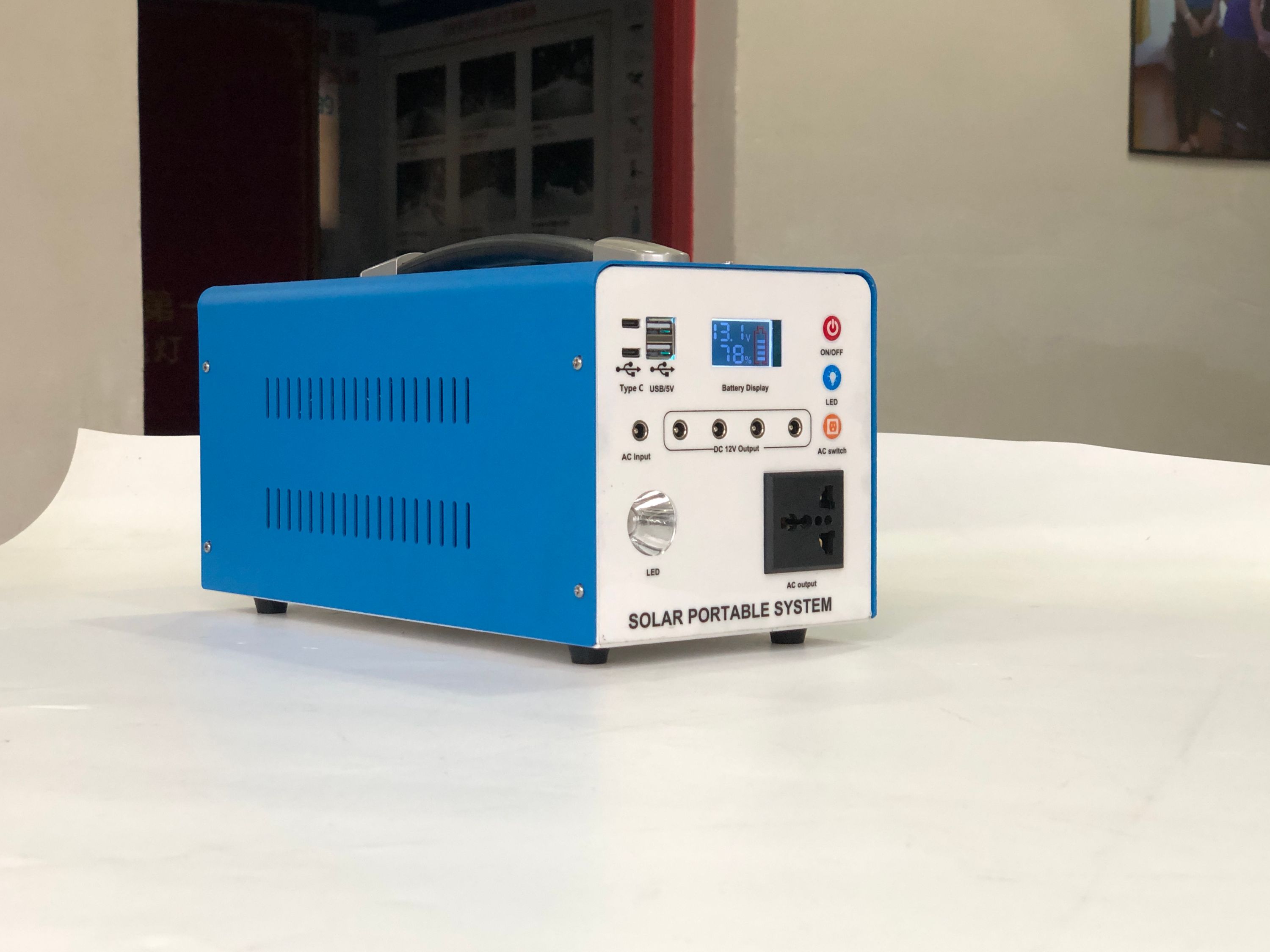
Modern portable solar systems have quietly revolutionized off-grid living, offering a whisper-quiet alternative to gas generators that fits in a backpack. Compact and thoughtfully engineered, these units gather surprising amounts of energy even under patchy clouds, turning a morning hike into a fully charged smartphone by lunch. The latest panels use high-efficiency cells with bypass diodes that keep current flowing even when partial shade falls across the surface, so you’re not constantly repositioning them. Hook up a power station and you’ve got a plug-and-play microgrid: USB-C for laptops, regulated 12V for coolers, and pure sine AC outlets that won’t hum through delicate electronics. It feels less like camping and more like carrying a silent power outlet in your daypack, ready whenever the sun peeks through the trees.
What sets the best systems apart isn’t just raw output—it’s how they handle the real world. Drop-resistant casings and IP-rated weather sealing shrug off dusty trails and sudden downpours, while oversize power stations can top up multiple devices overnight and still have reserves for a mini fridge or medical equipment. Smart charging profiles negotiate the fastest safe rate with each gadget instead of blindly pumping watts, preserving battery health over hundreds of cycles. In practice, a single 100W suitcase panel paired with a mid-capacity station runs LED lights, a tablet, and a portable speaker from dusk till dawn without a hiccup. Whether you’re posted up at a remote cabin or moving camp every day, the combination of rugged build quality and intelligent power management means you spend less time babysitting gear and more time enjoying the silence of the backcountry.
Contact Us
Contact Person: kitty
Email: [email protected]
Tel/WhatsApp: +8618676039824
Website: https://www.srssolargroup.com/