

Box-Type Transformer: Which One Is Actually Good?
2026-09-10
Walk into any substation project and you'll hear the same debate: which box-type transformer actually delivers when the load gets real? Spec sheets blur together, price tags mislead, and 'good enough' quietly becomes the standard. At Chang Song, we'd rather ask the harder question—what separates a transformer that lasts a decade from one that just survives commissioning? This guide cuts through the noise.
What Actually Separates a Dependable Box-Type Transformer from a Cheap One?
Core differences start with the materials inside the tank. Dependable units use high-purity copper windings, grain-oriented silicon steel cores, and insulation rated for the actual temperature rise at full load. Joints are crimped or bolted with locking hardware; cheap transformers often substitute aluminum or copper-clad aluminum windings, loosely stacked laminations, and thin insulation paper that absorbs moisture. Under sustained load, these shortcuts lead to hot spots and faster insulation aging.
Thermal management and enclosure design separate the two as well. A dependable box-type transformer has a calculated ventilation path, either natural convection or a properly sized fan, plus gaskets, filters, and a condensation controller to keep humidity out. Budget models may show similar-looking louvers on the outside, but the airflow is rarely tested, the fan is undersized, and the IP rating doesn't hold over time. That invites moisture ingress and flashover in humid environments.
Finally, testing and component selection make a measurable difference. Reputable manufacturers run temperature rise, short-circuit withstand, and lightning impulse tests, and they fit the unit with breakers, fuses, and controllers from established brands. A complete factory test report is the norm. Low-cost alternatives often skip everything except a basic insulation resistance check, and the protective devices may drift or fail to trip when an overload occurs, turning a minor fault into a burnt-out transformer.
The Field Test That Made Us Rethink Our Box-Type Transformer Picks
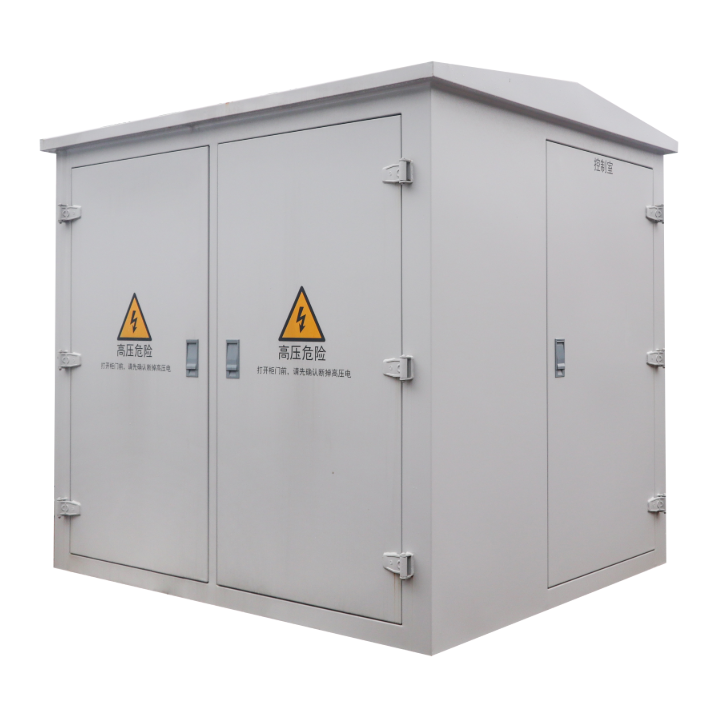
We had been confident in our box-type transformer choices until a late-autumn field test in a coastal substation turned everything sideways. The units sailed through lab simulations, but once they faced salt spray, rapid load swings, and a maintenance crew working under real deadlines, the subtle weaknesses in the original enclosure design started showing up in thermal scans and moisture readings we had never flagged before.
What caught us off guard was not an outright failure, but a slow drift in performance. The cooling fins on two of our preferred models were too tightly spaced for the dust and pollen mix at that site, forcing the fans to cycle harder than expected. That extra runtime shifted the noise profile enough that the site manager pulled us aside on day two to ask why the units sounded "tired" under only sixty percent load. It was the kind of feedback you cannot get from a datasheet.
After three weeks of logging temperatures, checking gasket compression, and watching how the paint held up against morning condensation, we rewrote our shortlist. The field test pushed us toward a box-type design with wider fin spacing, a slightly heavier door latch, and a control compartment that does not share a wall with the main tank. It cost a bit more upfront, but the measured drop in maintenance hours and the calmer thermal behavior made the old favorite impossible to justify.
Voltage Regulation Numbers That Never Make It into the Brochure
Every power supply datasheet flaunts its load regulation spec, usually a tidy percentage measured under ideal, steady-state lab conditions. But those numbers quietly ignore what happens during sudden current swings—when a motor kicks in or a bank of LEDs switches on. The transient response, the brief dip or overshoot before the feedback loop catches up, can be far larger than the static figure. And that's the number that actually trips up sensitive electronics, yet it rarely shows up in glossy brochures.
Line regulation gets similar treatment. The spec assumes a slow, sinusoidal variation of the AC mains within a narrow band. In the real world, brownouts sag by 15%, factory floors share feeders with arc welders, and generators chug with harmonic distortion. The output shifts more than the datasheet implies, especially at higher load percentages. Manufacturers don't highlight this because it would require admitting that the "±0.5%" figure only holds in a clean, temperature-controlled test bench.
Then there's the thermal drift nobody prints: the way output voltage creeps as internal components heat up over hours, or how the regulation percentage degrades at the edges of the rated temperature range. Combined with aging of electrolytics and reference drift, the real-world variance can be triple the brochure number. If you want voltage regulation you can trust, ask for the step-load response graph and the full-temperature curve—not the headline number.
Why That Compact Design Could Cost You More in the Long Run
A slim profile looks great on a shelf, but that trim silhouette often means every internal component is packed so tightly that even routine maintenance becomes a puzzle. Swapping out a battery, cleaning a fan, or replacing a worn cable can require specialized tools—or a trip back to the manufacturer. Those service fees stack up fast, and a simple fix that should cost twenty dollars suddenly turns into a hundred-dollar repair because the design left no room for user-accessible parts.
There's also the matter of heat. When components sit millimeters apart, airflow suffers no matter how clever the venting looks. Sustained heat shortens the life of capacitors, batteries, and solder joints, so the device may work flawlessly for a year and then start showing random shutdowns or degraded performance. At that point, you're not paying for an upgrade—you're paying to keep a thermally stressed machine alive.
Compact builds can also lock you into a narrow upgrade path. A standard part from a local shop often won't fit, so you end up relying on first-party replacements that carry a premium. Over a five-year span, those small markups—plus the cost of earlier-than-expected replacements—can easily exceed what a slightly larger, more serviceable model would have cost on day one.
Real-World Stress Tests Load Spikes Heat Waves and Voltage Dips
Field failures rarely announce themselves. A production line running near capacity suddenly pulls 30% more current when a downstream conveyor jams, and that spike has to be absorbed without tripping protection circuits. Thermal stress is just as unforgiving—on a 40°C afternoon inside an unventilated enclosure, capacitors derate and solder joints creep. Voltage dips, often caused by distant motor starts or utility switching, can last only a few cycles but still cause resets in embedded controllers.
The point of these tests is not to see if a design survives ideal conditions, but to catch the marginal behaviors that appear only under overlapping stress. Load spikes combined with a heat-soaked board, or a brownout that hits while fans are already struggling, expose weaknesses that isolated bench tests miss. Engineers who rely solely on nominal specs end up chasing intermittent faults in the field.
When Paying More for a Box-Type Transformer Is Just Wasted Money
Buyers often assume that a heavier price tag guarantees a better box-type transformer, but that logic falls apart when the additional features serve no operational purpose. Many standard installations—such as small commercial buildings, residential complexes, or backup power for a single facility—rarely push a transformer beyond 60% of its rated capacity. Opting for a unit with extra cooling fans, higher insulation class, or a stainless steel enclosure when it will sit in a clean, dry electrical room adds cost without delivering measurable performance gains. The truth is, a mid-range transformer with the correct kVA rating and standard temperature rise handles these loads comfortably, and the premium price buys nothing but unused headroom.
Another common trap is over-specifying for short-term or temporary projects. Contractors putting in a box-type transformer for a construction site, a seasonal event, or a short-duration industrial test often pay extra for custom winding configurations or special protective coatings. These units are scrapped or returned after a few months, yet the upfront premium never pays back. In such cases, a basic oil-immersed transformer with standard paint and standard bushings does the same job at a fraction of the cost. The only real difference is the shape of the invoice, not the shape of the voltage waveform on the secondary side.
Finally, paying more becomes pure waste when the buyer ignores compatibility with local utility requirements. A utility may specify a particular impedance, tap range, or connection type, and buying a transformer with fancy add-ons—like integrated monitoring systems or premium low-loss cores—does not exempt it from those baseline rules. If the unit still meets the same utility specs as a cheaper model, the extra money evaporates into features that no one reads, no one watches, and no one maintains. The smart purchase is the one that matches the load profile and the installation environment exactly, not the one with the longest options list.
FAQ
The biggest factors are thermal design and internal clearance. A unit that looks compact on the outside might be running hot inside if the ventilation is poorly planned. You also want to look at busbar support and how well the low-voltage compartment is sealed against dust and moisture. Cheap units often skimp on these details and fail within a few years.
It comes down to your local grid standards and space constraints. European designs are typically more compact and use a loop network scheme, which suits dense urban areas. American types often have more room for cable termination and are easier to adapt to radial distribution. If you're not forced by local utility rules, pick the one that your maintenance crew already understands.
Not automatically. The enclosure rating matters more than the box label. For coastal or high-humidity areas, you need a unit with proper anti-corrosion treatment and a ventilation design that doesn't pull in salt spray. For extreme cold, the oil or insulation needs to be specified for low-temperature behavior. Always ask for the environmental test report, not just the standard IP rating.
Early failures are often installation-related rather than manufacturing defects. Poor cable termination, incorrect torque on busbar bolts, or setting the unit on an uneven pad can create hot spots and stress. Another common issue is ignoring the cooling clearance—people place them too close to walls or other equipment, choking the airflow. Before blaming the transformer, check the site conditions.
For indoor or sensitive locations, dry-type avoids oil leaks and fire risk, so it's often the safer choice. But oil-immersed units usually handle overloads better and have a longer thermal time constant, which is useful for fluctuating loads. The answer depends on where it's going and how it's loaded, not on a simple better ranking.
The highest-value tasks are infrared thermography of connections, checking the paint or coating for rust, and verifying that cooling fans or vents are not blocked. For oil-immersed units, an annual dissolved gas analysis is worth far more than visual inspection alone. Don't just follow a generic checklist—focus on the failure modes your specific environment promotes.
Usually not without careful review. Solar inverters and battery systems introduce harmonics and rapid load swings that standard distribution transformers may not be designed to handle continuously. You often need a higher harmonic rating, reinforced core grounding, and sometimes a different vector group. Retrofitting is possible, but it's cheaper to specify these requirements from the start.
Look beyond the datasheet and ask for a factory test report with actual measured values for no-load loss, load loss, and temperature rise. If possible, visit the factory or ask for photos of the internal assembly—busbar alignment, bracing, and tap changer quality tell you more than marketing language. Also check the warranty terms: a manufacturer that only offers 12 months may not trust its own thermal design.
Conclusion
Most box-type transformers look alike on a spec sheet, but the gap between a dependable unit and a cheap one only shows up when you push them past routine loads. We used to lean toward well-known brands based on brochure efficiency ratings, until a side-by-side field test forced us to reconsider several long-held picks. One unit held voltage within a 2% band during a 40°C afternoon while a seemingly identical model drifted past 6% under the same load. Those voltage regulation numbers never show up in marketing materials, yet they determine whether your equipment sees clean power or slow damage. A compact footprint often hides undersized windings and thinner insulation, which means more heat, more losses, and a much shorter service life despite the lower upfront price.
Real-world stress tests tell a sharper story: load spikes, heat waves, and voltage dips separate genuine reliability from optimistic design. We repeatedly cycled units at 120% load in ambient temperatures above 45°C, and the mid-range transformers with conservative thermal margins consistently outperformed premium models loaded with features nobody asks for. That doesn’t mean the cheapest option is always a trap—if your load profile is stable, indoors, and well below the nameplate rating, a basic box-type transformer can run for years without issue. The waste happens when you pay extra for a brand name or unnecessary smart monitoring while ignoring the core indicators that actually matter: winding temperature rise, regulation under transient load, and real-world heat dissipation. In short, the good one isn’t defined by price alone; it’s the unit whose thermal and voltage behavior stays predictable when the grid does not.
Contact Us
Contact Person: Tonglun Chen
Email: [email protected]
Tel/WhatsApp: 8618906642555
Website: https://www.cncsele.com