

China Angle Steel Towers: Durable Solutions for Global Power Transmission
2026-06-30
In the ever-evolving landscape of global power infrastructure, the demand for robust and reliable transmission towers has never been greater. Among the many structural solutions, China’s angle steel towers stand out for their exceptional durability and adaptability. At the heart of this innovation is Anbang, a name synonymous with precision engineering and unwavering quality. But what truly sets these towers apart in harsh environments and large-scale projects? Let’s explore the engineering foundations and real-world advantages that make them the go-to choice for power transmission worldwide.
Built to Last: The Core Strength of Angle Steel Towers
Angle steel towers have earned their reputation for uncompromising durability through a marriage of metallurgy and structural logic. The L-shaped cross-section isn't just a convenient shape—it distributes stress along multiple axes, resisting torsional forces that would fatigue a flat-bar design over decades of wind, ice, and thermal cycling. Galvanizing adds a sacrificial zinc layer that heals minor scratches on its own, quietly fighting rust without any human intervention. This means a well-made tower can stand in a coastal salt spray zone for half a century with barely a patina change, while ordinary steel would have crumbled long before.
What truly sets these towers apart is how their modular construction turns longevity into a simple, repeatable recipe. Bolted connections eliminate the hidden vulnerabilities of welds—no micro-cracks propagating through a heat-affected zone, no field welding inspection nightmares. Every section is interchangeable by design, so a damaged leg or crossarm swapped out in a morning using basic tools keeps the structure young. It’s this practical repairability that extends service life far beyond initial projections; a tower isn’t just built to last—it’s built to be maintained indefinitely without specialized crews or expense.
But the deepest strength lies in how the lattice geometry handles nature’s extremes. Wind passes through rather than pressing against a solid face; ice loads are shed along angled members instead of accumulating into a crushing weight; seismic vibrations dissipate through a forest of joints, each one a miniature damper. These towers don’t stubbornly resist the elements so much as flow with them, turning destructive energy into harmless motion. That’s why after a hurricane or ice storm, you’ll often see angle steel towers still standing while rigid monopoles or wooden poles litter the ground—they’re built not just tough, but wisely.
Precision Manufacturing: How China Crafts Reliable Towers
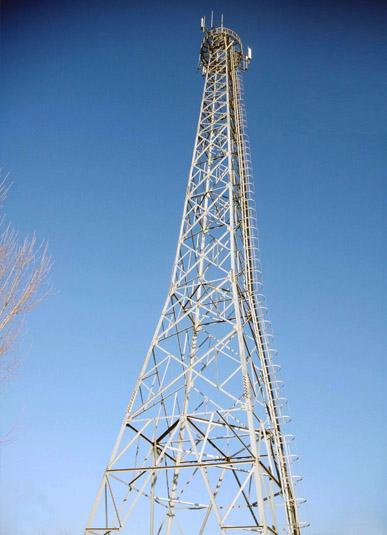
Every tower begins with a blueprint, but in China's leading factories, it's the execution that sets them apart. Advanced CNC cutting machines slice through high-strength steel with tolerances measured in fractions of a millimeter, while robotic welding arms ensure each joint is immaculate. This isn't mass production for the sake of speed—it's a meticulous choreography where every beam is numbered, every bolt hole pre-drilled to fit like a key in a lock. The result is a structure that stands true even under the stress of hurricane-force winds or seismic shifts.
What truly elevates the process is the marriage of automation and human oversight. In climate-controlled assembly halls, engineers use laser tracking systems to verify alignment before a single piece leaves the shop. Each tower undergoes stress-test simulation—not as an afterthought but as a built-in checkpoint. From the chemical composition of galvanized coatings to the torque of flange bolts, nothing is left to chance. It's this relentless attention to the micro that guarantees the macro: a tower that won't sag, sway, or surrender to corrosion for decades.
Delivering such precision isn't just about technology; it's about a culture that refuses to cut corners. Skilled technicians, often with years of specialized training, treat each component like a piece of precision machinery rather than a mere construction element. Component batches travel with digital passports, recording every production parameter for full traceability. When these towers rise on distant skylines—whether supporting power lines or telecom arrays—they carry with them an unspoken promise: built not just to stand, but to endure.
Powering Continents: Global Projects That Define Reliability
The vast Sahara Desert, once seen as an inhospitable void, now pulses with photovoltaic panels stretching across 6,000 square kilometers. The Morocco-based Noor Complex doesn't just harvest sunlight—it stores thermal energy in molten salt, delivering power long after dusk. This marriage of scale and storage is rewriting what reliability means for North Africa, turning intermittent sunshine into a steady, grid-quality current that homes and factories can count on. Half a world away, Brazil's Itaipu Dam silently churns out hydroelectricity at a capacity factor that rivals nuclear plants, year after year, isolating two nations from the chaos of fuel price swings and drought-induced water shortages.
Intercontinental links add another layer of resilience. The 1,400-kilometer NorNed cable threads beneath the North Sea, coupling Norway's hydropower reservoirs with the Dutch grid. When a calm, dark week stills the Netherlands' wind turbines, a valve opens in a Norwegian mountain lake, and the lights stay on. Meanwhile, China's State Grid is stitching together ultra-high-voltage corridors thousands of miles long, joining western wind and solar farms to eastern megacities. These aren't just transmission lines; they're hedges against local weather, aging equipment, and the sudden demand spikes that used to black out neighborhoods without warning.
Tailored for Terrain: Adapting Towers to Any Environment
From the shifting sands of desert dunes to the frozen peaks of mountain ranges, the success of a tower goes far beyond its height—it’s about how well it reads the land it stands on. Every terrain presents a unique set of demands, whether it’s anchoring against salt-laden coastal winds, absorbing seismic shudders, or simply staying upright when the ground itself refuses to cooperate. Rather than forcing a standard design onto an unwilling site, modern engineering treats the landscape as a collaborator, letting the contours and character of the environment dictate the shape, foundation, and materials of the tower. It’s this ground-up dialogue that turns a static structure into a resilient landmark.
What makes this approach work isn’t just advanced materials or clever math—it’s a deep familiarity with local conditions that can’t be replicated in a distant lab. Towers in permafrost regions might rely on thermosyphons to keep the ground frozen and stable beneath them, while those in flood-prone basins rest on deep piers that let water pass through without eroding their footing. In hurricane corridors, open-lattice designs reduce wind load, and in urban infill sites, customized base geometries allow towers to rise from irregular plots without sacrificing strength. Each adaptation is a quiet acknowledgment that no two patches of earth are alike, and that longevity belongs to the structures that respect that difference.
Yet this site-specific thinking doesn’t just prevent failure—it opens up possibilities that generic designs can’t touch. A tower shaped by its terrain often needs less artificial maintenance, using fewer resources over its lifespan because it works with natural forces instead of against them. The aesthetic benefits are equally genuine: a tower that tapers in response to prevailing winds or widens at its base to follow a slope looks purposeful rather than imposed. Ultimately, tailoring a tower to its environment is less about conquering the landscape and more about belonging to it—a principle that turns functional infrastructure into a seamless part of the horizon.
Advanced Steel, Extended Lifespan
The longevity of modern steel components hinges on precise control over microstructure. By manipulating cooling rates and alloying elements at the atomic level, we can create grain structures that resist crack propagation far more effectively than conventional grades. This isn't just about hardness—it's about distributing internal stresses so that wear becomes a slow, predictable process rather than a sudden failure. The result is a material that stays reliable through decades of loading cycles, temperature swings, and corrosive exposure, all without adding weight or bulk.
Surface engineering adds another layer of defense. Advanced nitriding and physical vapor deposition techniques form protective barriers that are only a few microns thick yet dramatically reduce friction and oxidation. Unlike traditional coatings that may flake or degrade, these treatments bond at the molecular level, preserving the base metal's integrity even under abrasion or chemical attack. The combined effect is a self-reinforcing system: the core steel provides toughness, while the tailored surface handles the environment, pushing maintenance intervals far beyond original expectations.
In practical terms, this translates to structures and tools that outlast their predecessors by a wide margin. Consider heavy machinery components that once needed frequent replacement—now they remain in service with only routine inspection, cutting downtime and material waste. The enhanced fatigue resistance also opens doors to lighter designs, as engineers can rely on sustained performance without oversized safety factors. From offshore rigs to surgical instruments, the quiet revolution in steel technology means longer asset life and a smaller environmental footprint, all delivered by a material that’s been quietly reinvented.
Supporting Tomorrow's Grid: Innovation in Tower Design
The push toward a cleaner, more resilient energy future places immense demands on transmission infrastructure. Towers, long seen as static steel skeletons, are now at the center of a quiet design revolution. Engineers are reimagining everything from geometry to materials, crafting structures that can shoulder heavier loads, withstand fiercer storms, and slip more gracefully into landscapes that are growing crowded and contested. It’s no longer just about height and strength—it’s about smart adaptation.
Modular concepts are gaining traction, letting crews assemble towers faster and with less heavy machinery—a real advantage in remote or environmentally sensitive terrain. Meanwhile, composite materials and high-strength alloys are trimming weight without sacrificing durability, reducing foundation burdens and opening doors to narrower right-of-way footprints. Some prototypes even incorporate real-time sensors embedded within the structure itself, turning each tower into a node that monitors tension, temperature, and sway, feeding data back to grid operators for predictive maintenance.
Perhaps most striking is the shift toward aesthetics and coexistence. Curved, monopole designs replace lattice hulks near scenic byways; avian-friendly silhouettes reduce collision risks; and in a few experimental sites, towers double as habitats—supporting nesting boxes or pollinator gardens at their base. These aren’t just functional upgrades. They signal a deeper rethink: tomorrow’s grid doesn’t have to bully the landscape. It can work with it.
FAQ
Angle steel towers are lattice structures built from steel angles, forming a lightweight yet robust framework. They support high-voltage lines across vast distances, handling both the weight and tension while standing up to tough outdoor conditions.
Chinese manufacturers combine high-grade steel with hot-dip galvanizing and precise fabrication. Rigorous testing against corrosion, wind, and seismic stress ensures towers remain reliable from deserts to coastal zones.
They balance affordability with consistent quality. Streamlined supply chains and mass production keep costs down without sacrificing structural integrity, while flexible designs meet varied international standards.
Absolutely. Engineering teams adjust height, bracing patterns, and member sizes to match project specs—whether crossing mountains or urban corridors—without delaying delivery times.
Load calculations factor in local climate data, and designs include reinforced joints and thicker coatings. Many have stood firm through cyclones and ice storms, proving their resilience in real-world deployments.
Automated cutting and welding paired with human inspection at key stages catch defects early. Third-party audits and sample testing to international codes add another layer of assurance before shipment.
Conclusion
Angle steel towers from China have earned a reputation for endurance, rooted in meticulous engineering and high-grade materials. The production process integrates automated welding, precision cutting, and strict dimensional controls, ensuring each section meets consistent quality benchmarks. Beyond the factory floor, these structures endure real-world extremes—from desert heat to alpine cold—thanks to hot-dip galvanizing and specially formulated weathering steel that resists corrosion for decades. Design innovations now allow slimmer profiles that still handle heavy ice loads and typhoon-strength winds, proving that lighter builds needn't sacrifice strength.
Across continents, these towers anchor transmission networks that communities rely on every day. In African savannahs, anti-vibration designs keep lines stable despite shifting soils, while in Southeast Asian jungles, quick-assembly configurations reduce on-site work and environmental disturbance. For high-altitude Andean routes, extended tower bodies clear snow accumulations without adding excessive weight. Every adaptation stems from a collaborative approach—field data from past projects feeds back into structural models, refining how towers respond to local conditions. This continuous loop of practical feedback and material science positions Chinese angle steel technology as a bedrock for tomorrow's grids, whether reinforcing existing corridors or enabling new renewable energy links across challenging landscapes.
Contact Us
Contact Person: antor khan
Email: [email protected]
Tel/WhatsApp: 8613863903569
Website: https://www.qdabtower.com/