

China HDMI Cable Sourcing Tips for Reliable Imports
2026-11-16
Sourcing HDMI cables from China isn’t just about chasing the lowest unit price—it’s about closing the gap between a polished sample and what actually reaches your warehouse. Connector plating, bandwidth certification, packaging, and compliance paperwork can turn a seemingly good deal into a costly import headache. In this guide, we break down the practical checks that help you qualify suppliers and avoid common failure points, with sourcing insights from EBCYX to make your next import decision clearer.
Match the Cable to the Actual Device, Not Just the Spec Sheet
A cable that looks perfect on paper can still fail the moment you try to plug it in. Ports are often recessed, surrounded by tight plastic bezels, or placed at angles that a bulky connector simply cannot clear. Before trusting a datasheet, hold the cable near the actual port and check whether the boot sits flush, whether the connector head clears nearby edges, and whether the bend radius works with the device’s layout.
Power delivery is where printed ratings get vague. Two USB-C cables can carry the same wattage on paper, yet one will run cooler or hold voltage better with your specific charger and device. The only way to know is to run a full charge cycle with the actual hardware, feel the connector for heat, and note whether the connection drops when other peripherals are drawing power.
It also helps to watch how the cable behaves in daily movement. A cable that sits untouched on a test bench may perform well, but the same cable can disconnect, wear, or transfer strain into the port when the device is handheld, mounted, or moved. The right match is not the one with the highest specs, but the one that stays reliable while doing the exact tasks your device actually performs.
Ask Suppliers About Their Scrap Rate Before You Order
Most buyers fixate on unit price and lead time, but scrap rate tells you more about a supplier's process control than a polished sample ever will. A shop running at 8 percent scrap isn't just wasting material; they're absorbing rework, delaying shipments, and quietly passing those costs back into future quotes. When you ask for the number, pay attention to how they answer. A vague "it depends" or a defensive response matters as much as the figure itself. Good suppliers usually know their rate by part family, machine type, or material, and they'll share it without hesitation.
Before you commit, ask for scrap data tied to processes similar to your part, not a company-wide average that hides problem lines. If they can't break it down, assume the worst or request a trial run with agreed quality thresholds. You don't need zero scrap; you need a realistic number and a clear plan for containment. That conversation early saves you from inheriting their hidden rework loop as your own production headache.
Order Samples That Survive Your Own Stress Tests
Most sample orders fail because they get a quick glance under office lighting and then land in a drawer. If you want the final batch to hold up, treat the sample like it already belongs to your most demanding customer. Fold it, crease it, spill something on it, leave it in a hot car, or run it through the wash cycle you claim it can survive. The point is not to admire the sample, but to find where it quits.
Document what breaks, fades, peels, or warps before you approve anything. A finish that looks great on day one can turn cloudy after a few weeks of handling. A seam that feels sturdy in your hand might split after repeated tension. If a supplier cannot tell you which stress test a material passed, ask for a version that can. Small adjustments here are cheaper than replacing an entire production run later.
Once the sample survives your own rough handling, keep it as a reference. Compare every incoming shipment against that approved piece rather than against a photo or a description. This gives your team a clear physical standard and makes it easier to catch drift in color, thickness, stitching, or coating before it spreads across thousands of units.
Check the Fine Print on Certification Claims
Certification badges can create a sense of trust at a glance, but that trust is often built on layers of fine print nobody reads until something goes wrong. Before letting a logo sway your decision, ask what the certification actually covers. Does it apply to the whole product line or just one ingredient? Was it awarded by an independent body, or is it a self-created mark with no external audit? Many labels use phrases like “certified sustainable” or “clinically proven” without specifying the standard, the testing method, or the date of certification.
One common trick is to highlight a narrow attribute while implying a broader guarantee. A coffee bag might carry a fair-trade seal for the beans, but the packaging, shipping, and roasting processes remain outside that certification. Similarly, a supplement bottle can claim “third-party tested” while the third party is a lab owned by the same parent company. Take a moment to search the certifying organization’s name, check whether its standards are publicly available, and look for a unique certification ID you can verify. If the details are hard to find or deliberately vague, that is a signal worth weighing more than the badge itself.
Plan Packaging for Humid Transit and Rough Handling
Humidity does most of its damage quietly, so packaging decisions need to start with barrier materials rather than box strength alone. A sealed foil or thick polyethylene liner keeps vapor out, but only if closures are taped or heat-sealed without gaps. Adding desiccant packs inside the liner helps capture moisture that enters during packing, and a simple humidity indicator card placed near the product gives receiving teams a clear sign of exposure before they sign off.
Rough handling calls for bracing that works when the package is dropped from waist height or stacked under shifting cargo. Use high-density foam or custom molded inserts for fragile edges, and reinforce corners with board or plastic protectors before strapping. Pallets should be built with a stable, interlocking layer pattern, and any void inside the crate or carton should be filled so contents cannot slide and hammer against each other.
Before finalizing the design, run a short trial under realistic conditions: pack a sample, expose it to heat and moisture cycling, then drop it on its corners and face. If the outer carton gets soft or the product moves, adjust the barrier, desiccant quantity, or cushioning density. This kind of packaging is less about meeting a general standard and more about matching the actual route the shipment will travel.
Set Payment Milestones Around Inspection, Not Promises
Smart buyers know that inspections reveal what a property actually needs, so it makes sense to let the findings shape the payment schedule. Instead of paying large sums based on seller promises or emotional appeal, tie each milestone to a verified condition report. This keeps money moving only when the roof, plumbing, electrical system, and foundation have been checked and cleared by a professional you trust.
For example, you might release a portion of the deposit after a clean structural review, another after the seller completes agreed repairs, and the final amount only when the walkthrough matches the inspection notes. That way, you never find yourself chasing vague commitments after the deal closes.
The goal is to shift the conversation from “you have my word” to “here’s the proof.” When the timeline is built around third party findings rather than hopeful timelines, both sides get clarity, and you keep leverage for negotiating repairs or price adjustments before the last check is written.
FAQ
Ask for the factory audit report and check if the business license lists manufacturing as the actual scope. A real plant will usually share production line photos or a short video showing cable twisting, soldering, and connector molding. Trading companies often dodge this request or send generic stock images.
Specify HDMI 2.1 only if your customers genuinely need 4K120 or 8K output, because the certification cost and cable construction change a lot. For everyday 1080p or 4K60 use, a well-built high-speed HDMI cable with Ethernet is often more reliable and keeps the price reasonable.
Ask for a pre-shipment inspection that covers connector fit, bend strain relief, solder joints, and a basic eye pattern test on the cable tester. Many buyers only check length and appearance, but loose connector shells and poor shielding cause the highest field failure rates.
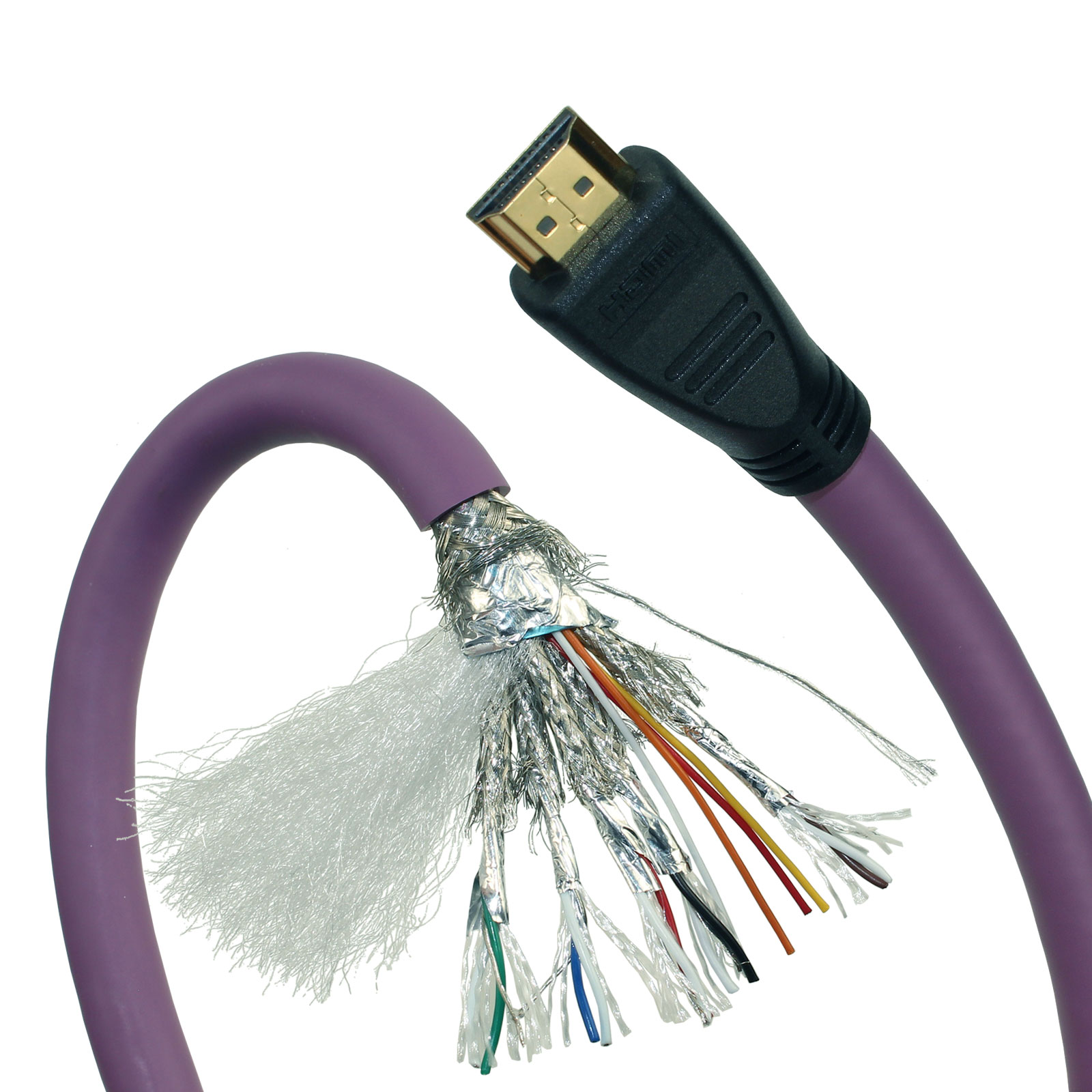
Request a cut sample from the middle of the cable, not just the ends, and have the conductor diameter and shielding measured. Also ask for the copper weight per kilometer in the spec sheet and compare it against the price; unusually low quotes usually mean copper-clad aluminum or reduced gauge.
Look for UL certification for the cable assembly, HDMI Adopter status, and CE marking with a valid test report for EU shipments. RoHS and REACH documents are expected, but ask who issued them; a proper lab report is worth far more than a supplier-designed compliance letter.
A slightly higher unit price with a consistent factory line and dedicated follow-up person is almost always cheaper in the long run. Low-price bids often change material suppliers between orders, which leads to color shifts, mating force problems, and customer complaints later.
Pin 13 and Pin 14 not wired correctly for CEC or Ethernet, poor connector shell retention after repeated plugging, interference when the cable is bent near the connector, and inconsistent outer jacket thickness. These don't show up in a simple continuity test, so you need to ask specifically about them.
Lock down a simple golden sample and a one-page critical-to-quality sheet that includes gauge, materials, connector dimensions, and packing weight. State clearly in the purchase order that a material change requires written approval, and schedule an unannounced or short-notice inspection for the second order.
Conclusion
Reliable HDMI cable sourcing from China rarely comes down to the printed specification alone. A cable can list every version number and still fall short once it is plugged into a real monitor, capture card, or conference system. Before committing to an order, it is worth confirming that the pinout, gauge, and connector dimensions match the device you are actually supporting, not just the supplier's generic datasheet. Equally revealing is a supplier's internal scrap rate. Factories that openly share rejection numbers tend to have tighter process control, while vague answers often signal hidden rework or inconsistent assembly. Sample orders should be pushed beyond a quick continuity check: flex the cable at the connector, run it through repeated plug cycles, and test it with the exact source and display it will serve in the field.
Certification claims deserve the same scrutiny as performance claims. A printed logo or a low-resolution test report is not the same as verifying the certificate number with the issuing body, especially when UL, HDMI, or regional compliance markings are involved. Packaging also needs to be engineered for the journey, not just for the shelf. Moisture-barrier bags, desiccant packs, and reinforced cartons help prevent corrosion and connector damage during humid transit and rough handling. Finally, structure payment terms around inspection milestones rather than production promises. Deposits can cover materials, but the balance should hinge on an agreed inspection report, measured against confirmed samples and clearly defined defect limits. This keeps leverage on your side until the goods actually meet the standard you negotiated.
Contact Us
Contact Person: David Yang
Email: [email protected]
Tel/WhatsApp: 8615814734054
Website: https://www.ebcyx.com/