

Custom Forged Steel Gate Valve: Precision-Engineered Control for Demanding Pipelines
2026-11-16
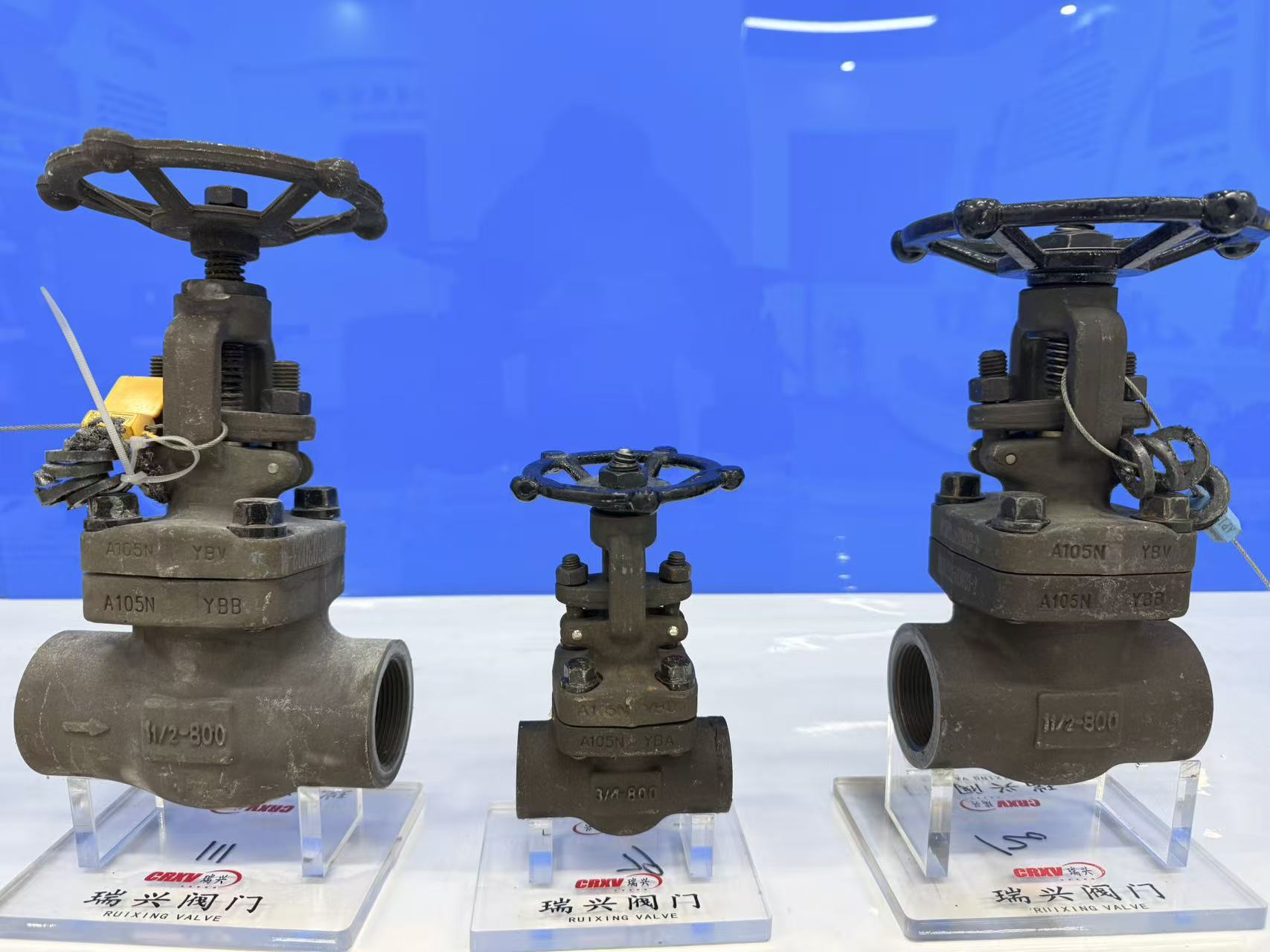
Some pipelines don’t tolerate compromise. When pressures spike, temperatures swing, and media turn corrosive, an off-the-shelf valve can become the weakest link. That’s where custom forged steel gate valves come in — and where CRXV has focused its engineering for years. Each valve is built from forged steel, machined to precise tolerances, and tailored to the exact demands of your pipeline, from material grade to end connections. This blog explores how precision-engineered control from CRXV helps you avoid costly downtime and keep critical flows exactly where they need to be. If you’ve ever wondered whether a custom valve is worth the investment, the answer may be simpler than you think.
Why Forged Steel Changes Gate Valve Life Expectancy
A gate valve's durability hinges on how well its body and bonnet resist stress, temperature swings, and corrosion. When these components are forged from a single piece of steel, the grain structure aligns with the valve's shape instead of being interrupted by casting seams or weld joints. This continuous flow of metal dramatically reduces the weak points where cracks typically start, giving the valve a fundamentally longer service life in demanding pipelines.
Casting can leave microscopic voids or inclusions that act as stress risers under pressure cycling. Forged steel, by contrast, is worked under extreme force, closing up those internal gaps and refining the grain. The result is a material that handles thermal fatigue and impact loads far better over time. Operators notice fewer leaks, less seat wear, and no sudden fractures even after years of frequent open-close cycles.
The shift to forged construction also allows thinner, more uniform wall sections with higher strength per pound. That means the valve body flexes less under line pressure, keeping the seating surfaces aligned longer. For high-temperature or high-pressure services, this dimensional stability is what separates a five-year throwaway valve from one that quietly delivers two decades of dependable shutoff.
Custom Trim Packages for Corrosive and Erosive Flow
In valves handling corrosive or erosive media, off-the-shelf trim rarely lasts. Custom packages start with a detailed review of the process fluid, particle load, velocity, and temperature. This drives material selection away from generic 316 stainless toward duplex, super duplex, Hastelloy, or even solid tungsten carbide for extreme slurry service. The goal is not just a harder surface but a matched set of trim parts—plug, seat, cage—that degrade at similar rates.
Beyond alloy upgrades, geometry matters. Erosive flows tend to concentrate damage at the throttling point and downstream seating surfaces. Custom trims often incorporate hardened flow passages, staged pressure drops, or replaceable wear sleeves that redirect particle impact away from critical sealing areas. For corrosive service, wetted surfaces get passivation treatments or ceramic coatings where crevice corrosion typically starts. These adjustments are more about fluid dynamics than raw material toughness.
Field results show why custom packages earn their cost. In a nickel laterite HPAL plant, a custom trim with tungsten carbide seat and duplex cage extended valve life from six weeks to over eight months under abrasive acid slurry. Mining concentrate lines, chemical injection points, and sour gas chokes all benefit from similar tailored designs. The key is treating the trim as a system rather than a collection of parts.
Achieving Bubble-Tight Sealing on First Installation
First-install leak-free joints rarely come down to luck. They come from treating the flange face, gasket, and fastener set as a single sealing system. Any mismatch in surface finish, material hardness, or bolt preload turns a routine assembly into a rework job. Before a single bolt is tightened, check that both flange faces are clean, dry, and free of radial scores deeper than the gasket's compressibility limit.
Bolt-up sequence matters more than final torque. A common mistake is pulling the first bolts tight and then working around the circle, which cocks the flange and pinches the gasket unevenly. Instead, use a three-pass cross-pattern: snug-tight, 50 percent of target, then full torque in small increments. If the joint is vertical or the gasket has a narrow seating width, consider switching to a controlled method like hydraulic tensioning or a calibrated multiplier rather than a breaker bar with a cheater pipe.
Once you think the joint is tight, stop and verify before pressure testing. Run a 0.05 mm feeler gauge around the flange gap at 90-degree points; any variation beyond that means the flange is tilted and the gasket isn't loaded symmetrically. Also, let the gasket relax for a few minutes and re-check the torque on the first pass bolts. A bubble-tight seal on first installation is not achieved by adding more torque, but by avoiding the small off-center misalignments that force a second installation.
Stem Design That Keeps Torque Predictable Over Time
The stem’s cross-section tapers gradually from the clamp area toward the mid-section, which spreads stress instead of letting it pile up at a single shoulder. That alone does more for long-term torque stability than adding extra bolts. The material choice also plays a role: a slightly softer alloy at the clamping face beds into the bar or steerer without cracking, and keeps the friction coefficient steady after repeated loading cycles.
Thread engagement is kept deeper than the minimum standard, and the bolt heads sit in machined recesses rather than on raw edges. This prevents localized deformation that slowly shifts the preload. A dry-film lubricant is applied only to the threads, not the clamp interface, so the friction that holds the assembly stays predictable even after dozens of adjustments.
Test runs that cycle the stem through temperature swings and vibration show the torque reading returning to the same value after each re-check. That repeatability is what riders and mechanics notice first: no need to chase a creeping spec or re-tighten mid-season.
Dimensional Flexibility When Standard Valves Fall Short
OEM engineers often hit a wall when catalog valves demand space that simply isn't there. A pump skid squeezed into a retrofit, a manifold nested between existing pipe runs, or a custom actuator footprint that shifts everything off-center — these are the moments where a standard face-to-face dimension becomes a liability. Rather than forcing a redesign around an off-the-shelf body, dimensional flexibility lets you specify a valve that matches the actual geometry of the job. This means shorter or longer end-to-end lengths, offset port placements, or non-standard flange patterns that bolt straight into the surrounding assembly without adapters or awkward piping workarounds.
Beyond just saving inches, true flexibility handles mixed connection styles. A single valve body might need an ANSI flange on one side and a metric welded end on the other, or a compact wafer profile that can slide between existing flanges without cutting into the pipe run. When you're dealing with legacy systems or regional hardware variations, this kind of dimensional tailoring prevents the domino effect of swapping out adjacent components. It's not about reinventing the valve — it's about letting the valve fit the system instead of forcing the system to fit the valve.
The real payoff comes during installation and service. A valve that drops into place without field modifications keeps downtime short and rework costs low. For maintenance teams, dimensional flexibility means replacement valves don't require re-drilling mounting holes or adding extension couplings. It's the difference between a straightforward swap and a weekend-long fabrication project, and that's why more engineers are treating dimensions as a design input rather than a fixed constraint.
Material Traceability for High-Consequence Pipeline Service
Tracking the genealogy of every pipe joint, fitting, and weld from mill to installation is not a bureaucratic nicety in high-consequence pipeline service—it is the backbone of operational integrity. A single heat of steel can hide a subtle inclusion that only surfaces under years of cyclic pressure, and without a clear chain of custody, isolating that rogue batch after a failure becomes guesswork. Operators who treat traceability as an afterthought end up chasing phantom suppliers and digging through faded stencil marks when a rupture investigation demands certainty.
The real friction lies in marrying the physical artifact to the digital record. Mill test reports, heat numbers, and coating batch logs often live in disconnected spreadsheets or scanned PDFs that no one reopens until an audit knocks. On the right-of-way, field crews may find that a fitting’s stamped identifier has been ground off during field coating repair, or that a valve’s tag was lost in transit. Those gaps force engineers to fall back on statistical inference rather than direct lineage, which erodes confidence exactly when it matters most.
Building a defensible traceability thread demands more than a database—it requires a culture of verification at every transfer point. Welders must log heat numbers before striking an arc, inspectors need barcode scanners that work in rain and mud, and procurement teams should reject material whose documentation arrives a week late. For pipelines that cross state lines or feed critical infrastructure, the cost of retroactive tracing after a leak easily dwarfs the upfront investment in a disciplined record system. The goal is not paperwork for its own sake, but the ability to point to a specific joint and say, with documented certainty, exactly where that steel came from and who touched it along the way.
FAQ
Forging aligns the steel's grain structure, giving the valve body higher tensile strength and better fatigue resistance. In high-pressure or high-temperature lines, that means fewer leaks, longer service life, and less chance of cracking under thermal cycling.
Yes, the material and trim can be tailored. We often supply 316 stainless or duplex bodies with Stellite-coated seats and wedges for slurries, brine, or chemical streams. The exact alloy depends on the process conditions you're dealing with.
The gate and seat are machined to tight tolerances, so the wedge seats firmly with minimal torque. This gives a bubble-tight shut-off and smoother throttling when needed, without the typical chatter or erosion you see in lower-grade valves.
We can adjust end connections, pressure class, face-to-face dimensions, and actuation. You can also specify extended bonnets for cryogenic or high-temp service, or add a bypass for pressure equalization.
Yes, forged steel gate valves are commonly used in gas transmission and hydrogen-ready systems. We can include low-emission packing, fugitive emission testing, and NACE compliance for sour gas. For hydrogen, we use special sealing materials to prevent embrittlement.
Each valve undergoes hydrostatic and pneumatic shell tests, plus backseat and seat leakage checks. We can also provide material traceability, PMI testing, and third-party inspection if your project requires it.
Oil and gas production, refining, power generation, chemical processing, and marine systems. Anywhere you need reliable isolation under high pressure, high temperature, or frequent cycling.
Conclusion
Forged steel gate valves don't just survive in demanding pipelines—they change the equation for how long a valve can stay in service. The solid forged body eliminates the porosity and weak spots common in cast parts, so the valve withstands thermal cycling and high-pressure shocks without cracking. Pair that with custom trim packages: Stellite seats, tungsten carbide guides, or hardened wedges can be matched to the specific corrosion or erosion profile of the flow, whether it's sour gas, abrasive slurry, or superheated steam. This isn't a one-size-fits-all approach. And when it comes to sealing, the goal isn't a few turns past hand-tight—it's bubble-tight from the first installation. Precision-machined seating surfaces and controlled wedge travel mean you don't have to rely on repeated cycling to lap the valve in; it closes dead tight on day one, even under full differential pressure.
Stem design often gets overlooked until a valve becomes impossible to operate. Here, the stem geometry and bearing surfaces are engineered so that torque stays consistent over years, not just months. Anti-galling coatings and thrust bearing placement prevent the stem from binding or corroding in place, which means an operator can still hit the right torque with a standard wrench long after installation. Dimensional flexibility is another reason these valves fit where standard cast valves fall short. Face-to-face lengths, end connections, and pressure classes can be adjusted without compromising the forged body's integrity, so you're not forced to rework the pipeline around a catalog number. Finally, for high-consequence service, every heat of steel is traceable from the mill to the finished valve, with full documentation of chemical and mechanical properties. That level of traceability isn't just paperwork—it's the difference between a valve you trust and one you hope was made right.
Contact Us
Contact Person: TIM
Email: [email protected]
Tel/WhatsApp: 8615857807381
Website: https://www.crxv.com/en/