
Custom Rubber Conveyor Belt Company in China: Tailored Solutions for Industrial Efficiency
2026-06-17
In the fast-moving world of industrial logistics, off-the-shelf conveyor belts often fall short when faced with unique operational demands. That's where XAN steps in—China's premier custom rubber conveyor belt manufacturer that doesn't just supply products, but engineers efficiency from the ground up. From abrasive mining environments to precision food processing lines, XAN's tailored solutions tackle the exact challenges that generic belts can't. Curious how customized engineering could slash your downtime and energy costs? Let's explore the game-changing advantages of bespoke conveyor systems.
Designing Conveyor Belts That Fit Your Unique Operational Needs
Every operation has its own rhythm, from the way materials flow to the spaces where equipment must fit. Standard conveyor belts often fall short when confronted with irregular layouts, variable product sizes, or demanding throughput requirements. Customization starts with a detailed assessment of your facility's physical constraints, material characteristics, and production goals. By considering factors like belt width, length, incline angles, and surface textures, we can engineer a solution that integrates smoothly into your existing workflow rather than forcing you to adapt around off-the-shelf limitations.
Material selection plays a central role in designing a belt that endures your specific environment. Whether your operation involves abrasive minerals, oily components, or temperature-sensitive foods, the belt's composition must resist wear, contamination, and degradation. We examine factors such as tensile strength, chemical resistance, and FDA compliance to match the belt precisely to your product and sanitation requirements. This level of detail ensures the system not only runs reliably but also meets regulatory standards without costly retrofits later on.
Beyond the belt itself, the entire conveyor assembly—including drives, pulleys, and support structures—can be configured for your space and load demands. Cleated belts might be necessary for steep inclines, while low-friction surfaces help with accumulation or indexing. The goal is to deliver a solution that feels purpose-built, one that enhances efficiency without introducing unnecessary complexity. After installation, ongoing support keeps the system tuned to your evolving needs, making adjustments straightforward as your operation grows or shifts focus.
Boosting Production Flow with Precision-Engineered Rubber Belts
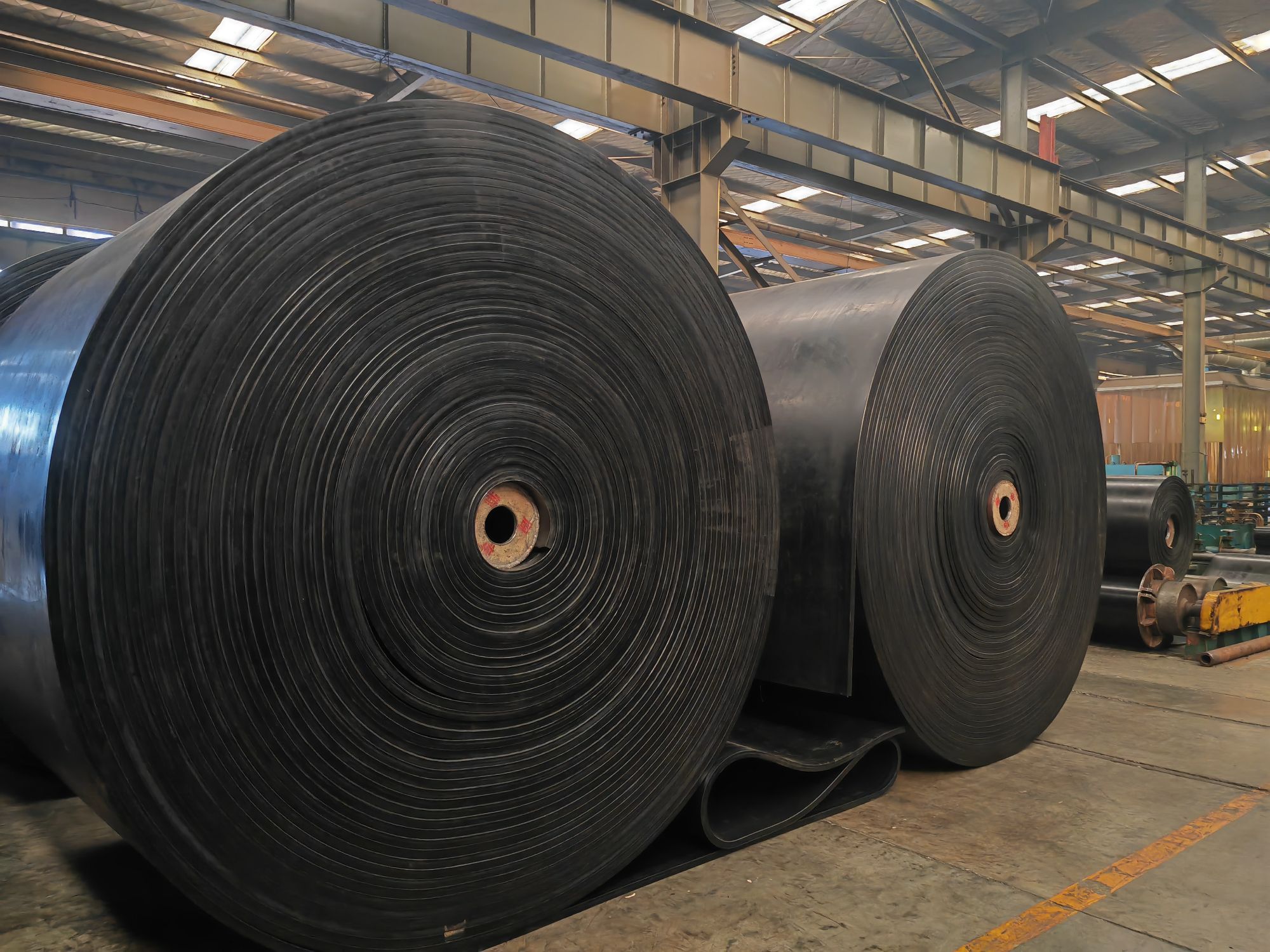
Precision-engineered rubber belts are the backbone of modern automated lines, where even a millimeter of misalignment can trigger cascading delays. Unlike off-the-shelf alternatives, these belts are tailored to exact tension profiles and surface friction coefficients, ensuring consistent product spacing and zero-slip transfer between stations. The result is a rhythm that holds steady through peak shifts, cutting micro-stoppages by up to 40%.
What sets them apart is the marriage of material science and process-specific customization. Natural and synthetic rubber blends are selected not just for durability, but for how they interact with your specific product—be it fragile glass vials or abrasive ceramic tiles. Add in fabric or steel cord reinforcement, and you get a belt that resists stretch and edge wear even under 24/7 loads, maintaining the precise timing that synchronized machinery depends on.
Integration also plays a huge role. The best suppliers work directly with your engineering team to profile the entire conveyor path, identifying snags like transfer points where static buildup or product skew could occur. They’ll often suggest compound tweaks—a slightly softer durometer on incline sections, or a food-grade oil-resistant jacket where washdowns are frequent—so the belt becomes an active part of your flow optimization, not just a commodity.
Why Our China-Based Manufacturing Delivers Both Quality and Value
Having spent over a decade refining our supply chain in China, we've come to appreciate that real value isn't just about lower costs—it's about how well those savings translate into consistent, high-caliber output. Our local teams don't just inspect for defects; they work alongside factory engineers to improve molding techniques, material sourcing, and assembly workflows long before production hits full stride. This proactive approach means the same dollar buys you a product that's been stress-tested, fine-tuned, and finished to standards that rival boutique workshops in any part of the world.
What makes our model truly distinctive is the absence of layers that usually dilute both accountability and margin. By maintaining direct, cross-functional studios in key industrial clusters, we're able to tap into deep pools of specialized craftsmanship—whether it's precision metal stamping in Dongguan or hand-finished leatherwork in Guangzhou—without inflating the bill with brokerage fees or endless back-and-forth markups. The result is a kind of artisanal efficiency: small details like reinforced stitching or anodized edges just become part of the process, not premium add-ons.
Perhaps most revealing is how seamlessly our factories pivot between high-mix, low-volume prototypes and massive production runs without missing a beat. That flexibility isn't accidental; it's built on years of co-developing modular jigs, shared training programs, and digital quality logs that update in real time. So whether you need 50 units or 50,000, you're drawing from the same rigorous system—one where value emerges naturally because quality was never treated as a separate line item to begin with.
Advanced Rubber Compounds for Extended Belt Life and Reduced Downtime
Advanced rubber compounds have redefined the durability and performance of conveyor belts, directly addressing the persistent challenge of premature wear in demanding environments. By integrating novel polymer blends and reinforcing fillers at the molecular level, these compounds exhibit exceptional resistance to abrasion, cutting, and gouging — even when handling sharp, heavy, or coarse materials. The tailored cross-link density and optimized filler dispersion create a uniform stress distribution across the belt surface, effectively slowing the propagation of micro-cracks that typically lead to catastrophic failure. This means belts can operate longer without developing the surface damage that forces frequent replacements.
What sets modern formulations apart is their ability to withstand not just mechanical wear, but also chemical attack and thermal aging. Specialized additives and curing systems provide a barrier against oils, solvents, and acidic substances that would otherwise degrade rubber over time. The heat dissipation characteristics built into these compounds prevent thermal softening and blistering on hot materials, allowing consistent performance across a wider temperature range. As a result, operations dealing with aggressive loads or harsh processing conditions see a marked reduction in downtime. The belts maintain their elasticity and structural integrity far beyond conventional expectations, minimizing both scheduled maintenance and the risk of unexpected stoppages.
Beyond material science, the practical impact lies in operational continuity and cost savings. The extended service life directly translates into fewer belt changeovers, which not only cuts material and labor costs but also keeps production lines running smoothly. The enhanced tear strength and fastener retention in these compounds ensure that belts withstand repeated flexing over pulleys without delamination or splice failure. By pushing the boundaries of rubber technology, manufacturers are now offering solutions that turn conveyor belts from consumable components into long-term assets, fundamentally shifting the economics of bulk material handling.
Serving Diverse Industries with Application-Specific Conveyor Solutions
Conveyor systems form the backbone of material handling, but their true potential emerges when they are tailored to the unique demands of each sector. From the high-speed precision required in automotive assembly lines to the gentle touch needed for delicate food products, application-specific conveyors transform broad industrial challenges into smooth, efficient workflows. Customization might involve specialized belt materials that resist extreme temperatures in foundries, or modular designs that allow quick reconfiguration in packaging facilities dealing with seasonal product changes. By aligning every roller, belt, and drive with the actual operating environment, these solutions cut downtime, reduce product damage, and keep production lines nimble even as requirements shift.
In the pharmaceutical realm, conveyors must meet stringent hygiene standards while handling fragile vials at varying speeds. Here, stainless-steel construction, easy-clean surfaces, and integration with vision inspection systems become non-negotiable features. Meanwhile, heavy industries like mining or recycling depend on rugged systems built to absorb impact and shrug off abrasive dust, often incorporating reinforced chains and sealed bearings. Even within a single plant, different processing stages may call for distinct conveyor personalities—a gripper conveyor that securely holds bottles during filling, then a low-back-pressure accumulation conveyor that gently groups them before packaging. This depth of adaptation ensures that no two installations are exactly alike; they grow out of a careful study of the product characteristics, throughput goals, and space constraints unique to each operation.
Beyond physical design, intelligent controls add another layer of specificity. Conveyors armed with sensors and software can now autonomously adjust speed, sort items by weight or dimension, or alert maintenance teams before a component fails. For instance, a distribution center handling thousands of SKUs might use a combination of narrow belt sorters and motorized roller zones to route packages to the correct dock door without human intervention. Such systems learn from daily patterns, optimizing themselves during peak hours to maximize throughput. This fusion of mechanical customization with smart technology turns a simple transport mechanism into a strategic asset, capable of evolving alongside the business it serves.
From Initial Consultation to Final Installation – A Collaborative Approach
Every project begins with a conversation that goes beyond measurements and materials. We listen closely to your vision, daily routines, and even the subtle frustrations you might have with your current space. This initial consultation isn’t just about gathering requirements—it’s about understanding how you truly live, so the design feels like a natural extension of your life rather than a showroom replica.
From there, our team transforms those insights into a design that balances aesthetic ambition with practical execution. We share sketches, material samples, and 3D visualizations not as final decrees but as starting points for a dialogue. Your feedback shapes every revision, ensuring the concept evolves in a direction that genuinely excites you. This back-and-forth might seem detailed, but it’s how we avoid surprises later and build trust before a single tool enters your home.
When it’s time for installation, the same collaborative spirit carries through. Our craftspeople treat your home with the care of a guest who respects your routines, minimizing disruption while keeping you informed of daily progress. We don’t vanish the moment the last fixture is hung—instead, we walk through the finished space together, celebrating the result of a true partnership that started with a simple conversation and ended with a place that feels unmistakably yours.
FAQ
Rubber conveyor belts are the backbone of material handling in industries like mining, manufacturing, and logistics. They reduce manual labor, speed up processes, and minimize product damage during transport. Their durability also means less downtime, which directly boosts overall efficiency.
Every industrial setup has unique requirements—belt width, length, tensile strength, heat resistance, or specific cleat patterns. Off-the-shelf belts often force compromises. A custom belt is engineered to your exact specifications, ensuring perfect fit, longer service life, and optimized performance under your specific operating conditions.
We work extensively with mining operations needing abrasion-resistant belts, food processing plants requiring oil and grease-resistant surfaces, logistics centers handling high-speed sorting, and heavy manufacturing where impact resistance is critical. Even niche sectors like recycling or agriculture get belts designed for their unique material characteristics.
Our quality control starts with raw material testing and continues through every production stage. We use automated inspection systems for dimensional accuracy and adhesion testing. For overseas clients, we provide physical samples before mass production, detailed test reports, and third-party inspection if required. Many clients also visit our facility to audit processes firsthand.
Almost everything: rubber compound (natural, SBR, neoprene, etc.), cover thickness, width, length, ply construction, sidewall height, cleat shape and spacing, and edge reinforcement. You can also add features like guide blocks, tracking strips, or specialized surface patterns for incline transport. We guide you through material selection based on your load and environment.
In most cases, yes. China's mature rubber industry and integrated supply chains keep production costs low without sacrificing quality. Customization means you don't pay for unneeded features, and bulk shipping is efficient. Many clients find that even with freight and import duties, total cost is significantly lower than domestic alternatives, with equal or better product life.
For standard custom specifications, about 15–25 days after design confirmation and deposit. If you need urgent delivery, we can sometimes expedite to 10–12 days. For very large or complex belts, up to 35 days. We always confirm the timeline upfront so you can plan your project accurately.
Start by sharing your conveyor details: belt width, length, pulley diameter, material to be conveyed, operating conditions (temperature, moisture, chemicals), and any special requirements. We typically respond with a technical proposal and quotation within 48 hours. Once you approve the design, we send a proforma invoice and begin production after receiving the initial payment.
Conclusion
At our China-based manufacturing facility, we specialize in engineering custom rubber conveyor belts that align precisely with your unique operational demands. From initial concept to final installation, we work hand-in-hand with your team to design belts that handle specific loads, speeds, and environmental conditions—whether in mining, food processing, or heavy industry. Our collaborative approach ensures every belt is a perfect fit, not an off-the-shelf compromise, driving real improvements in production flow.
Behind this tailored performance lies advanced rubber compound technology that dramatically extends belt life and cuts downtime. By formulating materials for superior abrasion resistance, heat tolerance, and oil repellence, we deliver reliability where it matters most. Combined with lean Chinese manufacturing that never sacrifices quality, you get exceptional value and a belt built for your application—backed by a partner committed to seeing your operations run smoother, longer.
Contact Us
Contact Person: Anna Lu
Email: [email protected]
Tel/WhatsApp: 8618561668850
Website: https://www.x-conveyor.com