

Discovering High-Performance Inconel Alloys: Innovations and Applications
2026-01-23
In the demanding world of advanced engineering and high-temperature applications, Inconel alloys stand as a cornerstone of innovation. These superalloys, renowned for their exceptional strength and corrosion resistance, are pushing the boundaries of what's possible in aerospace, energy, and industrial sectors. As industries evolve towards more efficient and sustainable solutions, the quest for high-performance Inconel alloys has never been more critical. This blog delves into the latest breakthroughs and practical uses of these remarkable materials, showcasing how cutting-edge research is transforming their capabilities. At the forefront of this evolution is Jiangsu Baowu New Materials, a leader in developing tailored alloy solutions that meet tomorrow's challenges today. Join us as we explore the exciting innovations shaping the future of Inconel technology and discover how these advancements are revolutionizing applications across the globe.
The Evolution of Inconel Alloys: From Early Formulations to Modern Breakthroughs
Inconel alloys emerged in the early 20th century as a response to the growing demand for materials that could withstand extreme conditions in industries like aerospace and petrochemicals. Initially, early formulations such as Inconel 600, developed in the 1930s, focused on basic nickel-chromium compositions to resist corrosion and high temperatures. These alloys quickly gained traction due to their durability in challenging environments, setting the stage for more specialized developments.
As research progressed throughout the mid-20th century, advancements led to alloys with enhanced properties. For instance, Inconel 718, introduced in the 1960s, incorporated elements like iron and niobium, improving strength and weldability, which became crucial for jet engines and power plants. This period marked a shift from simply resisting corrosion to optimizing for specific mechanical and thermal stresses, driven by innovations in metallurgy and testing methods.
In recent decades, modern breakthroughs have pushed Inconel alloys into new frontiers, with alloys like Inconel 625 and Inconel 738 offering superior performance in 3D printing and ultra-high-temperature applications. These developments leverage advanced manufacturing techniques, such as powder metallurgy and additive manufacturing, to create materials with tailored microstructures. Today, Inconel alloys continue to evolve, meeting the demands of cutting-edge fields like renewable energy and space exploration, showcasing a legacy of innovation from humble beginnings to high-tech solutions.
Key Innovations in Processing Techniques for Enhanced Performance
Processing techniques have undergone a transformative shift in recent years, driven by the relentless pursuit of enhanced performance across various industries. One standout innovation is the adoption of heterogeneous computing, where tasks are dynamically allocated to specialized hardware like GPUs or TPUs, rather than relying solely on traditional CPUs. This approach not only accelerates complex calculations but also optimizes energy consumption, making it a game-changer for applications ranging from scientific simulations to real-time data analytics. By intelligently matching workloads to the most efficient processing unit, organizations can achieve unprecedented levels of speed and scalability without compromising on reliability or cost.
Another groundbreaking advancement lies in the refinement of parallel processing methodologies, which have evolved beyond simple multi-threading to embrace more sophisticated models like data parallelism and pipeline parallelism. These techniques break down tasks into smaller, interdependent segments that can be executed simultaneously, significantly reducing latency and improving throughput. Coupled with innovations in memory management—such as non-volatile memory express (NVMe) for faster data access—this has enabled systems to handle massive datasets with ease. The result is a more responsive and agile infrastructure capable of supporting demanding workloads like machine learning training or high-frequency trading, where every millisecond counts.
Beyond hardware and software synergies, there's a growing emphasis on adaptive processing strategies that learn and evolve based on usage patterns. Techniques like just-in-time compilation and runtime optimization allow systems to adjust their processing methods on the fly, tailoring performance to specific scenarios without manual intervention. This dynamic approach not only enhances efficiency but also fosters resilience in unpredictable environments, ensuring consistent outcomes even under varying conditions. By integrating these self-optimizing capabilities, modern processing frameworks are setting new benchmarks for what's possible, pushing the boundaries of performance in ways that were previously unimaginable.
Performance Characteristics: Corrosion Resistance and High-Temperature Stability
When it comes to performance features, corrosion resistance and high-temperature stability are critical factors, especially in demanding industrial settings. Corrosion resistance ensures that materials can withstand exposure to harsh chemicals, moisture, and other corrosive elements without degrading over time. This is particularly important in applications like chemical processing, marine environments, or automotive components where durability is key. High-temperature stability, on the other hand, refers to the ability to maintain structural integrity and functionality under extreme heat, preventing issues like warping, melting, or loss of strength in industries such as aerospace, power generation, or manufacturing. Together, these characteristics enhance the longevity and reliability of products, reducing maintenance costs and improving overall efficiency.
Many advanced materials, such as certain alloys and composites, are specifically engineered to excel in both corrosion resistance and high-temperature stability. For instance, nickel-based superalloys are famed for their ability to resist oxidation and corrosion while performing reliably in high-temperature conditions, making them ideal for turbine blades in jet engines. Similarly, ceramics and specialized coatings can provide excellent protection against corrosive agents and thermal degradation, enabling use in extreme environments like furnaces or chemical reactors. By balancing these properties, manufacturers can create solutions that not only survive but thrive under stress, offering a competitive edge in safety and performance across various sectors.
In practical terms, assessing corrosion resistance often involves tests like salt spray exposure or chemical immersion to simulate real-world conditions, while high-temperature stability is evaluated through thermal cycling or heat resistance measurements. Innovations in material science continue to push the boundaries, with ongoing research focused on developing new formulations that offer even greater resilience. Whether it's in oil pipelines exposed to corrosive crude or electronic components operating at high temperatures, integrating these performance characteristics ensures that systems remain robust and dependable, ultimately contributing to safer, more sustainable operations and longer service life.
Applications in Aerospace and Defense: Pushing Boundaries in Extreme Environments
In the aerospace and defense sectors, applications often operate in environments that test the limits of technology and materials, from the searing heat of re-entry to the frigid vacuum of space. These extreme conditions demand innovations that not only endure but excel, driving advancements in lightweight composites, thermal management systems, and robust electronics. For instance, next-generation aircraft and spacecraft incorporate materials like carbon fiber and ceramic matrix composites to withstand high temperatures and pressures, enabling safer and more efficient missions.
Beyond traditional flight, defense applications push boundaries in harsh terrains and climates, such as arctic operations or desert deployments, where equipment must perform reliably under extreme stress. Technologies like advanced sensors, stealth coatings, and autonomous systems are developed to enhance survivability and effectiveness in these challenging settings, reflecting a deep integration of engineering and real-world resilience.
This relentless pursuit of performance in extreme environments fosters cross-industry collaboration, leading to breakthroughs with broader societal impacts, such as improved disaster response tools or sustainable energy solutions.
Inconel Alloys in Energy and Industrial Sectors: Boosting Efficiency and Durability
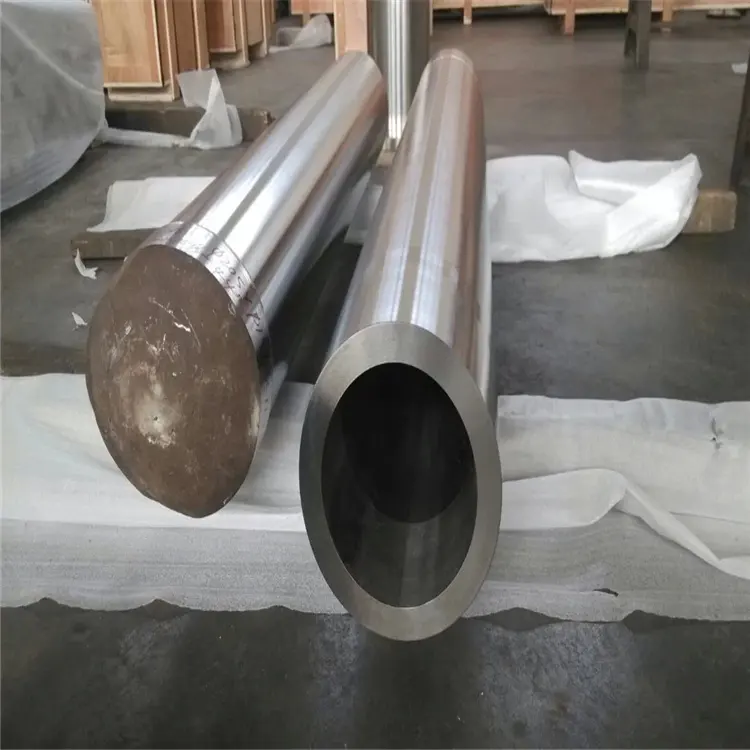
Inconel alloys, renowned for their high-temperature strength and corrosion resistance, are pivotal in enhancing operational efficiency and durability across the energy and industrial sectors. These nickel-chromium-based superalloys excel in demanding environments, from power generation plants to chemical processing facilities. By withstanding extreme heat and aggressive chemicals, they reduce equipment failures and maintenance downtime, directly boosting productivity and cost-effectiveness in applications like gas turbines, nuclear reactors, and oil refineries.
In the industrial realm, Inconel alloys such as Inconel 625 and 718 are integral to manufacturing equipment that encounters harsh conditions, including high-pressure steam systems and corrosive fluid handling. Their ability to maintain structural integrity over extended periods translates into longer service life and fewer replacements, fostering sustainable practices and reducing environmental impact. This durability not only minimizes operational disruptions but also supports compliance with stringent safety and environmental regulations.
Beyond mere material properties, Inconel alloys drive innovation by enabling more efficient designs and advanced technologies in sectors like aerospace and marine engineering. Their lightweight yet robust nature allows for optimized performance in components like heat exchangers and exhaust systems, contributing to overall energy savings and enhanced reliability. As industries push toward higher efficiency standards, Inconel's role as a cornerstone material continues to expand, solidifying its reputation as a key enabler of durability and progress in modern applications.
Future Directions: Emerging Trends and Research in Material Science
As material science pushes into new frontiers, researchers are increasingly focused on smart and responsive materials that adapt to environmental cues, such as shape-memory alloys that change form with temperature shifts or hydrogels that release drugs in response to body chemistry. This trend is driven by applications in robotics and biomedical devices, where real-time adaptability enhances functionality and safety, sparking interest in novel synthesis methods and predictive modeling.
Another key area gaining momentum is the development of sustainable and eco-friendly materials, including biodegradable polymers and composites derived from renewable resources like agricultural waste. Efforts are centered on reducing environmental impact without compromising performance, with studies exploring lifecycle analysis and recycling processes to make these alternatives viable for industries from packaging to construction.
Additionally, advancements in computational tools and AI are transforming material discovery, enabling rapid screening of vast chemical spaces to identify candidates with tailored properties, from superconductors to corrosion-resistant coatings. This data-driven approach accelerates innovation, reducing reliance on trial-and-error and opening pathways to materials that were previously unimaginable, such as those with optimized energy storage capabilities.
FAQ
Inconel alloys excel due to their exceptional resistance to oxidation and corrosion, high strength retention at elevated temperatures, and superb mechanical properties under extreme conditions, making them ideal for aerospace and chemical processing.
Recent innovations include advanced manufacturing techniques like additive manufacturing, which allows for complex geometries and reduced waste, and alloy design refinements that enhance creep resistance and fatigue life.
Inconel alloys are widely used in jet engine components, gas turbines, and nuclear reactors due to their ability to withstand high temperatures and corrosive environments, outperforming many steels and other alloys.
Challenges include difficulty in machining due to high work hardening rates, high material costs, and the need for specialized welding techniques to maintain integrity and avoid defects.
By enabling more efficient turbines and engines that operate at higher temperatures, Inconel alloys help reduce fuel consumption and emissions, supporting cleaner energy solutions and longer-lasting equipment.
Future trends include increased use of computational methods for alloy design, integration with smart manufacturing for better quality control, and expansion into renewable energy sectors like hydrogen production.
Conclusion
The evolution of Inconel alloys, from their early formulations to modern breakthroughs, showcases a remarkable journey of material science innovation. These nickel-chromium-based superalloys have continuously advanced through key innovations in processing techniques, enabling enhanced performance by refining microstructures and improving mechanical properties. The unique corrosion resistance and high-temperature stability of Inconel alloys stem from sophisticated alloying elements and heat treatment methods, making them indispensable in extreme environments where durability is paramount. This progress has not only expanded their capabilities but also fueled their adoption across demanding industries.
In aerospace and defense, Inconel alloys push boundaries in extreme environments, powering jet engines, rocket components, and military hardware with reliability under intense heat and stress. Similarly, in the energy and industrial sectors, they boost efficiency and durability in applications such as power generation, chemical processing, and oil and gas equipment. Looking ahead, future directions in material science point toward emerging trends like additive manufacturing and nanotechnology, which promise to further enhance performance and open new avenues for discovery. This ongoing research ensures that Inconel alloys will continue to be at the forefront of high-performance applications, driving innovation and meeting the evolving needs of technology.
Contact Us
Contact Person: Zoe Liang
Email: [email protected]
Tel/WhatsApp: 86 189 2128 6299
Website: https://www.baowuchina.com