

Double Hook Shot Blasting Machine Manufacturer in China: Advanced Surface Preparation Solutions
2026-07-14
When it comes to heavy-duty surface preparation, not all blasting machines deliver the same punch. China’s manufacturing landscape is filled with options, but few combine brute force with precision engineering like the double hook shot blasting machines from PuHua. Whether you’re stripping mill scale, cleaning large weldments, or conditioning structural components, the right equipment can make or break your production flow. In this post, we’ll explore how advanced double hook systems are reshaping efficiency—and why PuHua stands out as a partner you can trust for consistent, high-performance results.
Innovating Surface Preparation with Double Hook Shot Blasting Technology
Double hook shot blasting has quietly become a focal point for manufacturers dealing with complex, multi-sided components. Instead of passing parts through a single orientation, the dual-hanger setup allows workpieces to rotate and swing naturally inside the blast chamber. This exposes hidden recesses, undercuts, and overlapping joints to the media stream without manual repositioning. The result is a more thorough clean, an anchor profile that reaches right into crevices, and fewer blind spots that would otherwise demand time-consuming handwork.
The real advantage emerges when you look at throughput and repeatability. A double hook system can handle heavy, awkwardly shaped fabrications—think large weldments, castings, or structural assemblies—that would choke a conventional monorail machine. Because two hooks can cycle independently or in sequence, loading and unloading happen outside the blast zone while processing continues inside. This parallel workflow cuts idle time dramatically. Equally important, the programmable oscillation patterns mean every part gets the same dwell time and coverage, batch after batch, making quality control far more predictable than with manual blasting.
Beyond the mechanical cleverness, the process lends itself well to modern surface engineering goals. By precisely tuning the shot size, velocity, and hook motion, operators can create a surface texture that enhances coating adhesion without over-peening or removing too much parent metal. It’s a fine balance, but one that pays off in longer-lasting protective layers and reduced rework. For job shops and in-house finishing departments alike, this approach cuts across the old trade-off between speed and completeness, proving that innovation in surface preparation often lies in smarter material handling rather than just more aggressive blasting.
Tailored Blasting Solutions for Diverse Industrial Needs
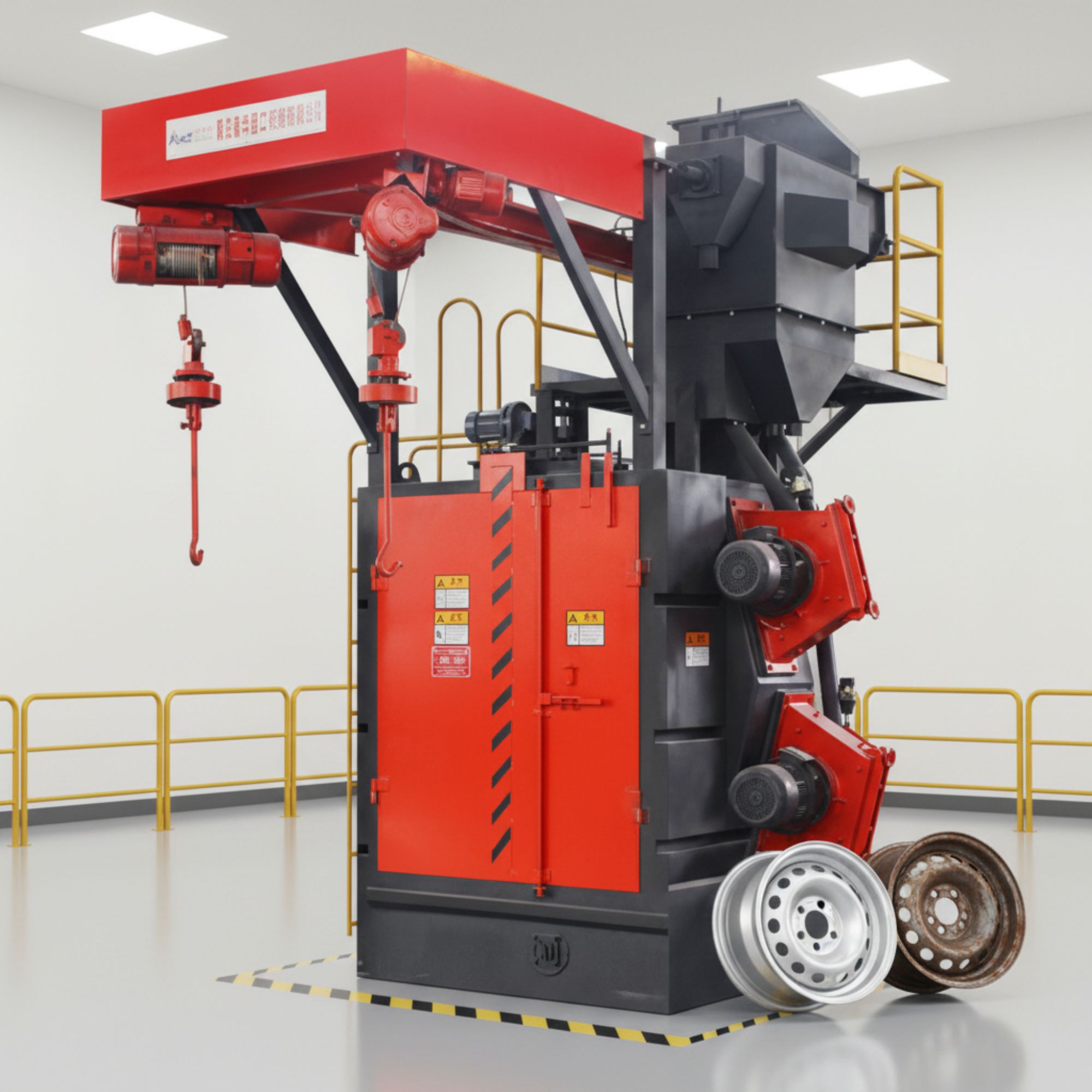
Industrial blasting demands more than just raw power; it requires a deep understanding of varying site conditions, material densities, and environmental constraints. Our approach starts with a comprehensive analysis of your operational landscape, factoring in everything from rock hardness and fragmentation targets to vibration limits and air overpressure thresholds. By calibrating explosives, timing, and drilling patterns to your exact specifications, we help you extract maximum value while staying firmly within regulatory boundaries.
In mining, quarrying, or large-scale excavation, one-size-fits-all solutions often lead to inefficiencies—excessive fines, uneven breakage, or costly secondary work. We deploy a range of advanced techniques, including electronic detonators for precision timing and bulk emulsion blends for varied geology, ensuring each blast is engineered for optimal performance. The result is cleaner cuts, reduced equipment wear, and significantly lower total drill-and-blast costs, all without sacrificing safety or speed.
Beyond the technical aspects, we recognise that every project carries unique logistical and community-related challenges. Our tailored plans integrate seamlessly with your existing workflows, and we actively coordinate with site crews to minimise downtime. Whether it’s an urban setting demanding near-zero vibration or a remote pit requiring fully autonomous charging units, we design solutions that align with your broader objectives—turning complex blasting into a predictable, controlled advantage.
From Design to Deployment: Our Commitment to Precision Engineering
Precision isn't a buzzword here—it's the thread running through every stage, from the first sketch to the final rollout. Our engineering process begins with rigorous digital prototyping, where tolerances are challenged and materials selected not just for durability but for their ability to hold form under stress. We treat each design iteration as a dialogue between theory and feasibility, stripping away assumptions until only the essential remains.
Once a design passes our validation tests, it moves into a manufacturing workflow where tooling is custom-built and inspected for micron-level accuracy. Our machinists work alongside engineers, adjusting processes in real time based on sensor feedback and surface finish analyses. This collaborative loop ensures that every product that leaves our facility carries the same dimensional integrity as the prototype that proved the concept.
Deployment marks the final test: seeing our solutions perform in demanding environments. We monitor field data closely, not as a benchmark for marketing claims, but as a driver for iterative refinement. This closed loop—from concept through deployment—reflects a discipline that refuses shortcuts, making precision an outcome of habit rather than a point of pride.
Maximizing Efficiency and Durability in Metal Finishing
Streamlining every stage of the finishing process, from surface prep to final seal, directly cuts waste and rework. Adjusting bath chemistry in real time prevents uneven coatings and extends the life of both the solution and the workpiece. Automated monitoring systems have proven invaluable here, catching shifts in pH or temperature before they compromise quality.
Material selection plays an equally critical role. High-performance alloys or specialty polymers resist corrosion and wear far longer than standard alternatives, especially in harsh environments. Pairing the right substrate with a tailored pretreatment regimen—whether it’s anodizing, phosphating, or plasma cleaning—creates a bond that holds up under stress, reducing the need for frequent recoating.
Durability isn’t just about the coating itself; it’s also about how the finished part is handled and maintained. Proper curing cycles, controlled cooling, and immediate packaging in low-humidity conditions lock in the finish’s integrity. When those steps are integrated tightly with production flow, throughput rises and long-term performance becomes predictable, not a gamble.
Behind the Scenes of China’s Premier Blasting Machine Craftsmanship
Stepping into the workshop where China’s finest blasting machines take shape, the first thing you notice is the rhythm—steady, almost meditative. Skilled technicians move through a choreography of welding, grinding, and precision assembly, their attention to detail honed over decades. Every steel frame is levelled by hand, every nozzle alignment triple-checked before it’s deemed ready. There’s no rush here; quality is a quiet obsession, not a bullet point in a sales brochure.
The heart of these machines lies in the pressure vessels, crafted from domestically sourced alloy plate and treated through a proprietary heat cycle that’s been refined over generations. We watched a senior fabricator run his palm over a freshly welded seam, feeling for microscopic imperfections the way a musician tunes a string. In another corner, pneumatic systems are assembled with surgical-grade cleanroom protocols—curious for heavy machinery, but it explains the whisper-quiet operation and service intervals that double the industry norm.
What truly sets the process apart is the feedback loop with end-users. Field engineers regularly bring site data back to the factory floor, where adjustments are made not through boardroom mandates but through direct conversations between the people who build the machines and those who operate them. This unbroken chain of hands-on knowledge turns each blasting unit into a living blueprint, evolving with every gravel pit and shipyard it encounters.
Seamless Integration and Reliable After-Sales Support Ecosystem
Every component we deliver is engineered to mesh with existing infrastructure without friction. From connectors that align precisely with industry protocols to firmware that auto-detects operational parameters, the initial setup often takes minutes rather than hours. Clients appreciate that compatibility isn’t just promised—it’s built into the hardware and software from day one, reducing the need for workarounds or custom patches.
Beyond installation, our after-sales framework operates more like a safety net than a checklist. Remote diagnostics let us spot irregularities before they escalate, often while your team stays focused on core tasks. When physical intervention is needed, stocked regional hubs and certified local technicians slash response times. The handshake between predictive monitoring and human expertise means fewer disruptions and a clear escalation path that avoids call-center limbo.
Long-term trust stems from how we close the loop. Every support interaction feeds a knowledge base that refines both future product revisions and training modules for your staff. This cycle of feedback and adaptation turns a vendor relationship into a partnership—where seamless performance is sustained, not merely restored, and where growth in one area ripples into improvements across the ecosystem.
FAQ
It's a type of industrial equipment used for cleaning and preparing metal surfaces. It uses two rotating hooks to suspend workpieces, which are then blasted with high-speed abrasive particles to remove rust, scale, and coatings.
The double hook design allows for handling larger and heavier workpieces, improves loading efficiency, and ensures more uniform blasting coverage. It reduces manual handling and increases productivity.
It's widely used in automotive, construction, and metal fabrication industries for treating components like engine blocks, weldments, and structural steel before painting or coating.
Reputable manufacturers implement strict quality control, source premium components, and adhere to international standards. They often provide comprehensive testing and after-sales support.
It provides a consistent surface profile with excellent adhesion for coatings, achieving cleanliness levels from Sa 2 to Sa 3 according to ISO standards, removing all visible contaminants.
They can be tailored in terms of hook capacity, blasting power, conveyor systems, and dust collection. Manufacturers often offer bespoke solutions to fit different workpiece sizes and throughput requirements.
Regular inspection of wear parts like blast wheels and liners, checking abrasive levels, and maintaining the dust collector are essential. A preventive maintenance schedule helps avoid downtime.
Chinese manufacturers combine advanced technology with cost-effectiveness. They offer competitive pricing without compromising quality, along with strong engineering capabilities and quick delivery times.
Conclusion
In the competitive landscape of industrial surface preparation, China has emerged as a powerhouse of innovation, particularly through manufacturers specializing in double hook shot blasting machines. These systems aren't just about stripping away rust or scale—they represent a leap forward in efficiency, consistency, and integration. By leveraging a dual-hook design, the technology enables continuous, high-volume processing of heavy or complex parts, minimizing downtime and maximizing throughput. Advanced engineering teams in China have refined this method to deliver uniform abrasive coverage while controlling energy consumption, offering a blend of raw power and operational finesse that sets new industry benchmarks. Clients benefit from machines that handle everything from automotive chassis to structural steel beams with equal reliability, a testament to the thoughtful design that anticipates real-world challenges.
What truly distinguishes leading Chinese manufacturers is their comprehensive approach that stretches far beyond the machine itself. Customization sits at the core—every blasting chamber, abrasive metering system, and dust collection unit can be tailored to specific alloy sensitivities or production demands, ensuring peak performance without waste. The journey from initial concept to final installation is supported by meticulous precision engineering, where digital simulations and rigorous testing preempt issues before assembly. This obsession with durability means components like wear plates and turbine blades are crafted for extended service life, drastically reducing maintenance interruptions. Moreover, the ecosystem surrounding these machines has evolved: seamless integration into existing lines, intuitive controls that flatten the learning curve, and after-sales support that includes remote diagnostics, readily available spares, and on-site training. It's a partnership model that transforms a straightforward machinery purchase into a long-term strategic advantage for manufacturers worldwide.
Contact Us
Contact Person: Bruce
Email: [email protected]
Tel/WhatsApp: +86 15166629468
Website: https://www.povalchina.com/