

Ethanoldiisopropanolamine Sales Manufacturer Guide for Reliable Industrial Supply
2026-11-27
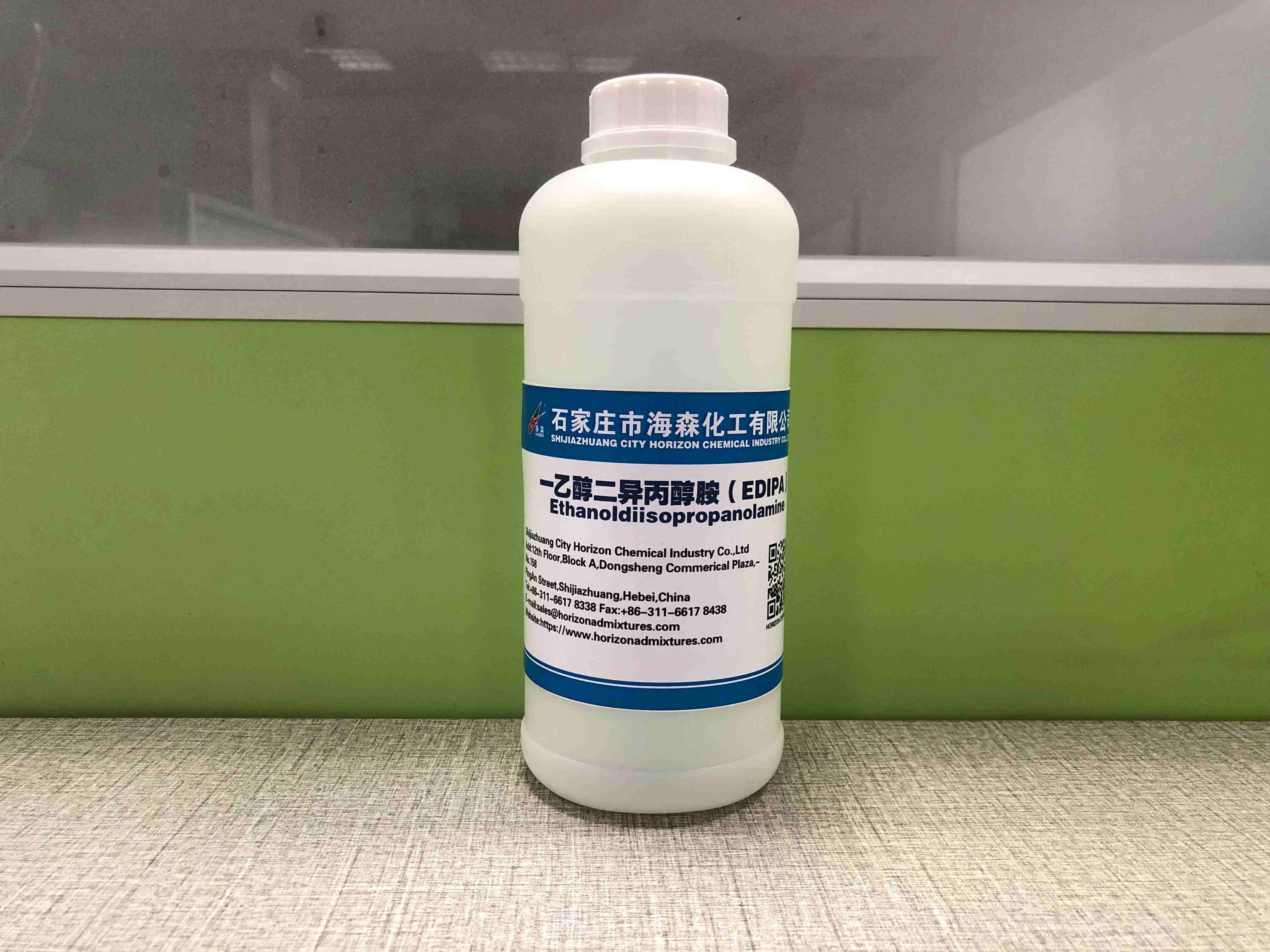
Sourcing ethanoldiisopropanolamine that performs consistently outside the lab is where many supply chains quietly lose time and money. A spec sheet can look perfect, yet minor shifts in purity, moisture, or packaging can stall grinding aid formulations or delay a full production run. This guide cuts through that uncertainty, mapping what to verify before you commit to a supplier and how to keep quality stable as volumes grow. Among the names worth watching is HAISEN, a brand that has drawn attention for dependable industrial supply. If your current sourcing process still depends on hope, the next few sections will give you a clearer way to buy.
Why Ethanoldiisopropanolamine Earns a Place in Complex Formulations
Most complex formulations fall apart not because a star ingredient fails, but because secondary interactions quietly destabilize the system. Ethanoldiisopropanolamine earns its place by working in that messy middle ground. It balances pH without forcing a narrow operating window, and its mixed amine/alcohol structure lets it sit comfortably at oil-water interfaces where many standard neutralizers simply phase out.
What makes it stand out in practice is the tolerance it brings to the rest of the formula. With anionic or nonionic surfactant packages, it tends to reduce the risk of salt-out and phase splitting, even when electrolyte levels drift or temperatures swing during storage. That behavior translates into fewer reformulation cycles and less need for co-solvents or extra coupling agents to keep the system intact.
It also contributes to corrosion control in industrial cleaners and metalworking fluids, which means a single ingredient can cover pH adjustment, compatibility, and substrate protection at once. Rather than adding another layer of complexity, ethanoldiisopropanolamine often removes it.
Matching Batch Consistency to Downstream Process Conditions
Batch records that appear nearly identical at harvest can still diverge in ways that matter once the material reaches a chromatography skid or a depth filter. Small differences in host cell protein load, aggregate content, or turbidity often shift loading behavior enough that a fixed downstream recipe either wastes capacity or pushes a step close to failure. Matching batch consistency to downstream conditions means tracking the upstream attributes that place real stress on each unit operation, then allowing those measured attributes to guide the operating window.
In practice, this shows up as pre-validated ranges rather than emergency adjustments. A capture column may be loaded to a lower target when the feed stream contains more high-molecular-weight species, or a precipitation step may use a slightly different salt ratio when conductivity drifts upward. These decisions are made from in-process data before the batch enters the step, not after an excursion. The goal is to hold the critical quality attributes steady while letting the process move within boundaries that have already been shown to deliver comparable purity and yield.
Technology transfer makes the same issue more visible because equipment and operators change along with the scale. Instead of forcing every batch through identical setpoints, it helps to define the envelope of inputs the downstream train must tolerate—worst-case impurity load, highest expected viscosity, shortest acceptable filter life. When that envelope is part of the transfer package, consistency is judged by how well the output remains within specification across that range, not by whether every intermediate reading matches a historical average.
What Dependable Industrial Supply Looks Like Beyond the Price Quote
A dependable supplier starts showing its value when the quote is already on the table and the real questions begin. Will the parts actually be in stock, or will a backorder notice arrive three days later? Can the team read a worn bearing number and cross-reference it without making you track down the original manual? These are the moments that separate a vendor from a supply partner, and none of them show up on a line-item price.
Beyond the numbers, solid industrial supply means someone catches the mismatch between your motor frame and the coupling you ordered before the pallet leaves the dock. It means the delivery arrives on a Tuesday morning as promised, not somewhere in a four-day window. And when a line goes down at 2 a.m., the supplier you trust is the one whose after-hours call actually gets answered by a person who knows your account history.
Over time, that reliability changes the math. The cheapest quote often carries the highest cost in downtime, expedited freight, and duplicate orders. A supplier that maintains sensible local stock, remembers your repeat parts, and tells you honestly when an alternative will work can save more operating money than any negotiated discount ever will.
Asking Manufacturer Questions That Reveal More Than a Brochure
Brochures tend to highlight the same polished specs, so digging into details like raw material suppliers, batch-to-batch tolerances, and what gets rejected on the line often tells you more about real consistency. Ask about the exact conditions behind a listed rating, not just the number itself.
A useful question is which failures or complaints the manufacturer has seen in the field and how those were resolved. If they can walk you through a specific root-cause analysis without hiding behind generalized promises, that is a stronger signal than any marketing claim.
You can also ask what is deliberately left off the datasheet, such as edge cases, maintenance quirks, or performance drop-offs outside a narrow range. Honest answers about limitations usually reveal whether the product is genuinely understood by the people who make it.
Reading Specification Sheets for the Details That Affect Your Line
A fabric can feel substantial in your hand and still fail on the rack. Go past the marketing name and look at the actual construction numbers: fiber percentages by weight, yarn count, thread count, gram weight, and finish. A 240-gram cotton jersey and a 180-gram cotton jersey will drape, shrink, and wear completely differently even if both are labeled 'premium cotton.' Checking the listed tolerance for weight and width also tells you how much variation the mill will allow between dye lots, which is often where a good sample turns into a disappointing production run.
Hardware notes in a specification sheet are easy to skim, but they decide whether a garment feels cheap after two months. Zipper size, teeth material, button attachment, snap tension, stitch-per-inch counts, and whether stress points are bar-tacked all sit in the fine print. If the sheet calls for a lightweight coil zip on a jacket meant for daily wear, that mismatch will show up as returns and repair requests, not as an obvious flaw at first inspection.
The last block of a spec sheet usually covers how the material behaves after washing and friction. Look for shrinkage percentage, colorfastness grade, pilling rating, and abrasion cycles. A low pilling score or a wide shrinkage range can quietly transform the fit and surface of a piece after a few laundromat trips. Comparing those figures against the approved sample gives you a working margin, so you know whether a small dip in hand feel is acceptable or a warning that the production fabric has drifted from what you actually signed off on.
When Supplier Response Time Changes the Outcome of a Production Run
A two-hour delay in a supplier's confirmation call can be the difference between a clean run and a line stoppage that ripples through the week. When a batch of temperature-sensitive adhesive sits in staging past its usable window, the production schedule doesn't just shift; it fractures. Operators get pulled to rework stations, quality checks double, and downstream orders quietly slip from "on time" to "best effort."
The less visible cost shows up in how teams plan the next run. Once a supplier has burned a floor manager with an optimistic lead time, every future quote gets padded. Inventory creeps upward not because demand changed, but because trust in the stated response time did. A single late confirmation rewrites the math that keeps a production line predictable.
FAQ
A dependable manufacturer usually keeps production records that go well beyond the certificate of analysis. They can tell you the exact amine value range from the last twenty batches, how often they calibrate the titration equipment, and which raw material lot was used for a specific delivery. Basic suppliers often just forward a spec sheet without any production context.
Ask for retained samples from three or four recent production runs and compare color, moisture, and amine value under your own lab conditions. Reliable suppliers will also provide batch-specific viscosity data and impurity profiles if the material is used in cement grinding aids or metalworking fluids, where small shifts can change downstream performance.
Watch for repeated changes in shipping origin, vague answers about production capacity, or extended lead times that only appear after a purchase order is placed. A stable operation usually discloses plant turnaround schedules and raw material sourcing regions before you commit to a quarterly or annual contract.
Specify drums with nitrogen blanketing if the material will be stored for more than a few weeks, and confirm the gasket material is compatible with alkanolamines. For intermediate bulk containers, ask whether the discharge valve is made of stainless steel or HDPE because carbon steel fittings can introduce rust and discoloration over time.
Some plants produce the material continuously and keep regional stocking points, while others run campaign batches only after enough orders accumulate. If a manufacturer relies on toll processing or imported intermediates, lead time can stretch from two weeks to two months without any change in published pricing.
At minimum you need a certificate of analysis with lot number, production date, amine value, moisture, and color. For regulated or high value applications, also request a certificate of origin, a current safety data sheet, and a statement of shelf life based on the filling date, not just the order date.
Often yes if your use is application specific, such as cement grinding aids, corrosion inhibitors, or cleaning formulations. A supplier with in house formulation knowledge can adjust the amine ratio or recommend a storage temperature instead of leaving you to troubleshoot a performance drop alone. For straightforward blending, a lower cost source may be enough.
Start with a smaller trial quantity from a current production lot and request a pre shipment sample before the full order is released. Run the material in a small scale version of your actual process and compare not only the primary amine value but also foaming tendency, odor, and color after short term storage.
Conclusion
Ethanoldiisopropanolamine earns its place in complex formulations for reasons that go beyond basic solvency or pH control. The molecule offers a combination of moderate alkalinity, coupling behavior, and low-volatility handling that formulators can rely on when other amines create instability or require tight temperature windows. What matters more than a certificate of analysis is whether those qualities remain repeatable from batch to batch. A supplier that tracks raw material sourcing, reaction conditions, and final neutralization with the same discipline will deliver product that fits downstream conditions—whether the end use involves metalworking fluids, water treatment, or specialized cleaning—without forcing constant adjustments on the production line.
Dependable industrial supply is rarely visible on a price quote. It shows up in how quickly a manufacturer responds when a batch arrives slightly off-spec or when a new formulation needs technical data before a trial run. Reading specification sheets closely reveals the details that affect your line: trace water content, color stability, residual reactants, and the actual assay rather than a rounded number. Asking direct questions about production capacity, storage recommendations, and change control often tells you more than a polished brochure. In practice, a supplier that answers within hours instead of days can prevent a stalled production run, making response time as critical as the chemical itself.
Contact Us
Contact Person: Sam Lee
Email: [email protected]
Tel/WhatsApp: 86-311-6617 8338
Website: https://www.horizonadmixtures.com/