

Insulated Clean Panel Production Line Manufacturer Delivers Reliable and Efficient Systems
2026-08-15
When you're investing in an insulated clean panel production line, reliability and efficiency aren't just nice-to-haves—they're the difference between smooth operations and costly downtime. That's why manufacturers who understand cleanroom standards turn to YI ZHOU TECHNOLOGY, a name trusted for delivering systems that actually perform under pressure. In this post, we'll explore what makes their production lines stand out and how the right equipment can reshape your manufacturing workflow.
Building Panels to Meet Strict Cleanroom Thermal Standards
Stringent cleanroom thermal standards leave no room for thermal drift or surface condensation. Building panels must combine low-conductivity cores—typically polyurethane foam or mineral wool—with continuous edge seals that eliminate thermal bridging at joints. The result is a stable internal shell where temperature fluctuations stay within ±0.5°C, even when the surrounding facility swings from humid summers to freezing winters.
Achieving that level of control goes beyond the insulation itself. Panel manufacturers machine tongue-and-groove profiles to tight tolerances, then compress factory-applied gaskets during assembly so no air leaks through seams. During validation, cleanroom builders often perform thermal imaging scans to spot any weak points before certification. For pharmaceutical or semiconductor spaces, this attention to panel performance directly influences yield and product integrity.
What Keeps These Production Lines Running Year After Year
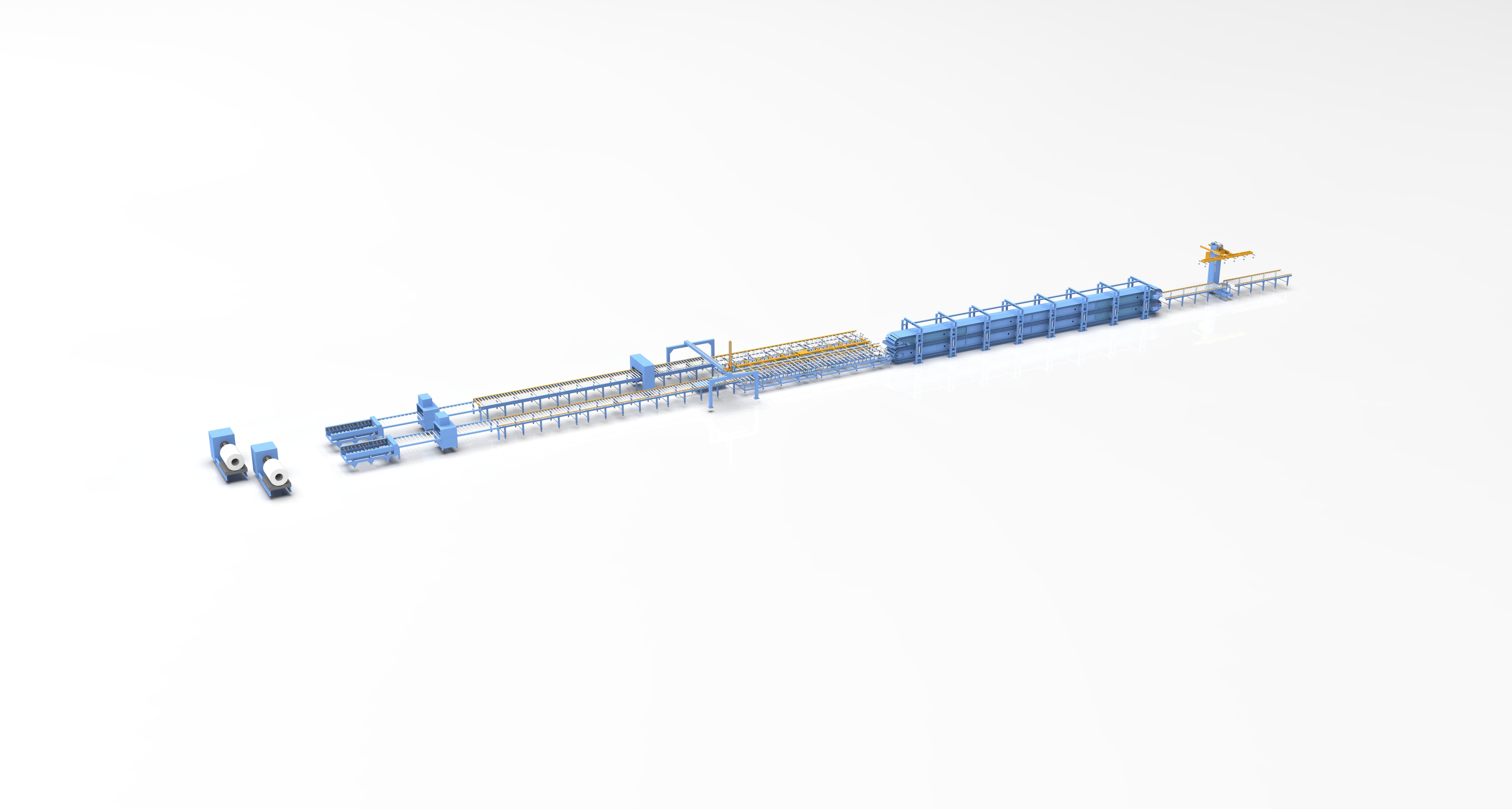
It rarely comes down to a single factor. The plants that keep humming through every season usually share a quiet obsession with the details—belts checked before they crack, bearings greased on a schedule nobody skips, and shift logs that actually get read. That kind of discipline doesn't make headlines, but it prevents the two a.m. calls that stop everything.
There's also a human layer that machines can't replicate. Operators who've spent years on the same line notice small changes in sound or vibration long before a sensor triggers. When management treats that experience as an asset instead of an expense, problems get caught early, and fixes happen during planned downtime rather than in panic mode. Cross-training helps too; a line that depends on one irreplaceable person is one retirement away from trouble.
Finally, the supply side matters as much as the factory floor. Reliable vendors, realistic inventory buffers, and a willingness to redesign weak points keep the flow steady even when a shipment is late or a part becomes scarce. Lines that survive year after year aren't lucky—they're built with enough slack to absorb the unexpected.
Smart Material Selection for Lighter, Stronger Panels
Choosing materials for panels isn't just about swapping steel for aluminum. It's about matching the load path, failure mode, and manufacturing constraints to a shortlist of candidates that offer high specific stiffness or strength. Carbon fiber reinforced polymers can outperform metals in uniaxial tension but may suffer in out-of-plane impact, so the selection process often starts with a clear map of where the panel needs to be stiff, where it can flex, and where it must absorb energy.
Sandwich constructions frequently deliver the best weight-to-bending-stiffness ratio. Thin facesheets made from high-modulus fiber laminates or advanced aluminum alloys carry the bending loads, while a low-density core—such as aramid honeycomb, aluminum honeycomb, or polymer foam—separates them and resists shear. Tuning core density, cell size, and facesheet thickness allows engineers to push the panel's natural frequency higher or improve dent resistance without paying a large mass penalty.
Hybrid approaches are gaining ground. Selective reinforcement with unidirectional carbon tapes in high-stress regions, combined with glass fiber or recycled composite skins elsewhere, keeps cost and weight down while meeting local stiffness targets. Additive manufacturing can also play a role by producing topology-optimized metal or polymer lattice cores that would be impossible to machine, further trimming grams without sacrificing panel strength.
Reducing Waste Through Automated Cutting and Filling
Manual cutting and filling often leaves behind unused material, uneven seams, and costly rework. By shifting to automated systems, manufacturers gain precise control over material usage from the very first pass. Sensors and software map out each cut in real time, adjusting for fabric stretch, pattern alignment, or surface irregularities. The result is less scrap on the floor and fewer rejected pieces that would otherwise end up in a landfill.
Automation also changes how teams think about filling operations. Instead of relying on operator judgment to gauge volume or pressure, calibrated dispensers apply exactly what each section requires. This reduces overfilling that squeezes out as waste, as well as underfilling that forces a second run. Over days and weeks, the avoided material loss adds up, lowering both procurement costs and the environmental footprint of each production line.
Beyond raw material savings, automated cutting and filling shortens the feedback loop between design and production. When waste patterns are tracked digitally, engineers can spot recurring excess and adjust specs before a new batch starts. That proactive step keeps surplus material out of bins and encourages a culture where waste reduction is measured, visible, and continuously improved.
From First Sketch to Final Inspection: A Closer Look
The first pass is never precious. A quick pencil line sets the overall height and the angle of the legs, and then the eraser comes out. You redraw the curve of the seat three times, flipping the tracing paper over to check the symmetry. That early sketch is more of a conversation than a blueprint—it helps you see the proportions before the wood demands its own opinion.
Once the timber arrives, the sketch gets tested against the grain. The prototype's mortise-and-tenon joints look right on paper but bind slightly when dry-fitted, so you shave a hair off one shoulder. A test sit reveals a wobble that tracing paper never predicted. You adjust the leg angle by two degrees, then cut a second prototype that finally sits flat on the concrete floor without a shim.
By the time the final stool reaches the inspection bench, the work is less about fixing and more about confirming. You run a fingertip along every arris to catch any sharp edge, then check the joinery under a bright raking light. A card scraper removes a faint glue line near the back leg. The last wipe of oil reveals the oak's own figuring, and only then does the piece earn its place by the door.
Maintenance Plans That Prevent Unplanned Downtime
Equipment rarely fails without warning. The signs are almost always there—slight vibrations, unusual heat patterns, a dip in performance that nobody logs because it still works. A well-structured maintenance plan turns those faint signals into scheduled interventions long before they become emergency shutdowns. It starts with tracking actual operating hours and load cycles rather than relying on a fixed calendar, because a pump running 24/7 in a dusty environment degrades differently than one used twice a week in a clean room. By aligning tasks with real wear patterns, you stop guessing and start acting on data that already exists inside the machinery.
The most effective plans blend condition monitoring with simple visual checks that operators can do in minutes. You do not need a full sensor suite on every bearing; a weekly thermal scan of critical motors or a monthly oil analysis on high-load gearboxes often reveals more than a blanket checklist. What matters is consistency and ownership—assign each inspection point to a person who understands what a bad reading looks like, not just someone ticking a box. When a threshold is crossed, the response should already be scripted: order the part, schedule the window, and adjust the run parameters temporarily. This removes the panic from the process and turns maintenance into a predictable rhythm instead of a disruptive event.
Finally, a plan only prevents downtime if it is treated as a living document. After every repair or replacement, feed the findings back into the schedule: shorten the interval for components that wore out sooner than expected, and lengthen it for items that came out looking new. Review the plan quarterly with the people who actually perform the work—their field notes often contradict the manufacturer's assumptions. Over time, this creates a feedback loop where unplanned failures become rarer, and the few that occur are treated as anomalies to investigate, not as normal operating costs. That is the difference between reacting to breakdowns and managing asset health.
FAQ
The line is built for EPS, polyurethane, rockwool, and mineral wool cores. Changeover between materials is handled through recipe-based settings and quick-adjust guides, so operators can switch runs without lengthy recalibration.
Thickness variation usually stays within plus or minus 0.5 mm. A closed-loop roller gap control measures each panel after lamination and adjusts automatically to hold the set value.
Yes. Width adjustment covers 900 mm to 1200 mm, and the cutting station is programmed for lengths from 1500 mm up to 12000 mm. No manual recalibration is needed between size changes.
For a 50 mm polyurethane panel, the line typically runs at 6 to 10 meters per minute. Thicker panels or rockwool cores reduce speed by about 15 to 20 percent, but the control system keeps output steady.
It can handle stainless steel, aluminum, and food-grade PVC facings. Edge sealing and protective film stations are included to prevent contamination before panels leave the production area.
Inline sensors monitor lamination temperature and adhesive coverage, and a surface inspection station flags dents or scratches. Operators also receive a sampling schedule for peel strength and density tests.
A field team manages installation and start-up, usually within 10 working days. Training covers recipe management, safety interlocks, and fault recovery, with follow-up video support during the first month of operation.
The package includes a spare parts list, remote diagnostics through the PLC, and semi-annual inspections. Wear items like saw blades and conveyor belts are stocked locally for quick replacement.
Conclusion
A dependable insulated clean panel production line does more than assemble components—it integrates thermal performance, material science, and process control from the very first sketch to final inspection. Panels are engineered to meet strict cleanroom thermal standards, using carefully selected core and skin materials that trim weight without sacrificing structural strength. Automated cutting and filling stations eliminate guesswork, keeping tolerances tight and scrap to a minimum. This focus on precision means the finished panels hold their insulation values over time, which is exactly what controlled environments demand.
What keeps these systems running year after year is not just robust construction but a maintenance approach designed around real operating conditions. Planned service intervals, accessible wear parts, and clear documentation help prevent the kind of unplanned downtime that disrupts production schedules. Manufacturers who pair smart material choices with automated processes and rigorous final checks end up delivering a line that remains efficient long after installation. For cleanroom builders and operators, that translates into fewer interruptions, lower waste, and panels that consistently perform under demanding thermal requirements.
Contact Us
Contact Person: Sophia Jiang
Email: [email protected]
Tel/WhatsApp: +86 17367381818
Website: https://yzwelding.com/