

Large Industrial Fans Company: Selecting High-Performance Ventilation Systems for Your Facility
2026-09-15
When a facility’s airflow falls short, every degree of heat and every pocket of stale air chips away at productivity, equipment life, and worker comfort. Choosing the right large industrial fans means looking beyond blade diameter and horsepower—it means understanding how air moves through your specific space, from loading docks to high-bay production floors. In this guide, we break down what separates high-performance ventilation systems from the rest, and why brands like VINDUSFAN are gaining attention for tackling the toughest airflow challenges without overcomplicating the install. Whether you are retrofitting an aging plant or designing a new build, the decisions you make now will shape your facility’s climate for years.
Why Air Movement Matters in Large Facilities
In a sprawling warehouse or production floor, still air doesn't just feel uncomfortable—it actively works against you. Heat rises and gets trapped near the ceiling, creating a temperature gap that can exceed 15°F between floor level and the rafters. This stratification forces HVAC systems to run harder just to keep workers at ground level from shivering while the upper reaches bake. Moving air with large-diameter ceiling fans breaks up those thermal layers, pushing warm air back down where people actually are. The result is a more uniform temperature throughout the space, which means less energy wasted on heating and cooling the empty upper third of the building.
Beyond temperature, air movement addresses moisture and air quality issues that become magnified in big open volumes. Without steady airflow, humidity tends to collect in corners, around cold surfaces, or near loading docks, leading to condensation, rust on equipment, and even slippery floors. A gentle but consistent breeze keeps moisture from settling, which protects inventory and reduces the risk of mold in hidden spots. It also helps disperse fumes, dust, or vehicle exhaust that might otherwise linger in dead zones. In high-ceiling facilities, the air down at breathing level can become stale and contaminated even when the space feels draft-free—proper circulation changes that.
Comfort is another often underestimated factor. Workers in large facilities may spend entire shifts in one zone, and if that zone has stagnant air, fatigue sets in faster. Even a modest airflow of 1–3 mph can make a space feel 5–7°F cooler, which reduces heat stress complaints without cranking up the AC. In cooler months, running fans in reverse gently mixes warm air from the ceiling down the walls, avoiding the cold drafts that make people huddle near space heaters. This isn't about creating wind—it's about keeping the whole volume of air alive, which translates into healthier people, fewer sick days, and a building that doesn't fight its own thermal tendencies.
Getting the Fan Size Right for Your Space
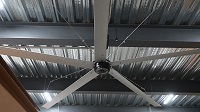
Most ceiling fans are bought for their style, yet the real question is whether the blades can handle the room. Measure the floor area first. A space under 75 square feet usually does fine with a 29- to 36-inch blade span. Between 75 and 144 square feet, look for 36 to 42 inches. Up to 225 square feet, a 44- to 50-inch fan makes sense, and beyond that, 52 inches or larger. If your room is long or open to other areas, treat it as one larger zone.
Ceiling height changes the calculation just as much as floor size. On a standard 8-foot ceiling, a flush-mount or low-profile fan keeps blades safely overhead. For ceilings above 9 feet, use a downrod so the blades hang about 7 to 9 feet from the floor—this places them where you actually feel the breeze. Skip the downrod with a very low ceiling; even a few inches make a difference for head clearance.
Don’t overspend for a fan with high CFM if the room doesn’t require it. A modest fan matched to the room’s square footage and height will move air more evenly than a huge one set on low. For awkward layouts like L-shaped rooms or kitchens open to a living area, two smaller fans often beat one oversized unit.
Direct Drive vs. Belt Drive: What Works Best?
Direct drive turntables spin the platter straight off the motor, so there are no belts to stretch or slip over time. That translates to rock-solid speed consistency and quicker start-up, which DJs especially appreciate when cueing a record. The downside? The motor sits directly beneath the record, and without a belt to absorb vibrations, any rumble or feedback can find its way into the stylus unless the design includes serious isolation.
Belt drive models take a quieter route, using a rubber belt between the motor and platter to decouple motor noise. That’s why many audiophile decks lean this way—the background stays blacker, and subtle details in the music come through more cleanly. But belts age, lose tension, and may need replacement every few years, plus speed can drift a bit as the belt warms up or wears down.
So the real question isn’t which one is universally better—it’s what you plan to do with it. If you’re scratching, mixing, or just want a deck that holds pitch rock-steady without fuss, direct drive is your friend. If you’re sitting back for critical listening and don’t mind occasional upkeep, a belt drive can squeeze out a touch more finesse from your favorite records.
Keeping Noise Levels Down in Work Areas
Excessive noise in work areas often goes unnoticed until it starts affecting concentration. The constant hum of machinery or overlapping conversations may not seem loud, but over time it can lead to mental fatigue and more mistakes. Even low-level background noise forces the brain to work harder to filter it out, reducing the capacity for complex tasks. Addressing this isn't about creating a library-like silence, but about keeping distraction at a manageable level.
A practical first step is to identify the main noise sources and see if they can be isolated. For example, placing printers and copiers in a separate room or behind acoustic panels can make a noticeable difference. Regular maintenance also helps—squeaky chairs, rattling fans, and loose machine parts often generate unnecessary noise. Adding soft materials like carpets, curtains, or acoustic ceiling tiles can absorb sound and prevent it from bouncing around hard surfaces.
Human habits play a big role too. Encouraging people to use headphones for music or videos, keeping phone notifications on silent, and using designated areas for longer discussions can all reduce ambient noise. Some teams find it useful to agree on "quiet hours" during the morning when deep work happens. Small adjustments in behavior, combined with the right physical setup, can transform a noisy workspace into a more focused environment without making it feel sterile.
Linking Fans with Your Existing HVAC System
Adding a few well-placed fans to a home that already has central heating and cooling can make the whole setup work better without replacing any major equipment. Instead of treating a ceiling fan as a separate cooling device, tie it to the HVAC blower so it runs whenever the system pushes air through the ducts. This helps mix the air in rooms that normally stay stuffy or too warm, especially on upper floors where the thermostat might not tell the full story.
There are practical ways to link the two without tearing into walls. A smart thermostat with an auxiliary relay can send a low-voltage signal to a ceiling fan controller, letting the fan spin at a gentle speed only during HVAC fan cycles. For whole-house fans, a simple pressure switch can lock them out while the air conditioner runs, so the two systems never work against each other. This keeps unconditioned outdoor air from being pulled in at the wrong time.
The retrofit is easier than most people expect. Many modern ECM ceiling fans accept low-voltage control inputs, and a small relay module can connect to the existing thermostat wiring in under an hour. The result is more even room temperatures, fewer hot and cold spots, and the ability to nudge the thermostat up a degree or two without feeling a difference. Over time that reduces compressor runtime and can add years to the equipment’s life.
Calculating Payback from Reduced Energy Use
Most people assume lower energy bills automatically mean a good investment, but the real question is how long it takes to recover the upfront cost. Start by finding the difference between your old and new monthly energy expenses, then divide the total project cost by that monthly saving. The result is the number of months until you break even. If you install a more efficient HVAC system for $6,000 and it cuts your utility bill by $80 a month, you're looking at a 75-month payback period — just over six years. That might seem long, but if the equipment lasts fifteen years, you still come out ahead.
One common mistake is ignoring non-energy benefits when calculating payback. A quieter compressor, better temperature consistency, or reduced maintenance calls all have real financial value, yet they rarely show up in a simple utility comparison. For a more accurate picture, assign a conservative dollar amount to these improvements and subtract it from the initial cost before dividing. Even a modest $300 annual maintenance saving can shave a year or more off your payback estimate. The goal isn't to force a quick return, but to understand the true economic threshold.
Inflation and rising energy rates also tilt the math in favor of efficiency upgrades. If electricity prices climb 3% each year, your monthly saving grows over time, which shortens the effective payback period. A fixed-rate calculation assumes energy costs stay flat, but that rarely happens. By looking at a simple spreadsheet with a 2-4% annual escalation factor, you might see a 6-year payback drop to under 5. This forward-looking view turns a marginal project into a clearly rational one, even without any incentives or rebates.
FAQ
Start by mapping out where heat, moisture, or stagnant air actually builds up. Instead of guessing based on square footage alone, walk the floor during peak hours and note problem zones. That gives you a much clearer picture of the airflow volume and placement you'll need.
High-volume low-speed models move a large column of air gently downward and outward, which creates consistent cooling across a wide area without the harsh, localized blast you get from smaller high-speed units. For facilities with high ceilings or open floor plans, that can mean better comfort and less disruption to dust or papers.
Generally, you'll want at least 12 to 15 feet of clearance for the blades to work effectively and safely. If your ceiling is lower, a smaller diameter fan can still help, but it won't deliver the same broad, low-velocity airflow that a full-size model provides.
Yes, often dramatically. By keeping air moving, fans make the space feel 5 to 10 degrees cooler to occupants, which means you can raise the thermostat setpoint without sacrificing comfort. Many plants cut cooling expenses by 15 to 30 percent after pairing fans with their existing HVAC system.
Pay attention to the motor's enclosure rating and whether it uses a direct-drive design, which has fewer wearing parts than belt-driven systems. A variable frequency drive or smart controller lets you adjust speed based on shift schedules or temperature sensors, preventing unnecessary runtime and wear.
A common rule of thumb is to aim for 3 to 5 air changes per hour for general cooling, but that varies with ceiling height, processes generating heat, and local climate. A better approach is to work with a fan supplier who can model your specific layout and recommend the right diameter, blade pitch, and quantity.
Mounting points must be checked for structural load capacity, and you'll need to keep clearances from overhead cranes, lighting, and sprinkler systems. Planning a shutdown or scheduling installation during off-hours can prevent production delays, and some manufacturers offer drop-in retrofit kits that simplify the process.
Direct-drive HVLS fans typically need only annual inspection of blade hardware, motor mounts, and safety cables. Belt-driven units require more frequent belt tension checks and lubrication. Ask for a maintenance schedule upfront and verify that spare parts like controller boards are readily available.
Conclusion
Large industrial spaces rarely fail because a single fan is undersized—they fail because air movement was treated as an afterthought. A properly sized high-volume, low-speed fan changes how heat, humidity, and fumes behave across the entire floor, not just in one corner. Getting that size right matters more than raw horsepower: too small and you create dead zones, too large and you waste energy while kicking up dust. For most facilities, direct drive motors have become the quieter, lower-maintenance option compared to belt drive setups, especially when fans run continuously during production hours.
Noise rarely shows up on a spec sheet until the fan is installed and the complaints begin. Blade shape, mounting isolation, and drive type all shape whether a large fan whispers or whines. Connecting the fans to the existing HVAC system—instead of letting them run as isolated boxes—allows you to reclaim ceiling heat in winter and reduce AC runtime in summer. That integration shortens the payback calculation considerably. Once you add up destratification savings and the reduced load on cooling equipment, a well-chosen fan system often pays for itself within two to three years, which makes it a capital improvement with a measurable return rather than just another piece of equipment.
Contact Us
Contact Person: Michael Danielsson
Email: [email protected]
Tel/WhatsApp: +1 951 565 7769
Website: https://www.vindusfans.com