

Laundry Pods Factory Production Process From Liquid Detergent to Sealed Pods
2026-11-28
Ever wondered how a tiny pouch can hold an entire load’s worth of cleaning power? The journey from liquid detergent to sealed pods is more intricate than it looks, and LANJIEYA has mastered every step. From precise dosing to leak-proof sealing, the factory process quietly turns raw formulas into the convenient capsules you toss into the drum without a second thought. Let’s pull back the curtain on what happens before those pods reach your laundry room.
What Goes Into the Liquid Core
The liquid outer core is mostly an iron-nickel alloy, but seismology keeps pointing to a density deficit that pure metal cannot explain. A roughly ten percent shortfall means lighter elements are mixed in, lowering both the melting point and the bulk sound speed. These additives are not incidental; they change how convection starts, how heat escapes, and how buoyant parcels rise through the core.
Sulfur, oxygen, silicon, and carbon are the usual suspects, with hydrogen occasionally entering the debate. Their exact proportions remain unsettled because each element partitions differently between solid iron and liquid metal at extreme pressure. Some may have arrived during planetary accretion, while others could have been squeezed out of the crystallizing inner core over billions of years. High-pressure experiments and computational melts attempt to narrow the list, but reproducing core conditions still involves trade-offs.
That unresolved chemistry feeds directly into the planet's magnetic behavior. Thermal and compositional buoyancy drive the dynamo, and the identity of the light elements influences how efficiently heat is carried away. A core richer in one element might convect more sluggishly, while another mixture could sustain turbulence long after the planet cools. The recipe matters far beyond a simple inventory.
Mixing Without Stirring Up Excess Foam
A surprising amount of foam starts with the tool, not the ingredient. Keep the whisk, spoon, or immersion blender head fully submerged before you switch it on, and avoid lifting it through the surface between strokes. That constant breaking of the surface pulls air into the mixture, and once those tiny bubbles form, they are harder to collapse than they were to create. Work in short, steady passes with the utensil staying low and the blade cage just below the liquid line.
Temperature matters more than speed here. Cold liquids trap air more readily, especially anything containing protein or starch, so letting a mixture come closer to room temperature before blending often reduces the foam without changing the final texture. If you do need to mix something chilled, add the liquid in stages and pour it against the side of the bowl rather than straight down the middle.
Finally, switch to a folding or slicing motion once the ingredients are mostly combined. Instead of beating in circles, cut through the center and scrape around the edge with a flexible spatula. This keeps the remaining pockets of dry material moving into the wet base without whipping more air into the surface. Stop as soon as the streaks disappear; the extra ten seconds is usually where the foam quietly builds.
The Film That Disappears in the Wash
Most people assume a photograph is permanent once it leaves the camera, but this film behaves more like a temporary tattoo. After a standard wash cycle with warm water and mild detergent, the image simply fades away. No amount of scanning, copying, or careful handling can stop the chemistry from dissolving — the picture becomes a pale gray haze that eventually turns blank.
The peculiar quality comes from a water-soluble emulsion layer that reacts to agitation. During the first rinse, colors run into each other and edges blur, as if the moment captured was never meant to be kept. Repeat washes accelerate the process, leaving only the clear plastic base. This makes the film useful for testing camera mechanics without worrying about wasted frames, or for artists who want their prints to have a built-in expiration date.
Handling the film before exposure feels normal, which adds to the surprise when the image vanishes. There is no special storage method that preserves it; even a damp fingerprint can start eating away at the undeveloped frame. For anyone tired of archives full of forgotten snapshots, a roll of disappearing film offers a strange kind of relief — every shot is a one-time event, and the laundry becomes the final darkroom.
A Measured Dose Into Every Pocket
There is a particular relief in not having to estimate. A slim case slides into a front pocket, each compartment holding exactly what the moment calls for—no counting, no spills, no second-guessing whether the amount is right. It turns a routine that used to involve bottles and measuring spoons into something you do without breaking stride.
That kind of precision stays useful long after the novelty wears off. Morning doses ride along in a jacket, an afternoon pick-me-up waits in a bag, and an evening reserve sits in the same quiet row. The order matters less than the fact that every slot is intentional, shaped for a single use and sealed against the jostle of a normal day.
What changes is not just portability but the feeling of being prepared. Instead of carrying more than you need or improvising when plans shift, you carry only what fits—and because it fits so easily, it actually goes with you. The dose becomes part of the pocket, not another item to remember.
Heat, Pressure, and a Leak-Proof Seal
Most seals fail long before the material itself gives out. What actually breaks the barrier is a mismatch between how the mating surfaces move under heat and how the gasket or ring responds to that movement. A reliable leak-proof seal doesn't just sit there; it has to keep pressing outward as the flanges distort, the bolt tension shifts, and the thermal cycle tries to open a path for fluid or gas.
That's where controlled heat and clamping force come in. The heat lets the seal material flow just enough to fill microscopic grooves and scratches in the metal faces, while the pressure holds that contact tight during the critical cooling phase. Get the balance wrong and the seal can tear, harden, or lose its spring-back. Get it right and the joint settles into a stable, low-permeability interface that stays tight even when the system cycles between hot and cold.
Every Pod Gets a Final Look
Before any pod reaches a box, it passes under a set of hands checking for the small stuff: foil tension, a clean rim, no stray grounds caught near the seal. The line slows just enough for each one to be turned once under direct light.
That last look is not a random sample. It happens for every single pod, even when the batch is running perfectly. If something feels off, like a slightly dented edge or a label shifted by a millimeter, it gets pulled before it ever has a chance to reach a cup.
FAQ
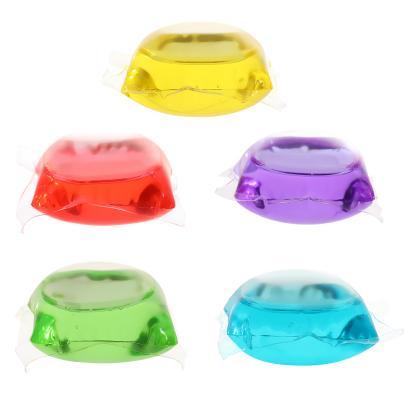
The liquid detergent gets mixed and thickened, then it moves to a forming drum where a water-soluble film is pulled into small pockets. A dosing nozzle drops a precise amount into each pocket, a second film layer is laid over the top, and heated plates press the edges together. The sheet is cut into individual pods and sent through a drying tunnel before packaging.
The film is usually a polyvinyl alcohol blend that only breaks down with water and agitation. Production rooms stay dry, and the detergent's own water content is kept low so it doesn't attack the film from inside. Once the seams are heat-sealed, the pods are cured in low-humidity storage to lock in the film strength.
If there is too much free water in the formula, it softens the film and can cause wrinkles, leaks, or pods that collapse. Most pod formulas are made with low water or use non-aqueous solvents, and every batch is checked in the lab before it reaches the filling line.
Multi-chamber pods need a more involved forming step. Separate cavities are created for each chamber, different formulas are dosed into them, and then one lid film seals all the chambers at the same time. The fill volumes and timing have to be matched carefully, otherwise one chamber may overfill and tear the shared seal.
Inline cameras scan the film for bubbles, thin spots, and weak seal areas. Some lines use a soft pressure test or roller sensors to catch wetness from leaks. Pods also pass over check weighers, and samples are dropped into water to make sure the film breaks down at the expected rate.
Mixing and conditioning the detergent can take a few hours, depending on the formula and whether it has to be cooled or degassed. The forming and filling portion runs continuously and can produce hundreds of pods per minute. After that, curing and packaging add more time before the cartons are ready to ship.
Seal strength comes from the film material plus the heat, pressure, and dwell time at the sealing plates. After sealing, the sheet stays in a controlled environment so the seams don't stretch while warm. Random packs are pull-tested to make sure they can handle stacking, vibration, and temperature changes during shipping.
Conclusion
Inside a pod plant, the liquid core starts with a blend of surfactants, enzymes, stain-fighting polymers, solvents, and fragrance, but these ingredients are not simply dumped together. Because heavy agitation creates excess foam that can throw off filling accuracy and weaken the final seal, mixing happens in enclosed low-shear vessels where materials are folded in stages and deaerated. The finished liquid then moves to calibrated filling heads. Each dose is injected into a pocket formed from a water-soluble polyvinyl alcohol film, thin enough to disappear during a normal wash cycle. The filler checks volume by weight or flow meter at high speed so every cavity receives a consistent amount without splashing onto the sealing zone.
Once filled, the top film is laid over the pockets and the edges are bonded with heat and light pressure. The line has to activate the film just enough to make a tight, leak-proof seal without melting or distorting the pod. After sealing, pods pass through a short cooling stage before inspection. Cameras and sensors scan for weak seals, underfilled units, holes, and film defects, while automated stations reject anything outside tolerance. Some plants also run squeeze or pressure checks on samples. Accepted pods are packed and shipped. The result is a stable, pre-measured dose that holds the detergent inside until the film breaks down in the machine.
Contact Us
Contact Person: Zhao Yanlong
Email: [email protected]
Tel/WhatsApp: 8615832007309
Website: https://www.gzlanjieya.com