

Leading Inkjet Marking System Manufacturer for Industrial Coding Solutions
2026-08-12
In industrial production lines, a single unreadable code can halt an entire shipment. That’s why manufacturers worldwide trust Danmajet to keep their operations running smoothly. As a leading inkjet marking system manufacturer, we go beyond standard equipment—delivering fast, precise, and durable coding solutions that adapt to your toughest environments. Curious how the right technology can simplify traceability and slash downtime? Stay with us as we break down what truly makes an industrial coding system exceptional.
Inkjet Precision That Withstands the Toughest Production Floors
Industrial inkjet systems often promise accuracy, but few deliver consistent precision when faced with vibration, dust, and temperature swings common on the factory floor. Our printers are engineered with a reinforced chassis and advanced vibration damping, ensuring each drop lands exactly where it should, even when forklifts rumble past.
The printheads are protected by a sealed, self-cleaning mechanism that shrugs off contaminants that would choke lesser devices. This means you get sharp, legible codes, barcodes, and graphics hour after hour without constant maintenance—a must for high-throughput lines where downtime isn't an option.
From automotive assembly to heavy machinery manufacturing, this durability isn't just a spec sheet claim. Operators report negligible drift in print alignment over months of 24/7 operation, confirming that the precision is built to last as long as the production line itself.
Coding Clarity Across Every Substrate and Surface
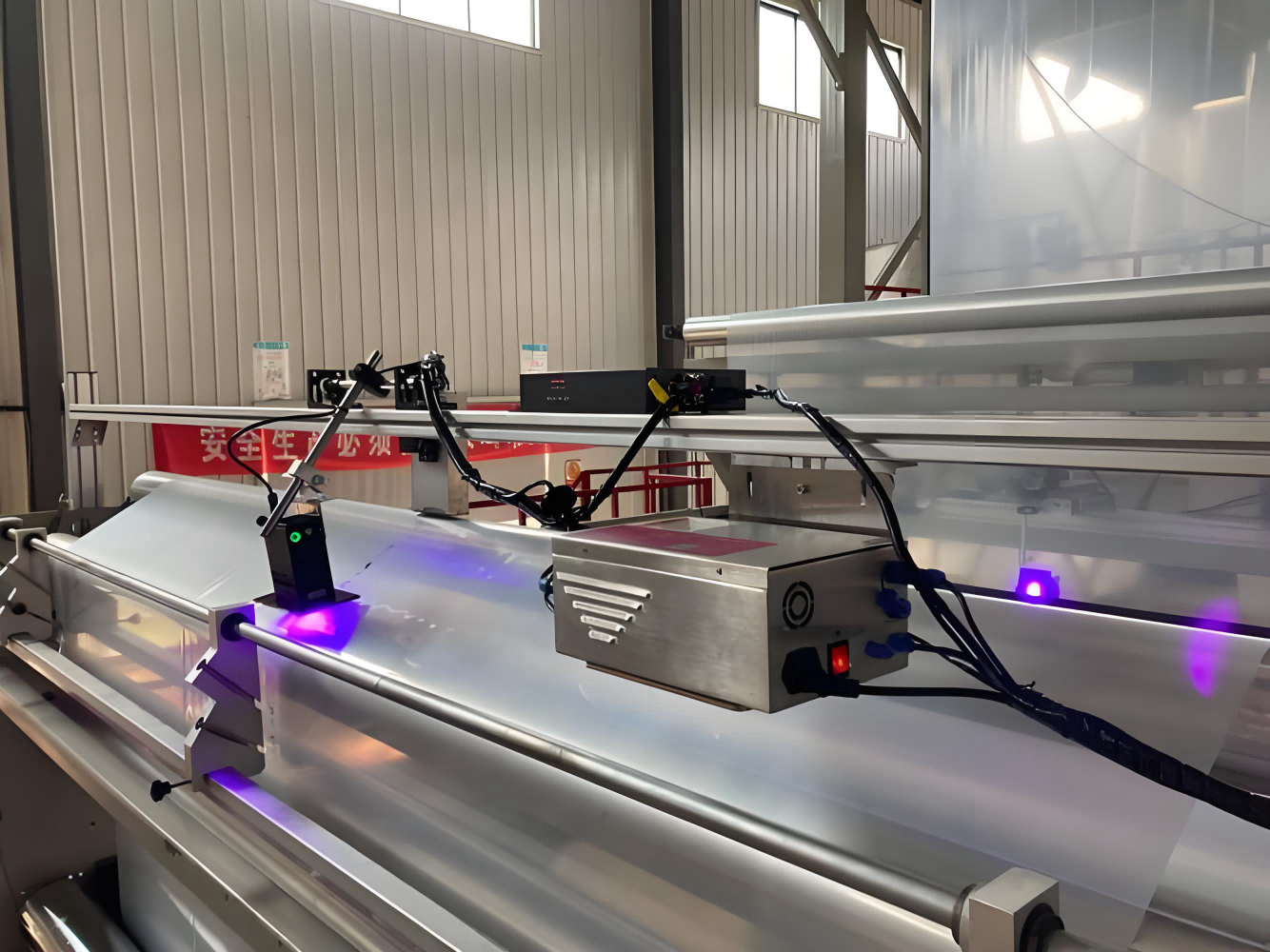
Ensuring clean, scannable codes on any material demands ink that behaves predictably no matter the backdrop. From slick, non-porous plastics to textured cardboard and curved metal, the right formulation holds sharp edges without bleeding or fading. Adjustments in solvent balance and pigment load allow the same printer to lay down crisp data matrices on glossy labels one minute and porous corrugate the next, without recalibration chaos.
Substrate variability kills throughput if the marking system can't compensate. High-resolution codes on soft films require a different wetting profile than heavy-duty codes on raw wood pallets. By tuning adhesion specifically to surface energy, each dot stays discrete, preserving readability even as line speed jumps. This approach sidesteps the usual trade-off between versatility and reliability, turning mixed-material production runs into a non-issue.
The payoff is confidence up and down the line: barcodes that scan first time, every time, regardless of what they're printed on. When ink bonds cleanly to glass, rubber, or recycled polymers without smudging or chipping, traceability holds firm through harsh handling and supply chain twists. It’s not just about marking—it’s about making every code dependable enough to disappear into the background of daily operations.
Built to Run: Minimal Maintenance, Maximum Throughput
When you strip away the extras and build for stamina, you end up with something that just won’t quit. The whole point is to minimize those nagging interruptions—no weekly restarts, no manual cleanups. Internal routines take care of memory leaks, log rotation, and failover switching without anyone lifting a finger. It’s almost boring in how dependable it becomes.
That stability pays off in sheer output. With no roadblocks from maintenance, the pipeline stays wide open. Peaks in demand don’t trigger panic because the system already allocated headroom. Over months, the cumulative effect is glaring: a steady stream of completed tasks that would normally get chewed up by downtime. The machine just keeps churning, and you get to forget it’s even there.
Smart Integration for Real-Time Line Control
At the heart of modern manufacturing, smart integration bridges gaps between machines and decision-makers. Real-time line control thrives when sensors, actuators, and analytics platforms operate in unison, turning raw data into immediate, actionable adjustments. This seamless connectivity isn’t just about speed—it’s about creating a responsive ecosystem that anticipates disruptions and adapts without human intervention.
Embedded intelligence at the edge empowers line operators to move beyond reactive troubleshooting. By fusing historical patterns with live streams, the system can pre-emptively tweak parameters—adjusting conveyor speeds, rerouting workflows, or recalibrating tolerances—all while maintaining a steady pulse on quality metrics. The result is a production flow that feels almost intuitive, where bottlenecks dissolve before they materialize.
What sets a smartly integrated line apart is its ability to learn and evolve. Unlike rigid automation, these setups embrace variability, using subtle feedback loops to refine their own logic over time. Whether it’s synchronizing mixed-model assembly or balancing energy loads across shifts, the control layer becomes a quiet conductor, orchestrating each station with a rhythm that keeps output precise and downtime a distant memory.
Inks That Match Your Process, Not Just Your Printer
The ink that flows through your press should feel like a natural extension of the way you work. It’s not just about compatibility with the machine—it’s about how it behaves under your specific conditions: drying speed that suits your turnaround, viscosity that holds fine detail without clogging, and color consistency that stays true across the entire run. When the chemistry aligns with your daily rhythm, you spend less time tweaking and more time printing.
We’ve seen too many shops forced to adapt their methods to a generic ink formula, fighting variables instead of controlling them. That’s why our approach starts with understanding your shop’s pace, substrates, and even the humidity levels you battle. The result is an ink that works with your technique—whether you demand razor-sharp halftones on uncoated stock or need a low-migration solution for food packaging that cures at your exact line speed.
Instead of forcing your process into a standard box, the right ink gives you the freedom to run jobs your way. It accounts for how you set your rollers, your preferred plate materials, and the finishing steps that follow. That kind of harmony doesn’t just improve print quality—it cuts down on waste and lets your team hit the ground running every morning.
Support That Speaks Your Industry’s Language
When a logistics company calls about a stuck shipment, they don’t want generic troubleshooting scripts. Our support team is trained on real-world supply chain workflows, so they immediately recognize terms like “demurrage,” “FCL,” or “transloading.” This familiarity cuts resolution time in half and makes every interaction feel like a peer-to-peer conversation, not a help desk.
We invest in continuous sector-specific education, embedding agents within client teams during onboarding to absorb the nuances of their daily operations. Whether it’s healthcare compliance jargon, fintech regulatory shorthand, or e-commerce fulfillment slang, our people internalize the vocabulary and context. The result is support that anticipates needs instead of just reacting to tickets.
Beyond terminology, we map our escalation paths to how your industry actually operates. A manufacturing client’s critical downtime alert bypasses tier-one scripts and lands directly with a specialist who understands production line rhythms. This vertical integration of knowledge means every answer you get feels native to your world, not translated from a manual.
FAQ
Our systems are built around real production environments, so you get intuitive controls, fast-drying inks that stick to tricky surfaces, and printers that keep running shift after shift without babysitting.
We serve a wide mix—food and beverage, pharmaceuticals, electronics, automotive parts, and building materials are a few. Basically, if a product needs a code, we’ve probably printed on it.
Absolutely. Many of our units are designed for lines moving over 300 meters per minute. They keep the print sharp and in the right spot even when things are flying past.
We don’t just ship a box and disappear. You get installation help, on-site training, remote diagnostics, and a spare parts program that actually keeps parts in stock.
We have a range of low-migration and food-safe inks that meet EU and FDA standards. We can help you match the right ink to your packaging and process.
It’s a mix of ink chemistry and printhead engineering. We formulate inks that cut through surface films and dry tough enough to survive the supply chain, plus we fine-tune throw distance and drop control.
We have printers that make sense for a startup co-packer as well as a multinational plant. You can start with a simple standalone unit and scale up later without swapping ecosystems.
Conclusion
When production lines push through heat, vibration, and constant motion, inkjet coding systems need to deliver without hesitation. That’s the reality behind every marking head, controller, and ink formulation we engineer. From high-gloss packaging films to porous corrugate and curved metal parts, sharp, scannable codes aren’t a luxury—they’re a requirement for traceability and brand integrity. Our equipment is designed to shrug off the conditions that send lesser printers into fault, with printhead designs and solvent-based inks that cope where dust, washdowns, and thermal shocks are daily facts of life. The outcome is a consistent mark on virtually any substrate, produced at line speeds that never slow because the printer is self-maintaining through automated cleaning cycles and long-life consumables.
Real production integration means control at the level of recipe changes, not just print triggers. Our systems talk natively with PLCs, MES, and ERP, so lot codes, dates, and serial numbers shift automatically with SKU changeovers—no operator override needed. Ink choice is never an afterthought. From fast-cure food-grade formulas to solvent-resistant and high-heat variants, every drop is tuned to match your specific surface, line speed, and drying method. When issues arise, you need support that grasps your process, not just a manual. Our global teams are embedded in verticals like packaging, automotive, electronics, and building materials, resolving problems fast using the vocabulary you use on the floor.
Contact Us
Contact Person: Jacky
Email: [email protected]
Tel/WhatsApp: 086 15000607053
Website: https://www.danmajet.com