

Mixing Tank Manufacturer: Key Factors to Consider Before You Buy
2026-05-21
Choosing the right mixing tank manufacturer can make or break your production efficiency. Too often, buyers overlook critical details—like material compatibility, customization capability, and after-sales support—only to face costly downtime later. That’s where a partner like DYE comes in, combining decades of expertise with tailored solutions that fit your process, not the other way around. In this guide, we’ll walk through the must-know factors before signing that purchase order, so you can invest with confidence and avoid the common pitfalls that trip up even seasoned engineers.
Material Integrity: Beyond the Spec Sheet
A spec sheet is a starting point, not the full story. It lists tensile strength, hardness, and chemical composition—useful benchmarks, but they rarely capture how a material behaves under real stress. We’ve seen alloys that pass every lab test yet fail in the field because of subtle grain-boundary corrosion or micro-crack propagation that no datasheet predicted. True material integrity means understanding the narrative behind those numbers: the sourcing traceability, the processing history, and the failure modes that only surface after thousands of cycles.
This is where deep testing and tribal knowledge intersect. Standardized mechanical tests give you a snapshot; our approach layers in iterative exposure trials—thermal shock, salt fog, vibration—until we identify the thresholds where performance actually degrades. It’s the difference between a part that meets minimums and one that holds up in unexpected conditions. Beyond the spec sheet, integrity is about reproducibility from batch to batch, and the confidence that comes from knowing every melt aligns with your application’s unspoken demands.
We’ve learned that the most critical property is often the one missing from the certificate. Whether it’s residual stress after machining or dampening capacity under cyclic loading, these hidden traits define lifespan. That’s why our evaluation doesn’t stop at the laboratory report; it continues through prototyping, field data, and failure analysis. The result is a material selection process that feels more like craftsmanship than checkbox-ticking—rooted in data but elevated by experience.
The Hidden Costs of Inefficient Agitation
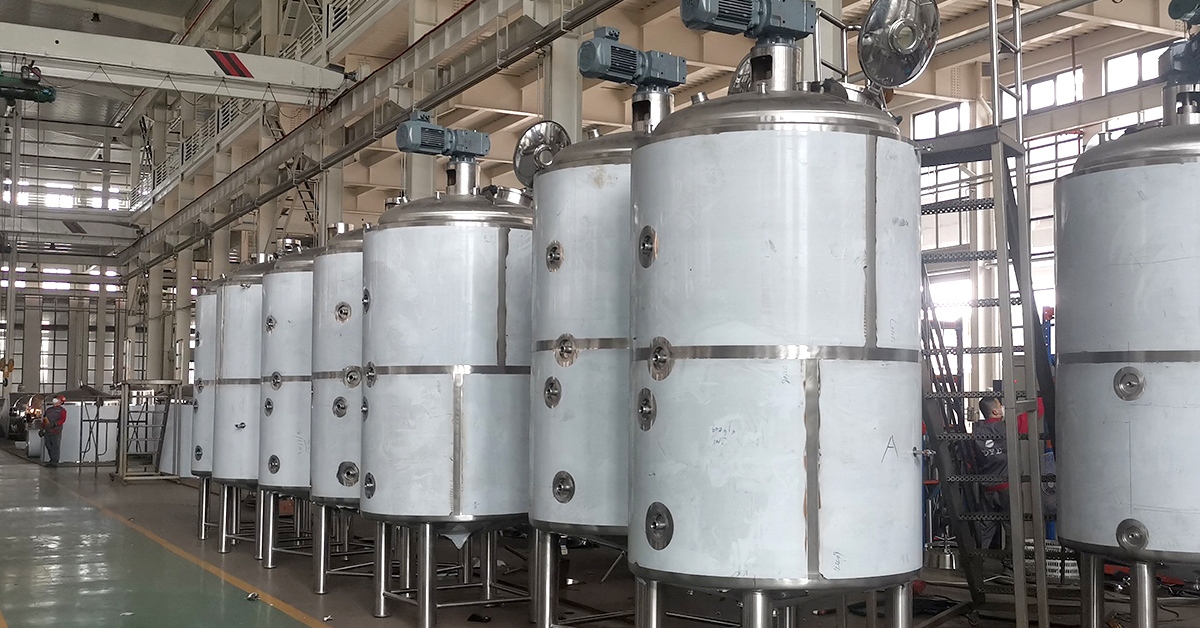
Inefficient agitation in industrial processes doesn't just waste energy—it quietly drains your budget through accelerated equipment wear, uneven product quality, and unplanned downtime. When mixing systems fail to maintain optimal flow, solids settle, reactions stall, and heating or cooling becomes inconsistent. These subtle failures compound over time, forcing operators to compensate with longer batch cycles or additional raw materials, eroding margins without obvious warning signs.
Beyond direct operating costs, the ripple effects hit maintenance teams hardest. Bearings grind under unbalanced loads, impellers erode from cavitation, and seals fail prematurely—all while data loggers show “normal” vibration levels until it’s too late. Each repair disrupts production schedules and hands competitors an opening. Without a proactive approach to agitation performance, what looks like a minor inefficiency on paper often masks a growing liability, one that annual budgets rarely account for until a critical breakdown occurs.
Certifications You Should Never Overlook
In a world where credentials are easy to fake and expertise is often self-proclaimed, certain certifications act as genuine differentiators. ISO/IEC 27001, for instance, signals a company's commitment to information security management—not just a checkbox, but a rigorous, externally audited framework. When you see this on a vendor's profile, you're looking at proof that they handle data with the seriousness it deserves, minimizing breach risks through structured protocols.
Beyond security, accessibility compliance is routinely underestimated. The Web Content Accessibility Guidelines (WCAG) aren't just about avoiding lawsuits; they reflect whether a product team actually prioritizes inclusive design. A verified WCAG conformance badge means someone has tested the experience for screen reader compatibility, keyboard navigation, and color contrast—things that affect real users daily. Skipping this check often leads to alienating entire demographics.
Another overlooked category involves supply chain ethics. Certifications like Fair Trade or B Corp go beyond marketing fluff when they require annual impact assessments and legal accountability. They indicate that a business isn't just chasing profits but is structured to consider workers and the environment. This matters because superficial claims crumble under scrutiny, while audited standards hold up over time, providing long-term assurance no press release can match.
When Off-the-Shelf Won’t Cut It: Custom Engineering
Sometimes a pre-built solution checks all the boxes on paper but still manages to miss the mark where it counts. It might handle 90% of what you need, but that last 10% is where your real work happens—the idiosyncratic workflows, the niche integrations, the internal tools your team refuses to give up. When you’re forced to reshape your entire operation around a product instead of the other way around, you’re not saving time or money; you’re just trading one set of problems for another.
Custom engineering isn’t about reinventing every wheel. It’s about building the thing that sits perfectly between your existing systems and your actual goals. The result might be a lightweight internal dashboard, a sensor interface no one else makes, or a data pipeline that talks to legacy equipment in a way no SaaS product ever could. The best custom work often looks deceptively simple—because it was designed for precision, not for a broad market’s assumptions.
The real advantage shows up over time. An off-the-shelf tool that’s only a near-match today will drift further away as your needs evolve. A custom solution, built to be extended, bends with you instead of breaking. It’s not just a fix for a missing feature; it’s a structural decision to stop working around your tools and start letting your tools do the work.
After-Sales: The Real Test of a Manufacturer’s Commitment
A warranty card and a polite phone call are no longer enough—true after-sales support reveals whether a manufacturer genuinely stands behind its products or simply moves on to the next sale. It shows up in the willingness to maintain a ready inventory of spare parts, not just for current models but for equipment sold years earlier, so a single faulty component doesn’t force an entire production line into silence. When a supplier answers technical questions with real engineering expertise instead of a scripted flowchart, and when field service arrives without weeks of delay, you know their commitment goes beyond the signing of a contract.
After-sales is where the hidden costs of “almost good enough” come to light. A machine that breaks down too often or takes too long to repair isn’t just an operational headache—it drains margins through overtime, scrapped batches, and missed delivery deadlines. Manufacturers who understand this invest heavily in remote diagnostics, training customer maintenance teams, and building support hubs near major industrial clusters, reducing travel time from days to hours. They treat after-sales not as a cost center but as a cornerstone of the relationship, knowing that a smooth recovery from any hiccup builds far more loyalty than a flawless but impersonal initial purchase.
The real commitment, however, reveals itself when things don’t go according to plan. It’s in the engineer who stays past midnight to recalibrate a critical machine before the morning shift, not because they were ordered to, but because they understand the stakes. It’s in the vendor who proactively reaches out with a redesign for a part that showed early wear, even if the formal warranty period has ended. After-sales, done right, isn’t just fixing what’s broken—it’s a quiet promise that somebody will always be there to keep your operations moving, treating your downtime as their own emergency.
Track Record: Decoding Case Studies and Client Feedback
Behind every successful partnership lies a trail of real-world outcomes. Our approach has always been to let the results speak, not through polished claims, but through the authentic experiences of those we've worked alongside. Each case study is more than a sequence of deliverables—it's a narrative of shared challenges tackled, late-night problem-solving, and the quiet confidence that comes when a plan finally clicks into place. We don't sanitize the messy parts; we highlight the pivots, the unexpected hurdles, and how we adjusted course without losing sight of what mattered to the client. That's where the real learning lives.
The feedback we receive often surprises new clients. It's not the usual parade of generic praise; it's granular, specific, sometimes blunt. You'll read about the time we pushed back on a request because we knew it would undercut long-term goals, or the weekend a team member spent dissecting a dataset because a hunch suggested a better answer. These stories, shared by clients across industries, reveal a pattern: trust isn't built on perfection but on consistency, transparency, and the willingness to go beyond the brief when it counts.
What ties these case studies and testimonials together is a refusal to template success. Each project leaves behind a unique fingerprint—a process refined, a metric redefined, a relationship deepened. We invite you to examine them not as trophies, but as field notes from the front lines of collaboration. No two stories are alike, because no two problems are truly identical. That's the point.
FAQ
Look for a track record in your specific industry, not just general mixing. A company that’s built tanks for pharmaceutical or food applications, for example, understands the strict sanitary requirements and material compatibilities that generic manufacturers might overlook. Ask for case studies and talk to their engineers directly about past challenges they’ve solved.
Provide a detailed process description and see if they ask smart questions. A competent manufacturer will probe about viscosity, shear sensitivity, temperature limits, and cleanability—not just quote a tank size. They might suggest a test run in their lab or offer to customize agitation based on your specific fluid properties.
The wrong alloy can lead to corrosion, contamination, or premature failure. Request mill certifications for every metal used, and confirm they follow standards like ASME BPE if you’re in a regulated sector. Also ask about their welding practices—back purging and passivation are signs they take contamination prevention seriously.
Instead of just asking ‘can you customize?’, give them a concrete scenario: can they integrate a double motion agitator, CIP spray ball, and load cells while keeping the overall height under a certain limit? Their response will show whether they have in-house engineering depth or just assemble parts from catalogs.
Request a documented inspection and test plan (ITP) that outlines checkpoints from raw material to final hydrotest. Look for third-party certifications like ISO 9001:2015, and ask for photos of recent projects showing weld quality and surface finish measurements. If they hesitate to share these, take it as a red flag.
Partially. An overly short lead time might mean they cut corners or rely on stock components that don’t match your needs. A manufacturer who’s transparent about their backlog and explains how they sequence jobs is more trustworthy. Ask for a realistic timeline with milestones, and see if they include buffer for unexpected delays without compromising quality.
Beyond the warranty, look for availability of spare parts, on-site commissioning assistance, and training for your operators. A good manufacturer will offer maintenance schedules and be willing to troubleshoot remotely via video call. If they treat the sale as a one-time transaction, you’ll struggle when something goes wrong years later.
Don’t just look at the bottom line. Create a comparison matrix that includes materials, surface finish, motor efficiency, included instruments, and warranty terms. Sometimes a higher upfront cost means lower lifetime expenses due to better energy use, easier cleaning, or reduced downtime. Ask each to explain the value behind their design choices, not just the price.
Conclusion
Before committing to a mixing tank manufacturer, it pays to look deeper than glossy data sheets. The metallurgy of the vessel isn't just a checkbox—surface finish, weld quality, and passivation affect everything from cleanability to corrosion resistance over years of service. Far too many buyers discover that an undersized or poorly designed agitator drags down productivity with dead zones or vortexing, which translates directly into wasted energy and batch inconsistency. Certifications—think ASME, PED, or EHEDG—are more than paperwork; they signal a shop that builds to verifiable standards, not just in-house promises. And if your process veers from the ordinary, a truly custom-engineered solution can mean the difference between a tank that integrates seamlessly and one that demands constant workarounds.
The story doesn't end at delivery. The real litmus test surfaces months later when you need a replacement seal or emergency troubleshooting—that's where after-sales support defines the relationship. It's easy to tout 24/7 availability on a quote, but check whether the team has hands-on engineers or simply a call center. Delving into a supplier's track record moves beyond curated case studies. Look for patterns in client feedback: do projects consistently come in on timeline, and does the manufacturer openly share lessons from past challenges? A dependable partner reveals itself through honest project post-mortems and long-standing customer relationships, not just a portfolio of shiny installations.
Contact Us
Contact Person: Ada Xu
Email: [email protected]
Tel/WhatsApp: 0577-86806088
Website: https://www.dayuwz.com/