

Moss Decorative Factory Crafting Sustainable Moss Wall Art for Modern Interiors
2026-09-16
At PHLEEYA, we don't just decorate walls—we bring them to life with sustainable moss art crafted in our own factory. No soil, no watering, no fading: just lush, tactile greenery designed for modern interiors. If you think moss belongs only in forests, this post will change your mind.
Preserved Moss, Zero Watering, All the Calm
Most living green demands a routine—water, light, the occasional rescue from crispy edges. Preserved moss asks for none of that. It keeps its soft, muted texture and earthy color without a single drop, which means you can place it in a dim hallway, a windowless bathroom, or a shelf above the radiator and forget about it entirely.
There's a particular calm in that kind of permanence. You don't watch for new growth or worry about drooping leaves. Instead, the moss sits there like a grounded, quiet presence, absorbing sound and softening the hard lines of a room. Running your fingers over it feels almost like touching a forest floor after rain—minus the dampness.
Because it's real moss that's been carefully preserved, it holds onto its natural look for years. No mess, no bugs, no guilt. Just a low, green hush that makes a space feel more settled.
Soundproofing That Looks Like a Forest
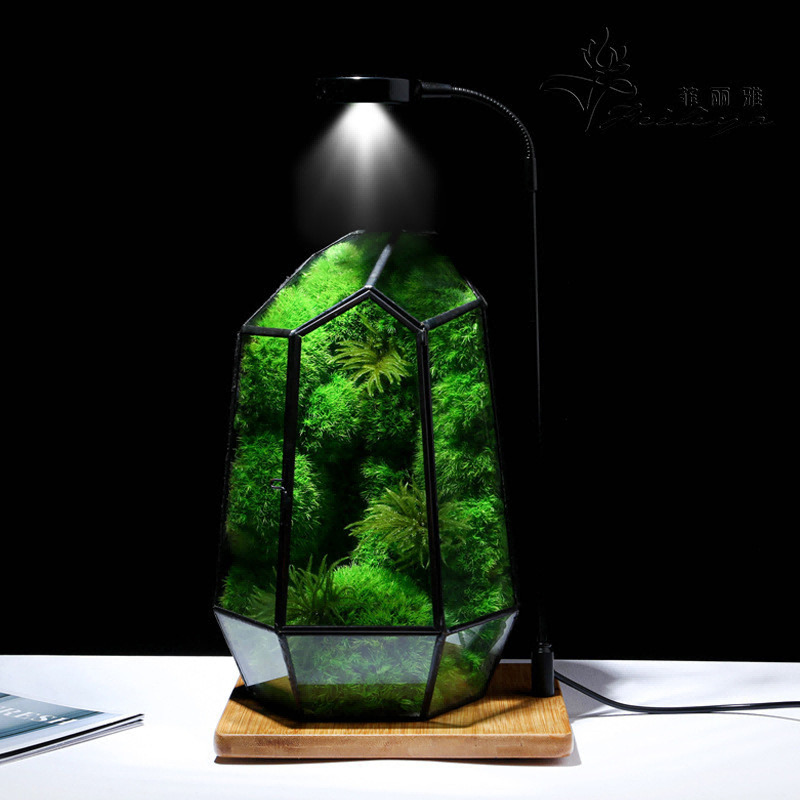
Most acoustic panels do their job but end up looking like sterile, grey boxes bolted to a wall. This approach flips that entirely—imagine a wall covered in a dense, sculpted forest, where every branch, leaf, and trunk is actually pulling double duty as a sound absorber. The visual effect is immediate: you're not standing in a room with soundproofing; you're standing at the edge of a quiet woodland, even if it's just a hallway or conference room.
The secret lies in how the material is shaped and layered. Instead of flat foam or fabric, the panels are carved or molded into overlapping organic forms—think tall pines, broad ferns, and tangled undergrowth. Each irregular surface breaks up sound waves, while the porous core traps and dissipates noise before it can bounce around the space. The finish might use earthy browns, deep greens, and subtle moss-like textures, so the illusion holds up even from a few feet away.
What makes this different from a standard acoustic solution is that it doesn't hide its function behind a bland cover—it turns the function into the main event. You get the practical benefit of a noticeably quieter room, but you also get a backdrop that calms people down, sparks conversation, and makes the space feel alive. It's especially useful in open offices, libraries, or home studios where you need both focus and a bit of nature's relief without planting a single real tree.
Why Live Walls Fail and Preserved Moss Doesn't
Live walls demand constant attention, and even then, they often fall apart. The main culprit is water—too much rots the roots, too little dries out the foliage. Add in poor drainage, limited natural light, and the ongoing battle against pests, and you're left with a wall that looks patchy and tired within months. Most live installations also need regular pruning and fertilizing, which drives up maintenance costs and leaves no room for error.
Preserved moss sidesteps all of that because it isn't actually alive. Through a careful preservation process, the moss retains its soft texture and rich color but stops all biological functions. It doesn't need sunlight, water, or soil, so you can hang it in a dim hallway or a busy lobby without worrying about survival. It also won't attract insects or develop mold, which are common headaches with living greenery.
The difference becomes obvious after the first year. A live wall may show dead spots, yellowing leaves, or uneven growth, while preserved moss keeps its original look with zero upkeep. You get the visual warmth of nature without the fragile ecosystem—no irrigation timers, no replacement plants, no disappointed clients. That's why interior designers and architects keep choosing preserved moss for long-term installations.
Custom Shapes and Colors for Real Rooms
When a room stops feeling like a catalog page, it usually starts with a piece that defies the usual rectangle. A curved sofa in a deep oxblood anchors the space without shouting, while a low, kidney-shaped coffee table in chalky sage pulls the eye across the floor. These aren't just furniture choices; they're quiet interruptions that make the room feel collected rather than assembled.
Color works the same way when it's allowed to be specific. Instead of another navy accent wall, imagine a cabinet in the exact yellow of a ripe quince, or a rug the color of wet slate after rain. Custom shapes and colors give a room its own memory—someone chose that odd, lovely green, someone decided the bench should curve like a river stone.
The trick is to let one or two of these pieces lead. A sculptural floor lamp in burnt orange can hold a whole corner together, while a perfectly round dining table in matte charcoal makes the room feel both softer and more deliberate. Real rooms breathe when they aren't forced into straight lines and safe neutrals.
The Low-Carbon Art Form You Can Hang Anywhere
A frame of pressed wild grasses, faded linen scraps, and one thin branch found after a storm doesn't ask for much. It hangs on a nail, weighs less than a hardcover book, and costs almost nothing in carbon to keep. The materials were already on their way to compost or landfill; here they get a slower second life.
These pieces work because they don't try to compete with a room. A hallway, a kitchen corner, even the narrow wall above a light switch can hold one without feeling crowded. Unlike a canvas that needs a focal point or a sculpture that demands floor space, a low-carbon wall hanging settles into whatever light and air the room already has.
Making one rarely takes more than an afternoon. You soak the stems to soften them, weave the cloth strips around the branch, and let everything dry flat under a heavy book. There's no resin, no plastic frame, no shipping box. When it eventually fades or frays, it can go right back to the earth it came from.
Inside the Workshop: How We Build Each Panel
It starts with raw sheets of birch plywood stacked against the back wall, each one inspected for warps or knots before it earns a place on the cutting table. Our saws are set to a tolerance of half a millimeter, and the first cuts define the frame that gives every panel its strength. No two batches are identical, so we adjust blade depth and feed rate on the fly rather than relying on a preset recipe.
From there, the core gets wrapped in a layer of recycled denim or PET felt, depending on the acoustic targets. We use a contact adhesive applied with a notched trowel, then roll the fabric by hand to chase out air pockets. It's slower than an automated line, but we can feel when a corner isn't sitting flat and fix it before the panel moves on. The edges are folded and stapled on the back, with each staple placed every four centimeters.
The last step is a wipe-down with a microfiber cloth and a close look under angled light. Any faint scratch or misaligned seam gets sent back to the bench, not out the door. That's why a single panel can take forty minutes from start to finish—we build them like furniture, not like a commodity.
FAQ
We use reindeer moss, sheet moss, and mood moss. Each one is preserved rather than living, so it keeps its color and softness for years without soil or sunlight. Reindeer moss gives that puffy, rounded look, while sheet moss fills in the background and mood moss adds a slightly wilder texture.
The moss goes through a preservation process that replaces moisture with a plant-based glycerin solution. That locks in the color and pliability, so it doesn't need misting or irrigation. You just keep it out of direct sunlight and away from heavy steam, and it holds up fine indoors.
Yes, custom sizing is possible. Send over the dimensions and we'll map out how the moss sections should be cut and joined so there's no obvious seam or forced pattern. It works best when you include a photo of the wall with measurements marked.
The moss is harvested from managed forest floors in small batches, and the backing boards are made from recycled wood fiber. The preservation solution is non-toxic and biodegradable. No live moss is stripped in a way that damages the source area, and leftover trimmings are composted or reused in smaller pieces.
Real preserved moss has a matte, uneven surface that catches light differently from molded plastic. It also feels softer and doesn't have that shiny, repetitive pattern. Over time, real moss may fade slightly or shed a few particles, but it never gives off the plastic sheen or brittle edges that fake tiles develop.
No grow lights or humidifiers are required. Normal office or home conditions work well. The ideal range is around 35 to 65 percent humidity, but it tolerates drier air. Direct sun through a window is the main thing to avoid, because it can bleach the color over a long period.
A typical panel weighs between four and seven pounds per square meter, depending on thickness and moss density. Standard drywall anchors or a simple French cleat are enough for most installations. For very large feature walls, we recommend screwing into studs just to be safe.
They fit well with biophilic, Japandi, and modern organic spaces, but they also soften stark concrete or minimalist rooms. The trick is to use them as a single focal wall rather than covering every surface, so the texture reads as intentional instead of overpowering.
Conclusion
Preserved moss wall panels quietly solve a problem most people only notice after their third dead fern: bringing greenery indoors without the upkeep, the mess, or the slow decline of a living wall. Live walls fail because they're thirsty, light-hungry, and prone to pests—preserved moss doesn't ask for any of that. It holds its color and softness for years with zero watering, no trimming, and no brown edges creeping in. The dense, velvety surface also does double duty by absorbing sound, so a room doesn't just look calmer—it actually feels quieter. You get the depth of a forest floor without the humidity, the gnats, or the guilt.
Every panel is built by hand in the workshop, not stamped out on an assembly line. That means real customization: odd wall dimensions, curved niches, or a blend of moss species and tones that matches the room rather than fighting it. We use preserved moss—a low-carbon material that's harvested once, stabilized, and then lasts for years—so the environmental footprint stays small while the visual impact stays large. Panels can be hung in bedrooms, offices, hallways, even bathrooms where live plants would sulk. No special lighting, no irrigation lines, no seasonal replacement. It's functional art that adapts to the space, not the other way around.
Contact Us
Contact Person: Mr. Luo
Email: [email protected]
Tel/WhatsApp: 86 18100895505
Website: https://www.feiliyaflowers.com/en/