

OEM Cooling Gel Mattress Topper: What Buyers and Brands Should Know
2026-11-21
Sleep hot? You’re not alone. As mattress toppers flood the market, one category keeps standing out for its ability to pull heat away from the body—OEM cooling gel mattress toppers. Whether you’re a buyer comparing factory options or a brand planning your next product line, the real difference often comes down to material quality, gel distribution, and long-term cooling performance. Kunbao has been refining these details for years, and in this guide we break down what actually matters before you place an order.
Why OEM Cooling Gel Mattress Toppers Feel Different From Standard Foam
Standard foam tends to hold heat close to the body because its dense cell structure leaves very little space for air to move. OEM cooling gel toppers take a different route, usually by working gel beads or a liquid gel layer into open-cell foam or placing it just beneath the surface fabric. That design pulls warmth away from the skin early, before it has a chance to build up through the night.
The feel also changes under body weight. Ordinary foam often presses down as one thick, slow-moving block, while many OEM gel toppers are built around a more responsive foam base or targeted support zones. That keeps the cooler gel layer near the body without creating the deep, stuck sensation people dislike in traditional foam.
Production choices matter as well. With OEM builds, gel density, foam firmness, and cover materials are usually adjusted to match a specific buyer’s requirements. That is why two gel toppers carrying similar descriptions can feel noticeably different once they are actually on a bed.
What Actually Changes When a Brand Customizes a Gel Topper
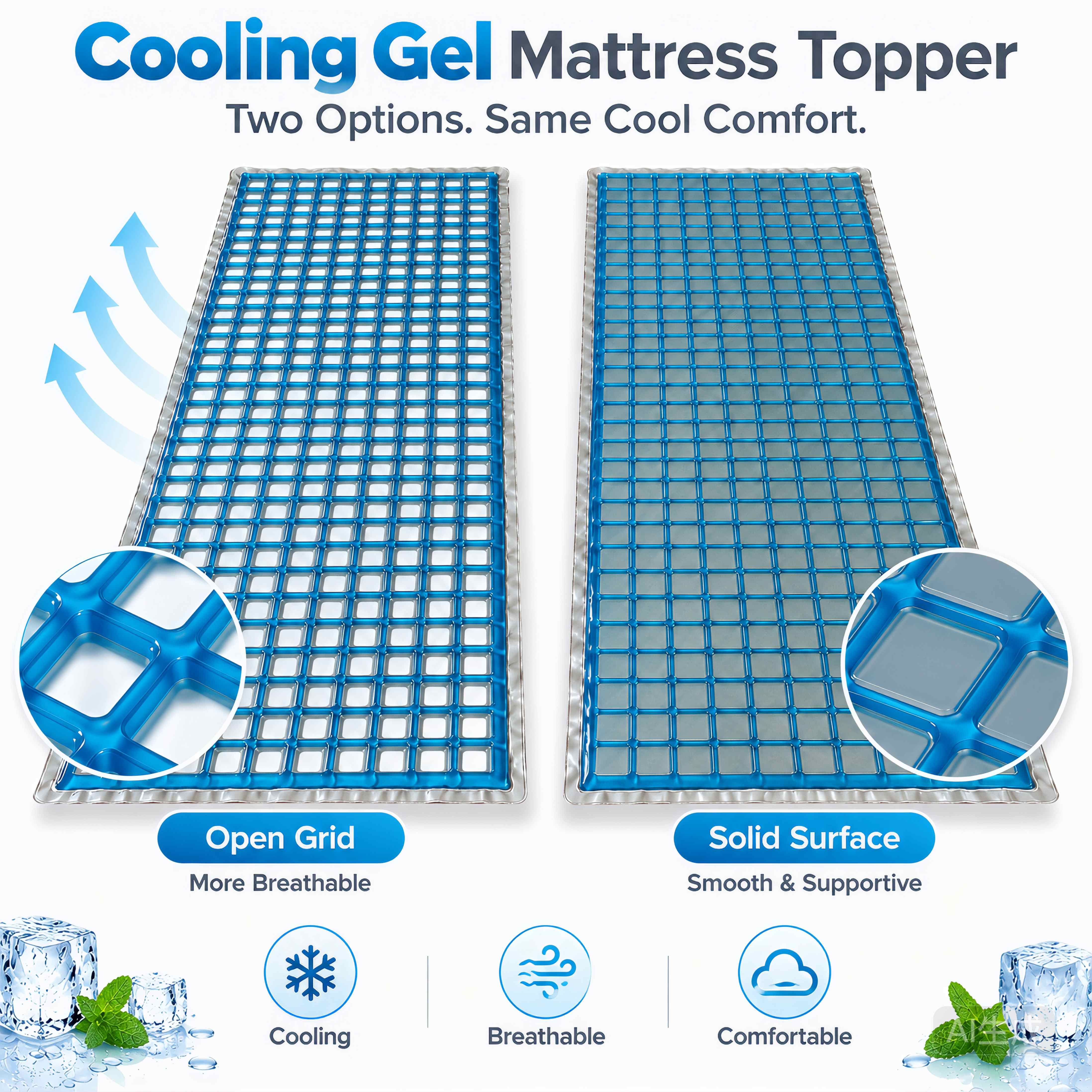
Most people assume customization is just a color change or a new logo on the box, but the real shifts happen inside the material itself. A brand can alter the gel blend ratio, the density of the foam base, and the way the topper is poured or cut. These choices change how quickly heat moves away from the body, how far you sink in, and whether the surface feels springy or slow to recover.
The cover is another quiet variable. Switching from a thin polyester knit to a quilted cotton-and-Tencel layer affects breathability and that first touch when you lie down. Some brands also move the gel particles closer to the top surface, while others push them deeper into the foam to hide the cool sensation. The difference is not always visible, but it shows up within the first few minutes of use.
Edge support and motion isolation are often adjusted during customization, too. A topper that is trimmed denser along the perimeter will feel more stable when you sit near the side, while a more uniform pour tends to let movement travel across the bed. In practice, the names on two gel toppers can look similar, but the way they are built can make one feel like a soft hug and the other like a firm pushback.
Questions Buyers Raise Before Choosing a Private Label Cooling Topper
Most buyers don’t start by asking for a quote. They start by asking why the cooling effect won’t wash out after twenty cycles, or how the topper feels on a warm night when the room is already humid. These are the questions that separate a generic foam pad from something that can carry a brand.
Then the discussion turns to cost control and packaging. Buyers often ask if the topper can be vacuum-packed flat enough to fit a slim retail carton, whether the quilting pattern can be adjusted to match their brand identity, and what the actual defect rate looks like across a production run. They also tend to request a temperature-retention test or a wash test before signing off, not because they doubt the supplier, but because their own customers will blame the brand first if the product under-delivers.
Certifications, lead times, and minimum order quantities usually come up last, but they matter just as much. A buyer might want OEKO-TEX or similar skin-contact documentation, a realistic shipping timeline, and clarity on whether the topper is drop-shipped as a finished piece or shipped in bulk for local fulfillment. Nailing these answers early builds more trust than a polished spec sheet.
Where Thickness Density and Gel Placement Really Matter
Thickness alone rarely solves discomfort; it controls how much travel the foot has before support engages. In the heel and ball area, extra material helps absorb repeated impact on hard floors, but that same stack height can crowd the arch and throw off balance. So the useful thickness tapers down through the midfoot instead of staying uniform.
Density is what determines whether that thickness actually holds up. A firm zone under the metatarsal heads keeps the foot from bottoming out during a long push-off, while a softer rim lets the edges flex without digging into the skin. After a few hours, the difference between a dense gel insert and a generic foam layer becomes obvious: the foam has packed down, but the targeted gel still returns energy.
Gel placement matters most where pressure concentrates rather than across the whole surface. Placing gel pads beneath the heel strike and the forefoot reduces shear and dampens vibration without making the midfoot unstable. A pad that sits even a few millimeters off its intended zone can create an edge you feel with every step, and then neither thickness nor density can fix the fit.
Quality Issues That Tend to Appear After the Topper Is Unpacked
Once the topper is out of its vacuum-sealed packaging, a few things can surface that weren't visible in the product photos. The most common is an uneven expansion—some areas may stay flat for days while others fluff up quickly, leaving a lumpy sleeping surface. This isn't always a defect, but it does require patience and occasional manual reshaping, which many buyers don't anticipate.
Another issue that tends to show up only after unpacking is a persistent chemical smell. Even brands that advertise CertiPUR-US foam can release a noticeable off-gassing odor when the material first breathes. In closed bedrooms or poorly ventilated spaces, that smell can linger for over a week. Some people also notice a slight tackiness on the surface straight out of the box, which usually fades but can trap lint and pet hair during the first few nights.
Finally, watch for small tears near the seams or corners—these often happen during the compression process and only become obvious once the topper is stretched over a mattress. While not always a dealbreaker, such tears can worsen with regular use, especially if the cover is thin or the foam is on the softer side.
How Brands Can Sell Cooling Comfort Without the Usual Sleep Promises
Cooling comfort has been trapped in the bedroom for too long. The tired promise of “deeper sleep” no longer separates one brand from another, and shoppers have learned to tune it out. Instead of repeating another bedtime claim, show people what coolness does in the middle of a workday, after a workout, or during a hot commute. A pillow insert that keeps a neck from sweating on a train, a blanket that makes a couch feel like shade, a mattress pad that turns a stuffy apartment into a recovery spot—these small, specific moments make the benefit tangible without ever mentioning sleep stages.
The most convincing angle is relief from heat, not rest. Talk about how the material pulls warmth away from skin, how it dries fast, how it feels on bare legs. Use sensory detail rather than clinical outcomes. “Cool side of the pillow” works because it is physical and immediate; it does not ask the buyer to wait eight hours for proof. Brands should lean into that instant sensation and let customers decide where they want to use it—bedroom, office chair, car seat, or picnic blanket.
A third way is to treat cooling as a comfort feature instead of a health fix. Mention humidity, warm nights, hot flashes, shared beds, stuffy rooms. Use plain language that sounds like a friend describing what helped. That approach lowers skepticism and makes the product feel like a small everyday upgrade rather than another overpromising sleep solution. The goal is not to deny sleep benefits but to stop making them the headline; let the cool feeling speak first and the sleep claims become unnecessary.
FAQ
Initial coolness often comes from the gel's thermal conductivity, but all-night comfort depends on breathability through the foam cell structure. Open-cell foams let air move instead of trapping heat. The gel type also matters: phase-change materials absorb and release heat, while simple gel beads mostly add a cool-to-the-touch feel. A topper that only has gel on the surface may sleep warm if the base foam is dense and closed.
Gel-infused foam mixes gel particles into the polyurethane before pouring, so cooling is more consistent throughout the layer. Gel-coated or gel-swirled surfaces put the visual and tactile effect right on top, which looks great in photos and showroom demos. The trade-off is usually cost and longevity: coated surfaces can fade or wear faster, while infused foam tends to perform more evenly over time. Many brands use a thin gel-infused top layer over a firmer support foam.
Side sleepers need deeper contouring, so a 3-inch topper at around 3.5 to 5 pounds per cubic foot reduces pressure on shoulders and hips. Back sleepers do well with 2 to 3 inches at medium density. Stomach sleepers often prefer 2 inches or less with a firmer feel to keep the spine aligned. Thickness alone won't fix a weak base foam, so density should come first.
The gel layer handles the cool touch, but the base foam carries body weight every night. If it's low-density polyurethane, it will soften and sag within months regardless of how good the gel feels on day one. Look for high-resilience or high-density support layers, and ask the factory for compression set and density test data. A reliable topper pairs cooling features with a base that keeps its shape.
CertiPUR-US and OEKO-TEX are the basics for chemical safety and indoor emissions. For production standards, ISO 9001 shows process control, while BSCI or SMETA covers social compliance. If you export to Europe, REACH compliance matters. Ask for current certificates and match them to the factory name on your order documents; don't accept a generic file without verification.
You can specify gel color, swirl pattern, foam density, thickness, edge support, cover fabric, quilting style, and packaging format. Some factories offer different cooling intensities or add phase-change material for a stronger thermal effect. The key is providing a clear spec sheet and asking for a pre-production sample so the final product matches what your brand promises.
The biggest one is chasing the lowest price and ignoring foam density. Cheap toppers often feel cool for a week then sleep hot. Another mistake is skipping a heat retention test or a small sleep trial before mass production. Off-gassing is also overlooked: low-quality foams can carry a strong chemical smell that leads to returns. Finally, some brands approve a sample but don't lock the spec, so later shipments drift in thickness or gel distribution.
Conclusion
OEM cooling gel mattress toppers rarely behave like standard foam because the gel infusion alters how the surface responds to body heat and pressure. Instead of simply softening the top layer, the gel draws warmth away from the skin and changes the foam's recovery speed, so the topper can feel cooler at first touch but firmer once weight settles in. When a brand customizes one, the real differences usually show up in gel distribution, cover tension, edge profile, and the base foam underneath. Buyers tend to ask about off-gassing, return rates, minimum order quantities, and whether the cooling effect survives washing or long-term compression before they commit. Thickness alone is not a reliable indicator of quality. A thinner topper with targeted gel zones and a denser support core often outperforms a thicker slab with uneven gel beads. Density and gel placement matter most under the hips and shoulders, where heat builds and foam breaks down first.
Once the topper is unpacked, certain flaws become obvious quickly. Uneven gel distribution can create warm spots, the first nights often come with a chemical odor, and some units fail to return to their full shape after being rolled. Low-density foam may collapse at the edges or sag where the sleeper sits up. Brands that sell these products well avoid leaning on vague promises about deeper sleep or instant cooling. They describe how the surface feels under warm skin, explain the role of the cover in moving moisture away, and set realistic expectations about temperature reduction. The strongest angle is practical comfort: a topper that feels cooler for the first hour, resists that sticky midsummer buildup, and keeps its structure after repeated use. That message holds up better than another generic claim about a perfect night of rest.
Contact Us
Contact Person: Catherine Peng
Email: [email protected]
Tel/WhatsApp: +86-13434169510
Website: https://www.kbcoolgel.com/