

Prefabricated Substation Company Advantages for Fast Track Power Projects
2026-08-17
When timelines tighten and power demand can't wait, the choice of substation partner often decides whether a project launches on schedule or stalls in delays. Lugao has built its reputation on prefabricated substations that cut months from traditional construction cycles—without cutting corners on reliability. But what exactly makes a prefabricated approach so well-suited for fast track power projects, and why are leading developers turning to Lugao to deliver? This post explores the concrete advantages that are reshaping project planning.
Shrinking Project Timelines with Pre-Assembled Power Units
Instead of spending days piecing together individual components on site, teams now receive fully integrated power units that are wired, tested, and ready to connect. This shift removes the most unpredictable part of any schedule—field assembly. The result is a dramatic reduction in the time between delivery and first energization, with fewer trades competing for the same workspace.
Because these units undergo factory acceptance testing before they ever leave the manufacturing floor, commissioning becomes a matter of verification rather than troubleshooting. Project managers no longer need to build in extra buffer days for unexpected wiring errors or missing parts. The schedule shrinks not through overtime or rushed work, but by eliminating entire phases of on-site construction that used to sit squarely on the critical path.
One often-overlooked benefit is the ripple effect on other trades. When the power infrastructure arrives as a drop-in module, downstream activities like instrumentation checkout and system integration can start earlier. Rather than waiting for electrical crews to finish, the whole project moves forward in parallel, compressing what was once a linear sequence into a much tighter timeline.
Factory-Tested Reliability That Avoids On-Site Surprises
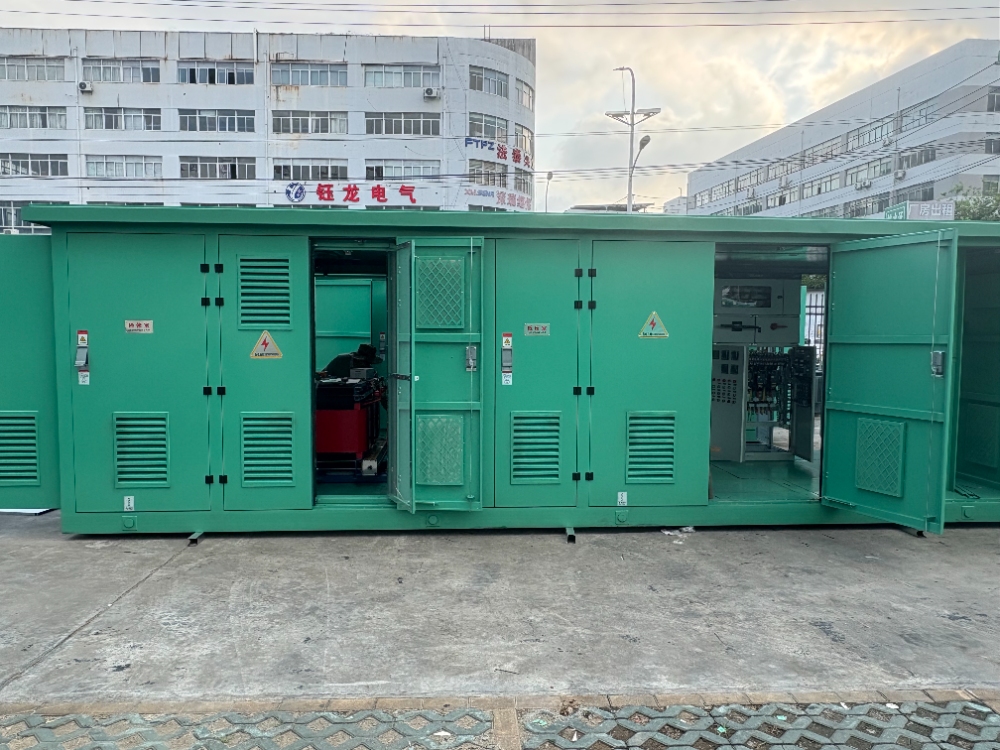
Before anything ships, each unit spends hours in a test bay that simulates real-world conditions: voltage swings, temperature cycles, vibration, and load steps. This isn't a pass/fail formality. We log every reading, compare it against baseline curves, and flag anything that drifts even slightly outside expected limits.
The benefit shows up at installation. Because the equipment has already been run at full load and under fault scenarios, the common first-day surprises—miswired terminals, unexpected fault codes, or parameters that need on-site tuning—are caught and corrected before the crate is sealed. That means less troubleshooting on a ladder or in a panel.
It also changes the conversation with installers and end users. Instead of assuming the factory only did a basic continuity check, they can trust that the unit has survived a controlled trial run. For projects with tight startup windows, that pre-verified performance is the difference between a clean commissioning and a weekend of chasing intermittent issues.
Modular Designs That Grow with Your Grid Demands
A fixed-capacity substation often forces a painful choice: build too much today and carry idle assets, or build too little and scramble when load arrives. Modular designs remove that dilemma by letting you start with what you actually need now, then add standardized building blocks as your grid expands. Each additional power module or switchgear bay slots into the same footprint, so capacity growth becomes an operating decision rather than a multi-year construction project.
Growth rarely moves in a straight line. One year a neighborhood adds a data center, the next a fleet of EV chargers appears. With modular hardware, you can stagger the investment to match real demand, avoiding the wasted capital of speculative overbuilding. If a feeder shows sustained overload, you simply roll in another converter or battery rack, connect it through prefabricated buswork, and return to service without tearing out what already works.
This approach also keeps future options open. Standardized mechanical and communication interfaces mean new modules can carry newer semiconductors, higher efficiency ratings, or different storage chemistries without forcing a wholesale replacement. What starts as a compact two-megawatt installation can evolve into a twelve-megawatt hub using the same control architecture, preserving both engineering effort and field experience as the grid around you changes.
Cutting Civil Works and Site Prep to a Fraction
Traditional site work chews through budget and schedule before a single module is even set. By swapping mass concrete pours for driven or helical anchors and letting the structure follow existing grade, the heavy civil scope shrinks to light grading and a few access paths. Most pads never see a mixer truck, and the usual excavation, formwork, and curing wait simply disappear.
What remains is measured in days, not weeks. Pre-assembled frames and factory-fitted connections mean a small crew can set out the entire layout with hand tools and a skid steer. Irregular ground isn't flattened into submission; the legs or piles adjust to the slope, so cut-and-fill volumes drop by an order of magnitude. That also keeps root zones and drainage patterns largely intact, which matters more than people expect when the site has to be handed back.
The payoff shows up in both the quote and the Gantt chart. Civil works and site prep become a line item you barely negotiate instead of the dominant cost driver. With fewer truck rolls, less imported stone, and no buried rebar cages, start-to-finish site disturbance stays minimal—and the percentage of the project spent on dirt drops to a fraction of what conventional layouts demand.
Streamlined Logistics for Remote and Tight Sites
Getting materials and equipment to a site that's far from main roads or squeezed between existing structures often feels like solving a puzzle with moving pieces. Instead of relying on standard delivery schedules, we map out access points, turning radii, and load limits before a single truck rolls. Small, articulated haulers slip through narrow gateways, while pre-staged drop zones cut down on time spent reversing or waiting. The goal is to keep the flow steady without stuffing the site full of idle inventory.
On remote jobs, fuel, water, and spare parts become as critical as the main build itself. We bundle everyday consumables into consolidated runs, reducing the number of trips that disappear into long distances. For tight urban footprints, we coordinate with local traffic windows and use off-peak deliveries to avoid blocking lanes or neighboring driveways. A small on-site coordinator tracks arrivals on a simple whiteboard, ticking off items as they're unloaded, so nothing gets lost in the shuffle.
The real difference shows when a crane or concrete pump needs to squeeze into a spot never designed for it. By measuring clearances early and choosing modular fittings that arrive in flat-pack form, we keep heavy lifts to a minimum. Temporary storage units are placed vertically, not spread out, to preserve every square foot of working room. This approach lets crews spend more time assembling and less time hunting for a place to put the next delivery.
Lowering Total Project Cost Without Cutting Corners
Many teams mistake cost reduction for cutting scope or chasing the lowest bid, but that usually backfires through rework and higher lifecycle spending. The real savings start at the design table—simplifying geometry, consolidating material grades, and reducing needless customization can lower procurement and construction difficulty without sacrificing performance.
Another often-missed lever is procurement timing and supply chain collaboration. Instead of waiting until drawings are complete to tender, bring key subcontractors and suppliers in early. They can point out which specs drive premiums and which lead times can be shifted to dodge price spikes. Those conversations often uncover savings far bigger than squeezing unit prices, while keeping quality expectations intact.
Finally, controlling change orders matters more than controlling the initial quote. The biggest variable in total project cost is rarely the base price of materials and labor—it's the waiting, rework, and temporary fixes caused by coordination misses on site. Investing in clearer 3D coordination and preconstruction clash detection costs a fraction of what it takes to resolve conflicts after they surface. That's not cutting corners; it's removing hidden waste.
FAQ
Instead of waiting for civil works and piecemeal equipment installation, most of the assembly and wiring happens off-site in a controlled factory. Once the pad or foundation is ready, the unit arrives almost complete, so commissioning can start within days rather than months.
They usually keep standardized designs and pre-approved components in stock, so procurement bottlenecks disappear. The real advantage is parallel working: site preparation and substation manufacturing happen at the same time.
Not if the manufacturer has rigorous factory acceptance testing. Because everything is assembled indoors, there's less exposure to weather, fewer field wiring errors, and consistent workmanship compared to building on a muddy construction site.
Yes, within limits. While the enclosure and layout may be standard, protection schemes, transformer ratings, busbar configurations, and communication interfaces can be tailored. A good vendor will confirm the specific grid code and seismic or environmental constraints before finalizing the design.
Substantially. The need for a permanent building, cable trenches, and extensive on-site terminations is greatly reduced. Usually you pour a simple concrete pad, set the unit with a crane, and connect the incoming and outgoing cables. That's often the entire site scope.
Since components are integrated and tested as a complete system, there are fewer interface failures. Maintenance is often simpler because the manufacturer provides a single point of responsibility and documentation for the whole package, rather than coordinating multiple equipment suppliers.
Not necessarily. The primary equipment remains standard, and many components like breakers, relays, and transformers are from well-known brands. However, matching the existing bus layout and control architecture usually makes it easier to stick with the original supplier or specify compatible hardware.
Conclusion
Fast-track power projects rarely allow the luxury of sequential site work. A prefabricated substation supplier flips that constraint by delivering pre-assembled, factory-tested units that cut weeks from schedules. Instead of waiting for concrete pads to cure or coordinating half a dozen trades in a cramped switchyard, crews land a single skid or containerized module, make final connections, and energize. Because the entire assembly is tested under factory conditions before shipping, the typical round of on-site fault-finding largely disappears. Remote locations benefit as much as congested urban ones: compact footprints and pre-planned lifting points let transport logistics stay simple even where access is narrow or ground conditions are poor.
Modularity is where long-term value shows up. A station can start with the capacity you need today and accept additional bays, transformer modules, or protection panels later without a major civil rebuild. That same approach trims the heavy groundwork—trenching, duct banks, foundation pours—to a small fraction of conventional construction. Procurement also becomes less fragile: fewer change orders, fewer weather delays, and less site labor mean the overall project budget drops without scaling back on breakers, relays, or safety clearances. The advantage is not just speed but predictability, which is what fast-track programs actually run on.
Contact Us
Contact Person: Doreen
Email: [email protected]
Tel/WhatsApp: 8618057712366
Website: https://www.liugaopower.com/