

Preserved Flower Recommendations for Lasting Floral Beauty at Home
2026-09-08
What if your favorite blooms could stay vibrant for years, no watering or wilting required? That's the beauty of preserved flowers—and PHLEEYA makes it effortless to bring that lasting floral charm into your home. From single stems to statement arrangements, these recommendations will help you choose pieces that feel alive long after fresh flowers would have faded.
Roses That Keep Their Velvet Finish Well Past the First Month
Most roses lose their plush texture within days, the petals turning thin and brittle before the first month is out. But a handful of carefully preserved varieties hold onto that dense, fabric-like surface for much longer. The petals remain soft to the touch, with a matte depth that doesn't fade into a papery sheen.
The trick lies in how these stems are treated at the exact moment of full bloom. Rather than being air-dried, they are placed in a solution that replaces natural moisture with a gentle, wax-based compound. This keeps the cell structure intact, so the edges stay smooth and the velvet finish doesn't crack or peel. Even after six weeks, rubbing a petal between your fingers still gives that slight resistance of good suede.
To keep them looking their best, place the arrangement away from direct heat and strong drafts. A quick pass with a soft brush removes any dust without flattening the nap. Unlike standard dried roses, these won't collect lint or turn dull, so the rich, touchable surface remains a focal point long after ordinary blooms would have been thrown away.
Eucalyptus and Ruscus for a Greenery Base That Feels Alive
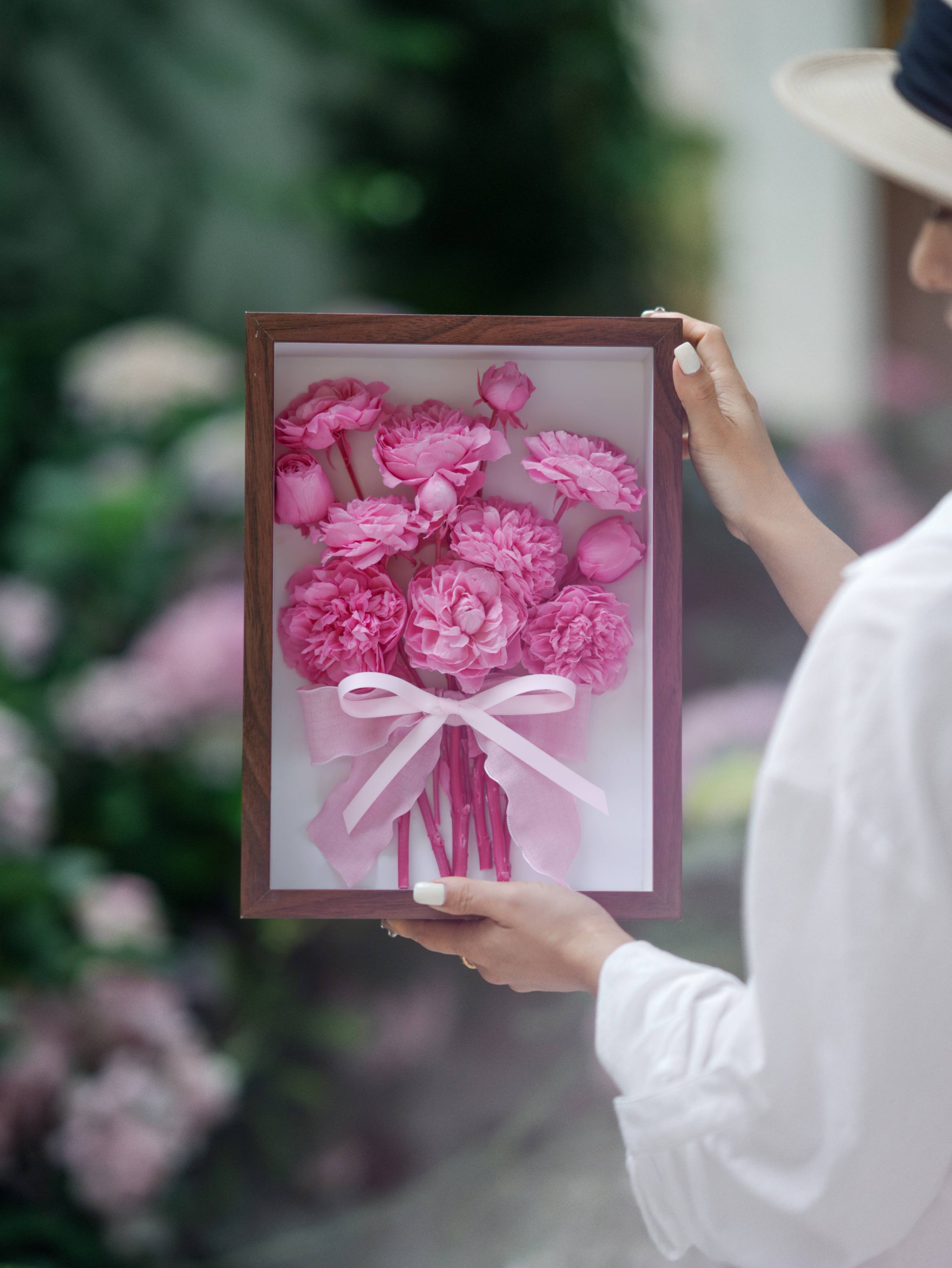
Eucalyptus gives the base a dusty blue-green cast and a loose, trailing habit that stops the arrangement from feeling boxed in. A few stems placed low do most of the work, their rounded leaves catching light unevenly and creating small shadows. Ruscus sits deeper in the mix with darker, almost leathery foliage and a more upright line. Together they read less like a standard filler layer and more like a snapshot of living undergrowth.
What makes the pair work is the way they age and move. Eucalyptus softens and relaxes, while ruscus keeps its structure, so the base shifts over time instead of staying frozen. That slight unpredictability is what gives the greenery its sense of life. It also means the base can stand on its own with minimal blooms, or disappear just enough behind larger stems without becoming flat.
Hydrangeas That Hold Their Fullness Without Drooping
Some hydrangeas earn their keep simply by staying upright after a downpour. The old mopheads often flop under the weight of their own blooms, but a handful of modern introductions and species have much sturdier branching. Smooth hydrangeas like Incrediball and the Invincibelle series carry full, rounded flower heads on stems thick enough to resist bowing, even when soaked. Panicle types such as Limelight and Quick Fire grow more like small shrubs with woody frameworks, so their cone-shaped blooms stay lifted rather than sagging toward the soil.
To get that spring-through-fall posture, look for plants labeled as strong-stemmed or bred for upright habits, and give them a spot with morning sun and afternoon shade. Snipping out weak interior growth in early spring also redirects energy into the remaining canes, helping them thicken before bloom time. With the right selection and a light annual prune, you get the fullness of a classic hydrangea without the sad, rain-flattened stems that often follow summer storms.
Lavender, Pampas, and the Textural Pieces Worth Mixing In
Lavender and pampas don't immediately seem like partners. One is delicate and upright, the other airy and a little unruly. But when they share the same arrangement, the contrast works in your favor: the cool purple spikes give structure, while the feathery beige plumes fill the space around them without flattening the silhouette.
To keep the mix from feeling too predictable, bring in smaller textural accents like dried bunny tails, oat stems, or a few branches of eucalyptus. These pieces add irregular rhythm and pull the eye through the composition. Let some stems lean outward and keep a few shorter near the base so the whole thing doesn't turn into a tidy bouquet.
A wide ceramic or woven vessel suits this kind of arrangement better than a narrow vase. It gives the pampas room to droop and the lavender stems a stable foundation. Place it somewhere with low traffic, because dried botanicals can shed, and you'll want to enjoy the texture without constantly sweeping up after it.
Color Pairings That Hide Fading Instead of Fighting It
Instead of trying to keep a cherry-red throw from turning pink, set it against deeper oxblood and faded terracotta. The eye reads the whole arrangement as a warm, sun-bleached palette, so the washed-out spots simply look like part of the story. This works especially well with vintage textiles where fading happens unevenly; layering similar undertones makes the patchiness feel intentional.
Low-saturation pairings are the easiest way to make fading disappear. Think dusty sage, oat, and clay — these colors barely shift when they lose pigment because they never relied on brightness in the first place. A faded sage cushion next to raw linen and a pale umber blanket doesn't look tired; it looks collected. The key is to avoid high-contrast partners that would highlight the difference between old and new.
You can also use a busier pattern or a darker anchor to pull attention away from faded areas. A faded mustard curtain hung beside a charcoal-framed mirror or a deep olive plant stops reading as faded at all — it becomes a quiet, warm backdrop that lets the darker pieces do the talking. This approach treats fading as a softening feature rather than a defect to correct.
A Hands-Off Care Routine That Keeps Stems Looking New
Let the stems do most of the work. Rather than fussing with sprays or frequent cleaning, position them away from direct sun and heating vents—those two factors cause more fading and brittleness than anything else. A cool, dry corner keeps petals and leaves crisp without constant attention.
Once a month, give them a quick once-over with a soft makeup brush or a hairdryer set to cool and low. This lifts the fine layer of dust that dulls colors. If you spot a stubborn smudge, barely dampen a microfiber cloth and dab the spot, then let it air dry completely before returning the stems to their vase.
For storage or rotation, wrap each bundle loosely in plain tissue paper and stand them upright in a box—never pile them flat. That way, the stems keep their shape and finish without needing constant reshaping. A little space between bundles goes a long way toward keeping them looking just unboxed.
FAQ
Deep-toned blooms like preserved burgundy roses, blue eryngium, and dark purple lavender tend to keep their pigment better than pastel shades. Still, place them away from direct window light or rotate the arrangement every few weeks so no single side bleaches out.
Build height in layers rather than sticking stems in a perfect grid. Use preserved eucalyptus or dried ruscus as a loose base, then add a couple of statement roses at odd heights, and finish with small textural bits like bunny tails or dried limonium. Slightly bending stems or tilting flower heads makes a big difference.
Preserved eucalyptus, lavender, and bunny tails work nicely because they tolerate humidity better if the room is ventilated. They also don't need sunlight to hold their look, so a little arrangement on a shelf away from the shower spray can last months.
Yes, but keep water away from the preserved stems. Use a divided vase or place the fresh stems in a small water tube tucked inside the arrangement. Better yet, pair them with fresh flowers that dry well, like statice or baby's breath, so the whole piece transitions naturally into a preserved state.
A quick dusting every three to four weeks keeps them looking bright. Use a soft makeup brush or a hair dryer on the cool, low setting from about a foot away. Avoid damp cloths and never shake the stems hard, because petals and seed heads can snap off.
Move them to a darker, cooler spot right away since light and heat speed up fading. You can also trim away any browned outer petals and nestle the roses next to darker preserved foliage or dried seed pods, which helps the remaining color look richer by contrast.
Preserved lavender, eucalyptus, and dried orange slices or cinnamon sticks bring a soft natural scent without being overpowering. If you want more fragrance, place a few drops of essential oil on a wooden bead or a cotton pad hidden at the base, never directly on the petals because it can stain them.
Use a low ceramic bowl filled with dry floral foam, then tuck in preserved hydrangeas and a few open roses around the rim. Add wispy dried pampas or eucalyptus sprigs for texture, keeping everything low enough not to block eye contact across the table. It needs no water, just a gentle dust now and then.
Conclusion
Fresh flowers fade fast, but preserved stems let you keep that just-arranged look without the weekly wilt. Start with roses that hold a velvet finish well past the first month; their petals stay soft and rich, especially in deep burgundy, blush, or antique cream tones. Garden varieties with cupped blooms tend to preserve best, keeping a natural fold that looks almost fresh. Pair them with eucalyptus and ruscus as a greenery base that feels alive—silver dollar eucalyptus adds cool sage notes, while ruscus gives structure and movement without demanding water changes. Hydrangeas are another standout, keeping their fullness without drooping when you choose blooms dried at peak shape. Muted green, dusty blue, or wine-colored hydrangeas all read as intentional rather than fragile.
Layer in lavender, pampas, and other textural pieces to break up the roundness and give the arrangement a hand-gathered feel. Dried lavender brings a soft purple haze and a faint, clean scent that lingers for weeks. Pampas adds height and a feathery silhouette, while bunny tail grass or dried oats introduce a playful, airy texture. When picking colors, lean into pairings that hide fading instead of fighting it—dusty rose with sage, cream with oat, terracotta with dried fern, or mauve with preserved eucalyptus all age gracefully. Best of all, upkeep stays hands-off: keep stems away from direct sun and humidity, give them an occasional gentle dust with a soft brush or a cool hair dryer on low, and they'll look new for months. Rotate the arrangement once in a while so no side gets flattened, and resist the urge to overhandle the petals. That's the quiet luxury of preserved florals—no pruning, no pollen, no pressure, just lasting beauty that works with your space, not against your schedule.
Contact Us
Contact Person: Mr. Luo
Email: [email protected]
Tel/WhatsApp: 86 18100895505
Website: https://www.feiliyaflowers.com/en/