

Professional Pet Food Production Line: Key Innovations Driving Quality and Efficiency
2026-05-07
In the fast-evolving world of pet food manufacturing, staying ahead means more than just keeping up with demand—it requires embracing innovations that redefine quality and efficiency. From precision extrusion to advanced automation, modern production lines are transforming how we nourish our furry companions. At the heart of this evolution is MINGDE, a brand synonymous with cutting-edge engineering and tailored solutions. As we peel back the layers of today’s most impactful advancements, you’ll discover how the right technology can turn challenges into opportunities, ensuring every kibble and treat meets the highest standards—while keeping your operation lean and competitive. Ready to explore what’s driving real change on the factory floor?
From Weighing to Packaging: Seamless Automation Cuts Waste
When weighing and packaging operate as disconnected steps, small inaccuracies compound fast. A slight overfill here, a misaligned bag there—these slip through manual checks but pile up as material loss and rising costs. Integrating these processes through automation keeps every gram accounted for, slashing waste without slowing down the line.
The magic lies in how data flows uninterrupted. Automated systems adjust fill levels on the fly, responding to real-time feedback instead of relying on preset estimates. This dynamic calibration means packaging machines receive exactly the product needed, avoiding excess use of films, trays, or seals. Even changeovers between product types become smoother, eliminating the scrap common in manual setups.
Facilities that make the switch often notice a secondary gain: cleaner insights. By linking weighing and packaging in one seamless loop, you get a clear picture of where material vanishes. Those insights drive continuous tweaks—not just cutting waste today, but building a smarter operation for tomorrow.
Precision Extrusion Shapes Kibble Texture and Palatability
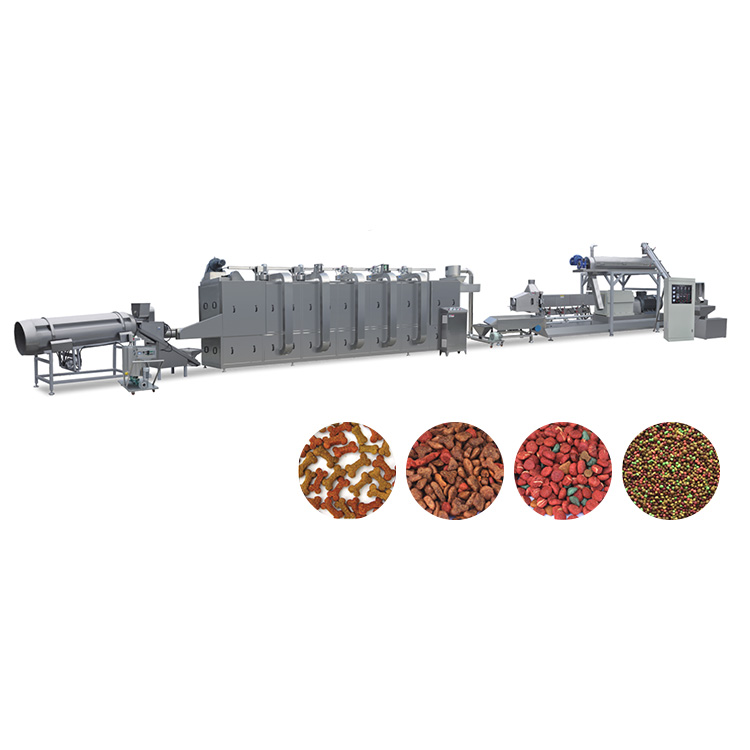
The way kibble is formed during manufacturing goes far beyond simple shape—it directly influences how pets experience every bite. Precision extrusion allows for controlled expansion and density, creating a texture that can be crisp and airy or dense and crunchy depending on the recipe and die configuration. This textural variety stimulates a pet’s natural chewing behavior and mouthfeel preferences, making meals more engaging and satisfying.
Palatability isn’t just about flavor; it’s deeply tied to the structural integrity and surface area of each piece. Extrusion parameters like temperature, moisture, and screw speed determine the porosity and breakdown pattern of the kibble. A carefully engineered shape can enhance the release of fats and flavor coatings, ensuring that the taste hits the palate immediately while also providing a slow-release effect during chewing. This interplay between form and function often tips the scales for picky eaters.
Beyond the technical side, precision shaping allows manufacturers to tailor kibble to specific life stages or breed sizes. Smaller, intricate shapes are easier for puppies or small dogs to grasp, while larger, geometric forms encourage thorough crunching for dental health. The consistency achieved through advanced extrusion means that each batch delivers the same textural experience, building trust with pets and owners alike without relying on artificial enhancers.
Inline Sensors Detect Inconsistencies Instantly
The moment a product veers off spec, the inline sensors catch it—no waiting for a batch check at the end of the line. A slight shift in pressure, a subtle color mismatch, or a fraction of a millimeter out of place is enough to trigger an alert. Production barely skips a beat before the issue is flagged and the defective piece is routed aside.
What makes this feel so seamless is the sensors’ ability to compare each item against a live reference profile, not just a static tolerance band. They learn from previous cycles and adjust for normal drift, so they don’t cry wolf over every minor variation. This cuts down on false alarms while still pouncing on real anomalies before they turn into costly rework downstream.
Operators on the floor notice the difference too. Instead of squinting at screens or manually measuring samples every hour, they get a crisp notification with the exact location and nature of a flaw. It turns a reactive scramble into a calm, targeted response—often before anyone else in the factory even realizes something was off.
Hygienic Equipment Layouts Prevent Cross-Contamination
A well-thought-out equipment arrangement does more than streamline production—it actively separates raw materials from finished goods, keeping contaminants from traveling where they shouldn’t. By placing washing stations, sterilizers, and conveyors in a logical sequence, you create a one-way flow that naturally prevents backflow or accidental contact between clean and soiled items. The physical distance between handling zones, combined with dedicated pathways for waste disposal, means staff aren’t forced to cross through sensitive areas with dirty tools or packaging.
The positioning of equipment also affects how effectively sanitation can be performed. Units placed too close to walls or in cramped corners rarely get the thorough cleaning they need, leaving hidden spots where pathogens thrive. Thoughtful layouts leave generous clearance for daily wipe-downs and periodic deep cleans, making it easier to maintain a hygienic environment without disrupting production schedules. Drainage slopes, smooth surfaces, and accessible service panels further reduce the time and effort required to keep everything contamination-free.
What often gets overlooked is the role of airflow and ventilation in equipment layout. Machineries that generate heat, moisture, or airborne particles can unintentionally spread contaminants if positioned near filling or packaging lines. Strategic spacing and proper hood placement help capture aerosols at the source, while positive pressure zones around critical operations keep unfiltered air from drifting in. Combined with material choices that resist microbial growth, these layout decisions form a silent barrier that stops cross-contamination before it even begins.
Energy Recovery Systems Capture and Reuse Heat
Energy recovery systems aim to capture thermal energy that would otherwise be lost from industrial processes, building exhausts, or power generation, and put it to practical use. Instead of letting heat dissipate into the environment, these setups extract it through heat exchangers, recuperators, or waste heat boilers, feeding it back into the same facility or into neighboring heating networks. The approach is surprisingly straightforward: whenever a stream of hot gases, liquids, or steam is discharged, a recovery unit intercepts that flow, transfers the heat to a secondary medium, and then channels it to preheat feedwater, supply space heating, or drive absorption chillers. The upfront cost of installing recovery hardware can be recouped within a few years by slashing fuel bills, especially in energy-intensive sectors like cement, glass, or chemicals, where kilns and furnaces release enormous amounts of high-grade heat.
Beyond the obvious fuel savings, energy recovery directly reduces a plant’s carbon footprint and helps meet tightening environmental regulations. The recovered heat can also improve process stability: preheating combustion air, for instance, makes burners run more efficiently and can even raise flame temperatures without extra fuel. In commercial buildings, heat recovery ventilators capture the warmth from stale exhaust air and transfer it to incoming fresh air, keeping indoor climates comfortable while cutting ventilation heating loads by half or more. District energy systems take this a step further, linking multiple buildings or industrial sites so that surplus heat from one user becomes a resource for another. This sharing not only boosts the overall efficiency of the local energy system but also strengthens resilience against fuel price volatility. The technology isn’t exotic—it relies on established principles of thermodynamics and has been successfully scaled from small heat exchangers in supermarket refrigeration racks to massive flue gas condensers on power stations.
Despite its promise, energy recovery often faces hurdles like space constraints, corrosive exhaust streams, or simply a lack of awareness among operators. Retrofitting older plants can be physically intrusive, demanding careful engineering to route ductwork and integrate controls without disrupting production. Yet the long-term economics are compelling: many projects achieve payback periods of under three years, after which the recovered energy is essentially free. Advances in materials and compact heat exchanger design continually push recovery efficiencies higher and make it feasible to tap into lower-temperature waste streams that were once considered unrecoverable. As the push for decarbonization intensifies, these systems are shifting from “nice-to-have” addons to core elements of any serious energy management strategy, turning waste heat from a costly inconvenience into a valuable asset.
Modular Stations Enable Rapid Changeover Between Recipes
Production lines that rely on a fixed set of equipment often grind to a halt when switching from one product variant to another. The minutes or even hours spent reconfiguring conveyors, swapping out fillers, and recalibrating sensors add up across a shift, eating into overall equipment effectiveness. Modular stations flip this script by letting operators pull one compact unit and wheel in the next, pre-configured for a different recipe, in a matter of seconds. Because each module carries its own tooling, controls, and validation settings, the line never waits for a technician to adjust dozens of parameters by hand.
The real payoff comes from the way modularity isolates complexity. A station built for hot-fill beverages might handle temperature loops and sanitary drainage one hour, then slide out to make room for a cold-fill dairy module the next, without cross-contamination worries. Maintenance teams can take a module offline for cleaning or calibration on a bench while production continues with a duplicate unit. This decoupling means changeover checklists shrink from twenty steps to two: unplug the old, dock the new. Recipe parameters travel with the module, stored in onboard memory or read from a tag, so the upstream and downstream machinery instantly recognize the new specification.
Beyond speed, modular stations give operations the flexibility to experiment with seasonal products or limited runs without committing permanent floor space. If a pop-up demand for a new flavor justifies a short campaign, the right station simply rolls into position, downloads the recipe, and starts producing. When the run is over, the module returns to a storage rack until next time. This plug-and-play approach keeps the primary line humming at its rated throughput, turning what used to be a hard tradeoff between variety and efficiency into a smooth, continuous rhythm of change.
FAQ
Advanced extrusion technologies now allow for precise temperature and moisture control, preserving heat-sensitive vitamins and amino acids. In-line nutrient sensors and real-time analytics ensure each batch matches the target profile, reducing degradation and boosting digestibility.
Integrated robotic packaging and automated material handling have slashed changeover times and minimized human error. Smart conveyors and vision-guided systems orchestrate high-speed sorting and palletizing, pushing daily output while keeping labor costs predictable.
Hyperspectral imaging and X-ray detection now spots foreign bodies invisible to the naked eye, while automated sampling stations perform continuous moisture and density checks. These non-destructive methods deliver data-driven traceability from raw ingredient intake to final packaging.
Closed-loop water systems and energy-reclaiming dryers cut resource use dramatically. Some lines now repurpose off-heat to pre-treat ingredients, and compostable or lightweight packaging is paired with right-size cartoning to reduce freight emissions without compromising product protection.
Sanitary conveyors with fully welded frames and sloped surfaces prevent residue buildup, while UV-C tunnels and controlled atmosphere zones suppress pathogen growth. These measures work alongside clean-in-place protocols that auto-verify chemical concentration and coverage, reducing biofilm threats.
Yes, machine-learning models ingest vibration, thermal, and acoustic data from extruders and grinders to flag bearing wear or die blockages early. Digital twins simulate running parameters so adjustments are tested virtually before live changes, squeezing out unplanned stoppages.
Modular micro-dosing stations now handle niche additives like joint-supporting glucosamine or breed-specific proteins without cross-contamination. Dynamic batching software can switch recipes mid-shift, enabling short runs of tailored blends without sacrificing efficiency.
Conclusion
Modern pet food production lines are being redefined by a suite of integrated advances that tackle everything from ingredient handling to final packaging. One crucial development is the seamless automation from weighing through to packaging, which dramatically reduces material waste by ensuring precise portion control and eliminating manual transfer errors. This is complemented by precision extrusion systems that fine-tune the cooking and shaping of kibble, directly influencing its texture and making it more appealing to pets. At the same time, inline sensors are deployed throughout the process to monitor parameters like moisture, density, and shape; when something drifts out of spec, adjustments happen on the fly, preventing large batches of substandard product. Altogether, these features create a tight feedback loop that raises both consistency and throughput.
Beyond the core processing, the physical design of the line plays a quieter but equally vital role. Equipment layouts are purposefully engineered with hygiene in mind, incorporating barriers and smooth surfaces that stop cross-contamination before it starts—a must for sensitive formulations or multi-protein facilities. Energy management has also become a priority, with heat recovery systems capturing thermal energy from dryers and other equipment and redirecting it to preheat incoming material or water, cutting overall utility costs significantly. Meanwhile, modular station designs allow operators to switch between recipes in record time, simply swapping out sections rather than retooling an entire fixed line. These flexible, clean, and energy-aware configurations don't just meet today's demands; they build in the resilience to handle whatever the market brings next.
Contact Us
Contact Person: LILY SUN
Email: [email protected]
Tel/WhatsApp: 0086-13969103791
Website: https://www.snackfoodmachinery.com/