

Stainless Steel Ball Valve Manufacturer Tips for Sourcing Durable Industrial Valves
2026-11-22
Finding a stainless steel ball valve that won’t leak, corrode, or fail under pressure often comes down to the manufacturer behind it. Too many sourcing teams discover that only after a costly replacement cycle begins. UPTAI takes a different approach, focusing on the material integrity and machining discipline that industrial systems actually demand. If your current supplier treats valves as interchangeable commodities, the following guide will show you what durable construction should look like before you commit to another order.
Match the Alloy to the Actual Service Environment
Alloy selection often starts with a datasheet, but the actual service environment has a way of rewriting the rules. A material that survives a standard salt spray test can still fail quickly when a few parts per million of chloride concentrate under a gasket, or when the operating temperature drifts just above the original design assumption. Matching the alloy means looking beyond the nominal corrosion resistance and mapping the real variables: wet-dry cycles, pH shifts, crevice geometry, flow velocity, and whether the surface stays continuously wetted or bakes dry between cycles. These details often decide performance more than the chromium or molybdenum content alone.
A practical approach is to break the environment into mechanical, thermal, and chemical loads instead of treating it as a single corrosive category. Stainless steels that handle clean seawater in an open channel may pit within months inside a flange crevice where oxygen replenishment is poor. If chlorides are present along with tensile stress, even a modest temperature increase can push a standard 316 grade toward stress corrosion cracking, while a duplex or nickel-based alloy might handle the same spot without issue. The goal is not to select the highest grade available, but to match the alloy’s passivation behavior, repassivation rate, and mechanical strength to the specific failure modes the environment can trigger.
Field validation closes the gap between catalog data and real performance. Coupon testing, electrochemical noise measurements, or simply reviewing the failure history of similar equipment in the same plant often reveals which variable actually controls service life. Where possible, test under the most aggressive condition expected, including shutdowns, startups, and upset chemistry, because those transient states frequently cause more damage than steady operation. This kind of environment-specific matching reduces expensive over-specification and avoids the more dangerous habit of assuming that a higher alloy content automatically buys longer life.
Verify Pressure and Temperature Ratings Beyond the Datasheet
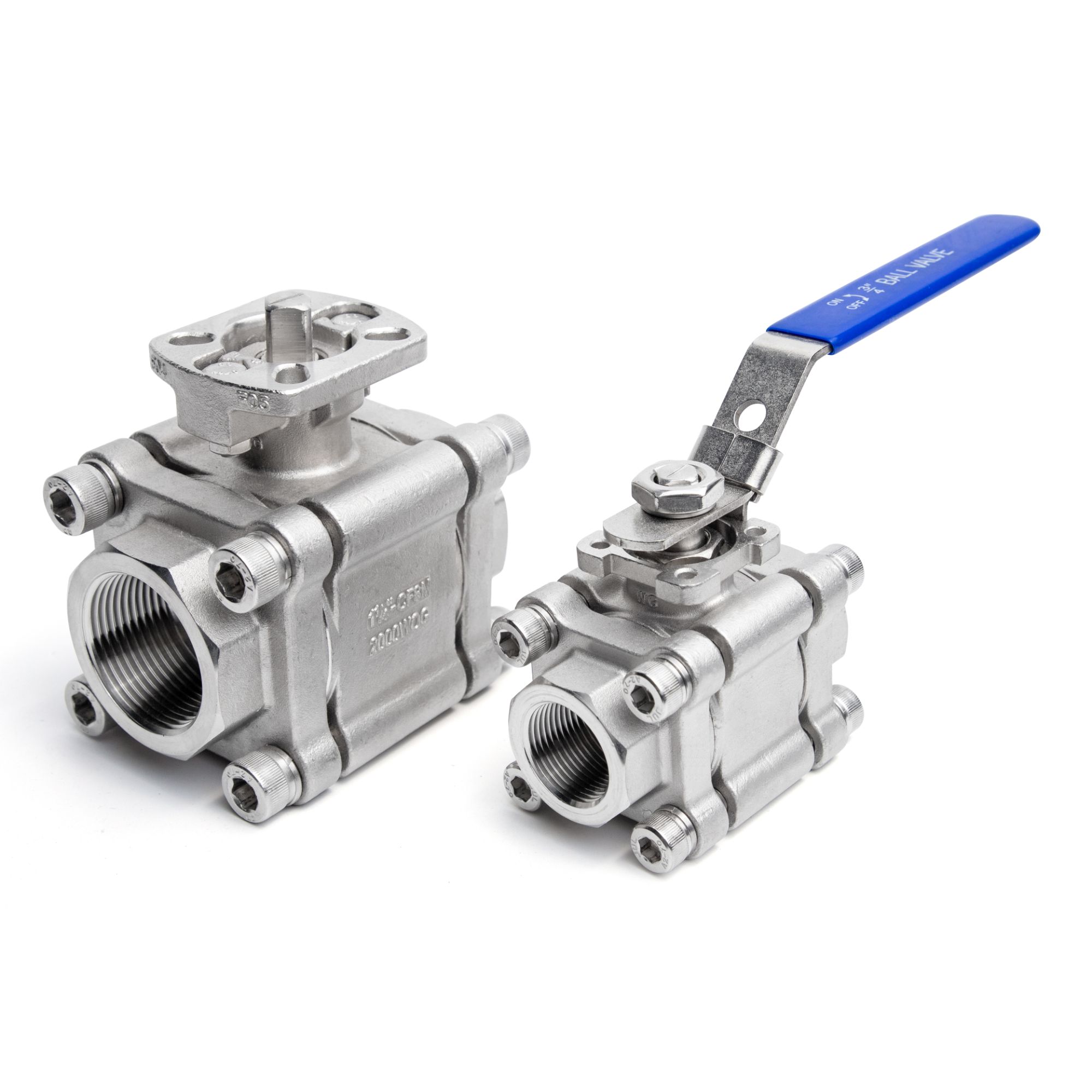
Many equipment failures happen because someone stopped at the datasheet’s headline numbers. A valve stamped for 150 psi can behave very differently at 180°F, and a pump curve quoted at 60 Hz may shift noticeably when actual site voltage drifts. The first step is to pull the original test reports, material certificates, and any shop inspection records, then compare them against your worst-case operating scenario—not just the normal duty point.
Temperature derating is often the quiet killer in applications with steam, hot oil, or cryogenic service. Gasket seating stress, seal material limits, and flange class ratings all move together as temperature changes. If the datasheet only lists ambient ratings, request the pressure-temperature curve from the manufacturer and verify that the weakest component in the assembly still meets your peak transient conditions.
Where possible, cross-check the calculated values against field readings or a short overpressure test at reduced temperature. A few extra minutes spent validating the boundary conditions can prevent a brittle fracture or a blown seal later on. Record any deviation, no matter how small, because undocumented assumptions tend to become future operating limits.
End Connection Choices That Cut Down on Leak Paths
Every joint in a fluid system is a standing invitation for leaks, so the style of end connection you pick does a lot of the reliability work before the system ever sees pressure. Welded and face-seal fittings tend to remove the small voids and spiral clearances that tapered pipe threads rely on. When a threaded joint depends on thread deformation or sealant to fill the helical gap, any vibration or thermal swing can open a narrow escape route. A metal-to-metal face seal, by contrast, squeezes a controlled ring of material flat against a mating surface, leaving almost no path for gas or liquid to work its way out.
Choosing a connection with fewer boundaries also simplifies what has to stay tight over time. A tube stub welded directly into a manifold or a flanged port with an O-ring captured in a groove gives you one predictable sealing line instead of several overlapping surfaces that can shift independently. In high-cycle service, that difference shows up as fewer re-torque events and less chance that a small misalignment becomes a slow seep. It is often worth accepting a higher upfront fabrication cost to avoid chasing leaks through a stack of adapters and bushings later.
The practical payoff becomes clear when you compare systems that look similar on paper but behave differently in the field. A well-chosen end connection can tolerate a modest amount of installer variation without losing its seal, while a thread-sealant joint may hold perfectly on the bench and then relax after a few temperature swings. Shortening the leak path is not just about tightening harder; it is about removing the places where a leak can hide.
Look Closely at Ball, Seat, and Stem Sealing Design
In a ball valve, the seal between the ball and the seat rarely fails in isolation. It helps to look at the contact band, surface finish, and how the seat is loaded against the ball. A narrow, even contact band usually holds up better than a wide one because it concentrates seating force where it is needed without requiring excessive torque.
The stem seal is just as easy to overlook. If the stem finish is rough or the packing is overtightened, the valve may feel stiff early on and then begin to weep after a few hundred cycles. A better design keeps the stem supported close to the packing area, reduces side loading, and uses a packing material that tolerates temperature swings without taking a set.
When you compare valves side by side, pay attention to how the seat is retained and whether the ball is guided. A floating ball depends heavily on seat support, while a trunnion design shifts more load to the bearings. Neither approach is automatically superior; the details in the sealing geometry and surface preparation tend to decide how the valve behaves after it has been cycled under pressure.
Separate Meaningful Certifications from Paperwork Noise
A lot of professionals still treat certification lists as proof of competence, but the reality is messier. Some credentials demand rigorous exams, supervised practice, or ongoing renewal requirements. Others are little more than a receipt for watching videos and paying a fee. If the entire assessment can be finished in an afternoon without any independent evaluation, it belongs in the noise pile rather than on your list of real qualifications.
The most useful filter is not how impressive a certificate sounds, but what it forced you to demonstrate. Look for programs that require a scored exam, a portfolio review, or a supervised project with consequences for poor performance. It also helps to notice which credentials working professionals actually mention when they describe how they got better at their jobs. If a certification is rarely discussed outside its own marketing materials, that silence tells you more than the logo on the PDF.
That does not mean every short course is worthless. It means the value comes from the skill change it produces, not from the paper trail. A two-hour workshop that fixes a recurring mistake can outperform a six-month program that only tests memory. Before adding another acronym to your email signature, ask whether the process changed how you would handle a real project. If the answer is no, you have collected paperwork rather than capability.
Ask These Questions Before You Place a Repeat Order
Repeat orders have a way of lulling people into autopilot, and that's exactly when small shifts get missed. Before you reorder, compare actual demand with your original forecast, check whether stock levels are running higher or lower than expected, and confirm the supplier hasn't changed lead times or pricing since your last purchase. Pay attention to what actually sold rather than what you planned to sell—that habit alone keeps slow movers from piling up.
Also ask whether the product itself has changed: packaging, carton counts, shipping costs, or the quality you received last time. If the previous delivery arrived late or included damaged units, a short conversation with the supplier beats assuming the next one will be fine. And if storage is tight or cash flow is uneven, a smaller batch now may make more sense than chasing a volume discount.
FAQ
Start with the body marking and material traceability. A reputable manufacturer stamps the grade, pressure class, and heat number, and can back that with a mill test report. If the valve feels unusually light or the wall thickness looks thin around the end connections, walk away. Cheap castings often hide porosity and inconsistent wall sections that fail under thermal cycling or water hammer.
304 is fine for many indoor utility lines and food contact where chlorides are low. If there is any chance of chlorine, salt spray, or aggressive cleaning chemicals, move to 316. The price difference is usually small compared to the cost of replacing a failed valve, and 316 gives you extra resistance in threaded and welded areas that tend to trap moisture.
Ask about the foundry relationship and whether they can provide casting layout drawings, heat treatment records, and in-house machining tolerances. A builder can usually walk you through how they machine the ball and seats, not just give you a catalog. If they cannot explain the tolerance between the ball and seat or the stem finish, they likely do not control the final product.
Not necessarily. Some of the cost goes into brand, packaging, or distribution. What matters more is the mechanical detail: a solid ball, a blow-out proof stem, ISO 5211 mounting pad thickness, and stem seals that can be adjusted or replaced. Look for those features rather than using price alone as a shortcut. A mid-priced valve from a focused manufacturer often outperforms an overpriced generic import.
At minimum, every valve should be shell-tested and seat-tested according to a recognized standard. For critical service, ask for a batch test report, hydrostatic or pneumatic test results, and optional third-party witness testing. Some manufacturers also do helium leak testing for high-cycle or gas service. Ask whether tests are done on every valve or just sampled, because that difference shows up in field reliability.
Get the exact elastomer name instead of a vague term like PTFE or soft seat. Standard PTFE is fine for many chemical duties up to around 180 to 200 degrees Celsius, but filled PTFE or reinforced seats handle higher thermal cycling better. For steam or hot oils, consider metal-seated or PEEK-based options. Share your minimum and maximum temperatures as well as pressure spikes, not just normal operating conditions.
Often yes, if the manufacturer has a modular platform. You may be able to choose end connections, seat materials, handle options, and an ISO mounting pad without a ground-up redesign. The key is to ask which combinations are already proven and stocked as semi-finished components. That gives you a tailored valve at a standard lead time and avoids the risk of a one-off project delay.
Watch for a stiff handle from day one, a stem that weeps around the packing after a few cycles, or a ball that does not fully seal at low pressure. Also check if the handle or nut is plain carbon steel hidden under paint; these corrode quickly and can make the valve impossible to operate. Any of these details suggests the manufacturer cut corners where it matters most.
Conclusion
Sourcing stainless steel ball valves that hold up over time starts with matching the exact grade to what the valve will actually face. A 316 body may look fine on paper, but chloride exposure, trace acids, or frequent thermal cycling can quickly expose the wrong alloy choice. It is also worth checking pressure and temperature limits against your real operating window, not just the headline numbers on a datasheet. Small differences in seat material or stem packing often shift usable performance more than the metal shell does. End connections deserve the same attention because fewer joints and welded or flanged options chosen for the actual pipe class can remove common leak paths before installation even begins.
The sealing arrangement inside the valve is where durability is won or lost. Look beyond the ball surface and ask how the seat is retained, whether the stem has live-loading or secondary containment, and what happens during low-pressure or vacuum service. Certifications can help, but only when they tie directly to the media, region, or fire-safe or fugitive-emission requirement you must meet. Generic ISO paperwork alone tells you little. Before placing a repeat order, ask the manufacturer what changed in their casting or machining process, whether batch traceability is available, and how they handle field failures. These conversations reveal whether a supplier is truly controlling quality or simply moving boxes.
Contact Us
Contact Person: Adonis
Email: [email protected]
Tel/WhatsApp: 8615858822657
Website: https://www.uptaivalve.com