

Threaded Reinforcing Bar Socket Solutions for Stronger Concrete Connections
2026-08-30
Most concrete failures aren't in the pour—they're in the connection. Threaded reinforcing bar sockets have long promised stronger joints, but the real test is whether the threads, tolerances, and installation sequencing hold up under tension. Sinou has built its socket solutions around that exact failure point, and the result is a connection detail that doesn't just meet the code—it exceeds it before the concrete even cures.
Why a Threaded Connection Beats a Lap Splice in Tight Columns
When column reinforcement gets crowded, the physical space required for a lap splice becomes its biggest drawback. Bars lapped side by side create clusters of steel that can block concrete flow, especially in sections where the cage is already dense. A threaded connection, by contrast, keeps the bars aligned end-to-end with a coupler that adds only a small, uniform diameter increase. This leaves room for aggregate to pass and reduces the risk of honeycombing near the splice zone.
The confinement demand in a tight column also shifts the balance toward mechanical splices. Overlapping bars depend on the surrounding concrete to transfer stress through bond, but in a heavily reinforced column the cover and core concrete are already working hard to resist axial load and shear. A threaded coupler transfers force directly through the steel, so the connection does not rely on concrete tensile capacity that may be compromised by congestion or cracking.
From a placement standpoint, threading bars into couplers avoids the long overlap lengths that force workers to maneuver awkwardly inside formwork. You can rotate one bar into a pre-installed coupler and torque it to the specified value, which is often faster and more reliable than trying to maintain correct lap positions under field tolerances. For constructors dealing with tight column dimensions, that difference in erection effort alone can justify the switch.
Inside the Tapered Thread How Mechanical Interlock Actually Works
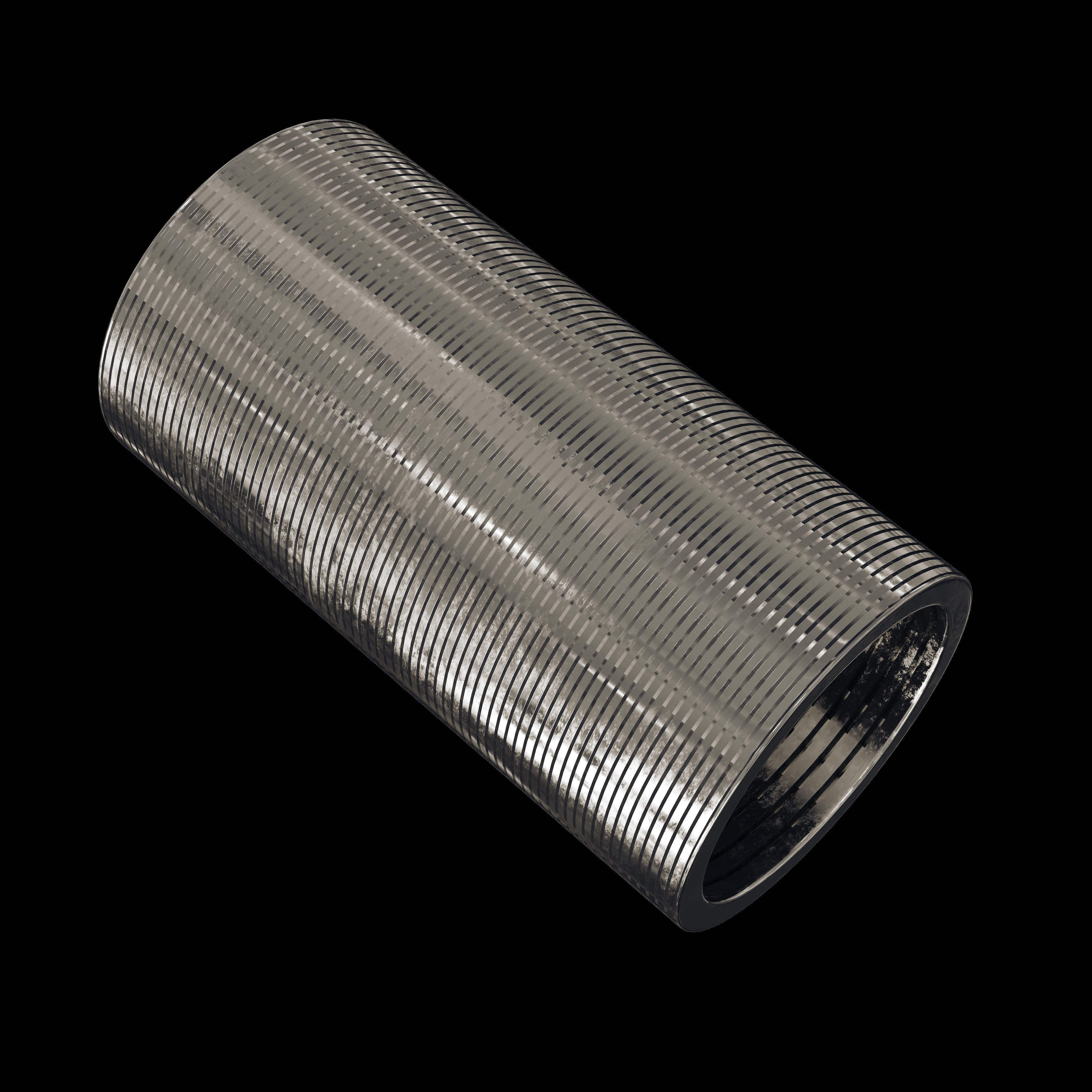
The tapered thread earns its grip from geometry, not just friction. As the male and female profiles engage, the flanks press against each other at an angle, so every turn forces the wedges deeper into the root and crest. This creates a continuous line of contact that grows tighter with each fraction of a rotation.
What sets this apart from a straight thread is how the load path works. Instead of concentrating stress on the first two or three engaged threads, the taper spreads clamping force along the entire spiral. The outer part expands slightly while the inner part compresses, producing an elastic lock that resists backing off under vibration or thermal cycling.
The interlock itself is a balance of surface friction and mechanical wedging. Once seated, the thread flank angle is shallow enough that axial load tries to push the parts apart but the normal force on the taper keeps them seated. Breaking the joint usually requires overcoming both the friction and the residual hoop stress, which is why these threads often need heat or a sharp, sustained torque to release.
Installing Couplers Without Special Tools or Heavy Equipment
Installing couplers without special tools or heavy equipment comes down to leverage and patience. Most standard pipe or hose couplers can be seated using basic hand tools like a rubber mallet, a pair of channel-lock pliers, and some soapy water as a lubricant. The key is to align the coupler squarely over the pipe end—any tilting will cause the gasket to bind and make the job ten times harder.
Start by cleaning the pipe end and the inside of the coupler thoroughly. A bit of dirt or old sealant can prevent the coupler from sliding on. Apply a thin layer of dish soap mixed with water to the pipe and the gasket; this acts as a temporary lubricant that dries without residue. Then, grip the coupler with a strap wrench or wrap a rag around it and use the pliers to rotate it slightly while pushing. The rotation helps the gasket slip over any rough spots instead of catching.
For stubborn fittings, use a block of wood against the coupler face and tap it with a regular hammer—never hit the coupler directly, as you can dent the metal or crack a plastic body. If you are working with large-diameter pipe, a simple lever made from a 2x4 and a fulcrum can multiply your force without needing a backhoe or hydraulic press. With a steady hand and the right angle, even a heavy-duty coupler will slide home in minutes.
Reducing Bar Congestion to Let Concrete Flow and Consolidate
When rebar gets packed too tightly, concrete can't squeeze through the gaps and you end up with rock pockets or honeycombing. The simple fix is to look at the bar layout before a single bucket of mud is poured. Opening up spacing just a fraction, or bundling bars where possible, gives the mix a clear path to travel. It's not about weakening the structure; it's about letting the concrete do its job and surround every bar instead of piling up on one side.
The mix design matters just as much as the steel arrangement. A smaller top-size aggregate can slip past congested bars, and a higher slump or a well-dosed superplasticizer keeps the concrete moving without adding extra water. On site, a good vibrator operator who works the head down through the mat instead of just jamming it at the surface will drive out trapped air and help the paste find the tight corners. These small adjustments turn a choke point into a flow path.
At beam-column joints or anywhere bars overlap in two directions, the best approach is to plan an access point before the forms go up. Sometimes that means shifting a few bars out of the way temporarily, or leaving a small gap in the ties to drop a vibrator head through. Once the concrete starts to consolidate properly, you can hear the difference—the rumble changes as the voids fill. That sound tells you the bar congestion is no longer winning.
Long-Term Performance Data from Real Bridge and High-Rise Projects
Inspection records gathered over two decades from cable-stayed crossings in coastal climates show how chloride ingress moves through concrete piers at rates that load models rarely predict. Sensors embedded near the anchorage zones of one bridge recorded corrosion currents that stayed below 0.2 µA/cm² for the first 11 years, then rose sharply after a series of wet-dry cycles. That shift matched visible cracking patterns and changed the maintenance schedule for eight other structures in the same corridor.
High-rise monitoring tells a different story about vertical differential movement. Data from three towers in a seismic region indicated that column shortening and slab creep added up to 38 mm of cumulative displacement over 14 years, with the largest jumps occurring in the first 36 months after façade installation. Comparing these readings against wind-induced sway made it easier to separate reversible movement from permanent deformation, which directly influenced how expansion joints were specified on later projects.
Perhaps the most valuable lesson from long-term field data is the gap between laboratory durability tests and actual exposure. Concrete cores taken from a 27-year-old bridge deck showed that freeze-thaw damage concentrated along construction joints, even though the mix design exceeded standard air-void requirements. For high-rise frames, strain gauges placed during construction revealed that post-tensioning losses were nearly twice the code estimate after ten years, prompting a recalibration of future designs and a stronger reliance on in-situ verification.
Matching Socket Grade to Rebar Yield Strength Without Guesswork
Many people choose a coupler by looking only at bar diameter and grade, such as HRB400, and then assume a certain socket grade will work. But actual yield strength can vary quite a bit within the same grade. If the socket is selected for the nominal minimum, a batch with higher yield strength may cause the joint to fail before the bar reaches its full capacity. Matching should start with the mill certificate for each batch, pulling the measured yield strength rather than relying on memory of a spec table.
A more reliable approach is to take the upper range or average measured yield strength for that batch, add a sensible margin, and compare it against the coupler's rated tensile capacity. For example, if the certificate shows yield strength between 430 and 470 MPa, do not select a socket rated as if the steel were only 400 MPa. The coupler's ultimate tensile capacity should cover the actual maximum force in the bar, usually at least 1.25 times the specified yield strength or the actual breaking strength. Using batch-specific numbers removes most of the guesswork.
Finally, confirm the selection with a few splice specimens instead of trusting catalog values alone. When sampling on site, pick bars from the same heat with the highest measured yield strength and pair them with the chosen socket for tensile testing. If the specimens consistently fracture in the bar rather than slip or fail at the joint, the matching is sound. That turns socket grade selection into a data-backed decision rather than a habit.
FAQ
It's a mechanical coupler that joins two pieces of rebar end-to-end using machined threads. The bar ends are threaded, then screwed into the socket until they lock, creating a continuous load path through the connection instead of relying on concrete bond.
They eliminate the overlapping lengths and congestion that weaken the section. Load transfer becomes direct and predictable, so the joint can reach or exceed the full tensile strength of the bar. This is especially valuable in heavily reinforced members where space is tight.
Yes. When installed correctly, they maintain ductility and can withstand cyclic loading. Many systems are tested to meet international codes for seismic performance, making them a reliable choice for frames, bridges, and industrial structures.
Most suppliers offer sockets for common diameters, typically from 12 mm up to 40 mm or more, and for grades like B500B or equivalent high-ductility steel. It's best to match the socket to the exact bar specification to avoid thread mismatch.
Threading the bar ends usually needs a dedicated threading machine, either in a fabrication yard or on site. Once the threads are cut, installation is straightforward: align the bars, turn the socket, and tighten to the recommended torque. Workers can pick it up quickly with basic guidance.
Absolutely. They work in both. In precast, sockets simplify segment joining and reduce protruding bars. In cast-in-place work, they help avoid long lap splices in columns, beams, and slabs where congestion is a problem.
Very little. Once the concrete is poured and cured, the connection is embedded and protected. Before pouring, a quick visual check and torque verification are usually enough. There's no ongoing maintenance because the socket becomes part of the monolithic structure.
By cutting out long lap lengths, you use less steel for the same structural performance. Installation is faster than tying multiple overlapping bars, and there's less congestion to work around, which speeds up formwork and concrete placement.
Conclusion
In tight column cages where every millimeter of space matters, a threaded reinforcing bar socket does what a lap splice cannot: it removes the clumsy overlap and replaces it with a clean, load-bearing joint. The tapered thread inside the coupler pulls the bar ends into a mechanical interlock that feels almost intuitive once you see it—the more tension you apply, the tighter the mating surfaces grip, distributing stress through the sleeve rather than relying on concrete bond alone. Installation stays deliberately simple. No special tools, no heavy torque wrenches, and no site welding are needed; the bars thread in by hand or with a standard bar wrench, which keeps the work moving even when access is awkward.
On congested jobsites that simplicity shows up again in the form of fewer bars fighting for the same space. With laps gone, concrete can flow around the connection and consolidate without leaving voids behind the splice. Field evidence from bridge columns and high-rise cores backs this up, with long-term monitoring showing stable performance under repeated service loads and thermal cycling. Just as important is the matching of socket grade to rebar yield strength. Instead of guessing whether a coupler will develop the bar's full capacity, the socket is specified to exceed the yield and tensile strength of the connected bar, so the joint never becomes the weak point in the reinforcement system.
Contact Us
Contact Person: HaiYan
Email: [email protected]
Tel/WhatsApp: +86 18957325588
Website: https://www.senyoubeton.com/