

Top 10 Load Break Switches for Safe and Efficient Circuit Control
2026-07-31
When it comes to managing electrical circuits, safety and efficiency aren't just nice-to-haves—they're non-negotiable. Load break switches sit at the heart of that balance, yet choosing the right one can feel like navigating a maze of technical specs and marketing fluff. In this guide, we've cut through the noise to bring you our top 10 picks, including standout solutions from Deepwill that have quietly redefined what reliable switching looks like. Whether you're upgrading an aging panel or designing a new installation, these switches promise to keep your circuits under control without breaking a sweat—or your budget.
What Exactly Are Load Break Switches and Why Do They Matter?
At its core, a load break switch is a specialized device designed to safely interrupt electrical current while a circuit is under load. Unlike a simple disconnect switch, which must only be operated after the circuit is de-energized, a load break switch can handle the demands of switching normal load currents and, in some cases, overload currents. This capability makes it an indispensable component in medium-voltage distribution networks, where it isolates equipment, redirects power flows, and ensures maintenance can be performed without widespread outages. Its internal arc-quenching mechanisms—whether using air, gas, or vacuum—contain and extinguish the electrical arc that forms when contacts separate, preventing damage and protecting both equipment and personnel.
Why do they matter? In an era where grid resilience is non-negotiable, load break switches fill a critical gap between basic isolation and full circuit-breaking protection. They provide a cost-effective, compact solution for switching points in ring main units, substations, and renewable energy installations. Without them, utilities would face higher expenses, larger footprints, and more complex protection schemes. Their ability to operate manually or through automation also supports smart grid ambitions, allowing remote reconfiguration and faster fault isolation. In essence, they’re the silent workhorses that keep power flowing reliably, safely, and efficiently—quietly preventing small issues from escalating into major failures.
Beyond their technical role, load break switches have evolved to meet modern demands for sustainability and digital integration. Many now use vacuum or SF6-free technologies to minimize environmental impact, while embedded sensors provide real-time data on temperature, position, and condition. This shift transforms a traditionally dumb component into an intelligent node, giving operators insights that preempt interruptions and extend asset life. As grids become more distributed with solar and storage, these switches ensure that even the most decentralized energy resources can be seamlessly managed. Ultimately, their value lies not just in what they do—breaking loads—but in how they enable the dynamic, resilient networks of tomorrow.
Key Features That Separate Reliable Switches from the Rest
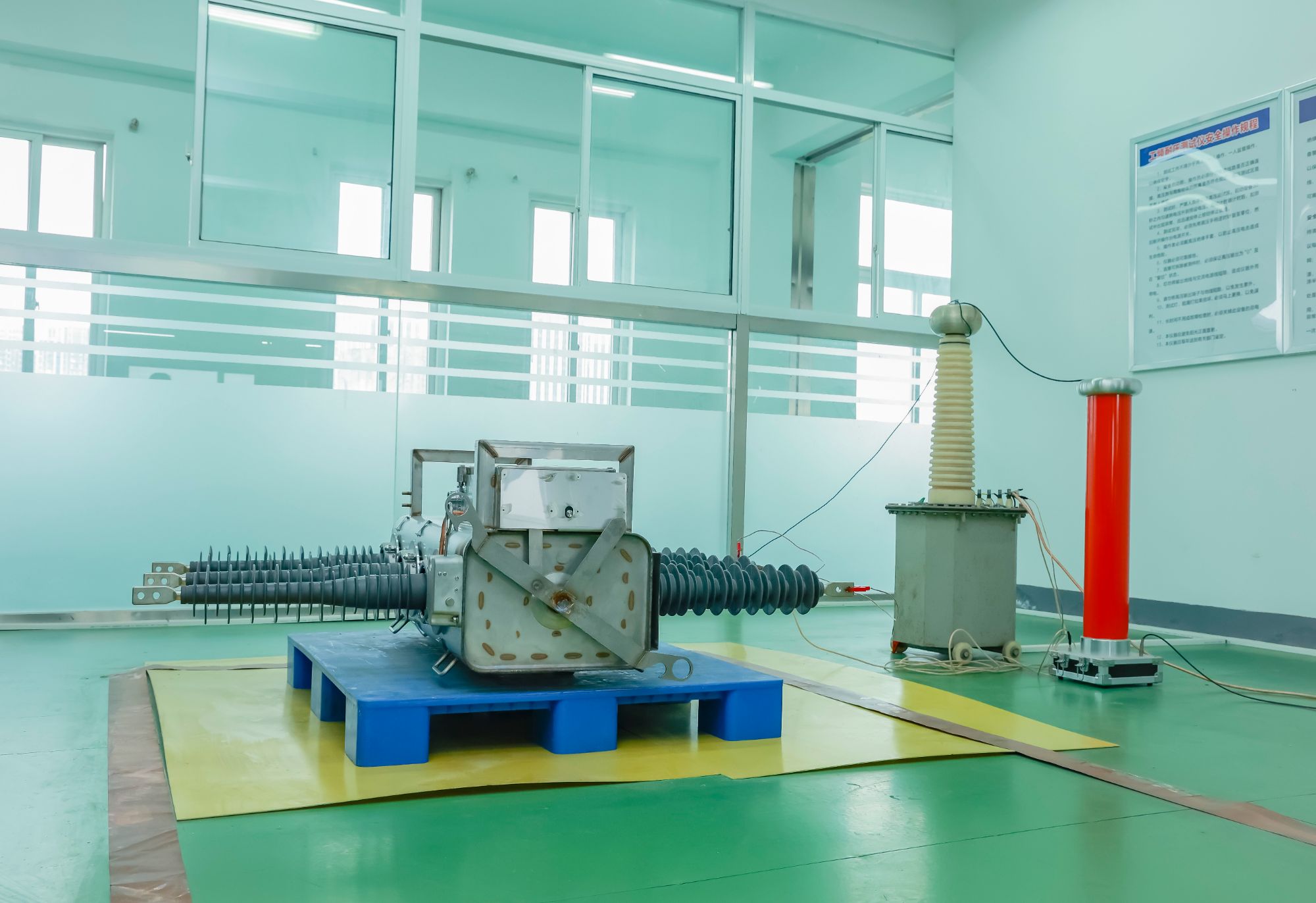
A truly dependable switch doesn't just move packets—it earns trust through the quality of its components. The internal power supply, for instance, often reveals more than any spec sheet. Premium models use capacitors rated for extended temperature ranges and have fans designed for hot-swap replacement without ever taking the unit offline. You'll also find that the port connectors on these devices maintain a firm, wiggle-free grip even after hundreds of cable insertions, a small detail that prevents intermittent link failures in high-vibration environments.
Beyond hardware, the software architecture plays a decisive role in long-term reliability. Switches that allow nondisruptive upgrades—where the control plane restarts while the data plane keeps forwarding—stand apart in networks where downtime is simply not an option. Look for platforms that implement graceful protocol restarts and stateful failover between stacked members. These capabilities mean that a software patch or a management-plane failure never spirals into a traffic outage, a silent differentiator that becomes painfully obvious only when it's absent.
Finally, the way a switch handles environmental stress separates the exceptional from the merely adequate. Industrial-grade designs derate performance gracefully under thermal overload rather than shutting down abruptly, and their forwarding ASICs incorporate hardware-based error correction on internal buffers. This matters in places like outdoor cabinets or poorly cooled wiring closets where temperature swings are routine. The best switches also expose detailed environmental health metrics through open telemetry, letting operations teams spot degrading fans or creeping bit errors long before users ever notice a problem.
A Closer Look at the Categories That Define Performance
When we talk about performance, it’s easy to get lost in raw numbers—page load times, request counts, or benchmark scores. But real-world effectiveness often hinges on three distinct yet interconnected layers: responsiveness, stability, and efficiency. Responsiveness captures how quickly a system reacts under normal or peak load; it’s not just about the first paint but the entire interactive journey. Stability reveals itself in edge cases and prolonged usage—memory leaks, cascading failures, or erratic behavior that erode trust. Efficiency digs into resource utilization: does the solution achieve more with less, or is it burning through CPU cycles for marginal gains? Together, these categories paint a much richer picture than any single metric could.
Diving deeper, each category often unfolds into sub-dimensions that depend heavily on context. For a data-intensive backend service, throughput and latency co-exist in a delicate dance—optimizing one can constrict the other. Meanwhile, for a mobile application, perceived performance matters as much as actual speed; smooth animations and instant feedback create an illusion of continuity even when operations are deferred. The real craft lies in balancing these dimensions not in isolation, but as a cohesive system where improvements in one area don’t silently degrade another. That’s why mature teams instrument for visibility across all categories, building feedback loops that capture degradations long before users notice.
What’s often overlooked is the temporal aspect: a performant system today might rot under the weight of accumulated data or shifting traffic patterns. Categories like scalability and durability come into play over months and years, not just minutes. A well-performing solution adapts gracefully—adding capacity without rearchitecting, and maintaining consistency under duress. This long-view approach separates sustainable excellence from short-lived speedups. Ultimately, defining performance through these nuanced categories shifts the focus from isolated tweaks to holistic resilience, ensuring that the experience stays solid across time, scale, and unforeseen challenges.
Smart Tips for Matching the Right Switch to Your Setup
Finding the perfect switch starts with understanding how you actually use your devices. Think about the daily rhythm of your work or play: do you hammer away at keys for hours on end, or do you prefer a gentle tap that doesn’t wake the whole house? Mechanical switches come in three broad categories—linear, tactile, and clicky—each with a distinct feel and sound. Linear switches glide smoothly with no bump, making them a favorite for rapid key presses and gaming. Tactile switches give a subtle bump midway, offering feedback without a loud click, ideal for typing accuracy. Clicky switches add an audible snap to that bump, satisfying if you love retro keyboard vibes but potentially annoying in shared spaces.
Don’t overlook the force required to press a key, measured in grams. Light switches (around 35-45g) can reduce finger fatigue during long sessions, but they might cause accidental presses if you rest heavy hands. Heavier switches (60g and up) give deliberate resistance, which can improve typing posture and precision. Testing a switch tester or borrowing a friend’s keyboard is the best way to gauge what feels natural—your fingers will tell you more than a spec sheet ever could.
Context matters too. A switch that sings in a home office might become a liability in a cubicle farm. If your setup lives in a quiet environment, consider silent stems or dampened housings that muffle the noise without killing the feel. And if you’re an all-night coder or gamer, pairing a tactile or linear switch with o-rings can keep the peace with family or roommates. Remember that most boards support hot-swappable switches, so you can experiment without soldering—treat your first choice as a starting point, not a forever decision.
Installation Practices That Make or Break Safety
It’s the small details that often decide whether an installation stands the test of time or fails when it matters most. Overlooking proper torque settings on fasteners, for instance, isn’t just a minor slip—it invites vibration loosening, structural stress, and eventual failure. A methodical approach, where each bolt is tightened to spec and checked twice, separates a reliable setup from a ticking time bomb.
Routing cables and conduits might seem mundane, but sharp bends, pinch points, or inadequate support can lead to insulation wear, short circuits, or even fire hazards. Smart installers take the extra time to secure lines away from moving parts and heat sources, using strain reliefs and protective sleeving as standard practice. It’s a quiet effort that prevents noise, signal loss, and catastrophic breakdowns down the road.
Grounding and bonding are the unsung heroes of safety, yet they’re frequently treated as an afterthought. A single loose ground connection can turn a harmless piece of equipment into a lethal hazard. Reliable installations include redundant ground paths, corrosion-resistant connections, and regular verification—because once the system is live, there are no second chances.
Common Missteps That Compromise Efficiency and Longevity
Many users unknowingly undercut their system's potential by neglecting basic maintenance routines. From clogged filters to outdated software, these small oversights accumulate into significant performance drains. For example, failing to clean cooling fans not only raises operating temperatures but also accelerates component wear. Over time, what begins as a minor inconvenience snowballs into costly repairs or total failure.
Another hidden trap is overloading devices beyond their intended capacity. Running too many applications simultaneously or pushing hardware past its rated limits might seem productive, but it actually forces components to operate under constant stress. This leads to thermal throttling, reduced responsiveness, and eventually premature breakdowns that could have been avoided with more balanced usage.
Equally damaging is the habit of disregarding manufacturer recommendations. Whether it’s using incompatible accessories, skipping regular updates, or ignoring warning signs like unusual noise, these choices often seem harmless at first. However, they frequently result in a cascade of issues that undermine both day-to-day efficiency and the long-term reliability you depend on.
FAQ
A load break switch is designed to safely interrupt the flow of current under normal load conditions. Unlike a simple disconnect switch, which should only be operated when the circuit is de-energized, a load break switch can handle the arc that forms when breaking a live circuit. This makes it essential for routine operations without needing to shut down upstream power.
They reduce the risk of arc flash and equipment damage by containing and extinguishing the arc during switching. On the efficiency side, they allow selective isolation of circuits for maintenance or reconfiguration, minimizing downtime. Top-tier models also have low contact resistance to keep energy losses minimal.
Focus on rated voltage and continuous current to match your system, short-circuit withstand capability, and the number of mechanical/electrical operations. Also check environmental ratings like IP65 if you need weatherproofing. Brands like ABB, Siemens, and Schneider Electric often stand out in head-to-head comparisons for these specs.
For rugged use, the ABB OT series and the Siemens 3LD series are frequently mentioned. The Eaton Moeller series also gets nods for durability. When comparing the top 10, models like the Socomec SIRCO and the Kraus & Naimer KG series appear high on lists for their robust build and reliable arc quenching.
Always de-energize upstream circuits if possible, even though the switch is rated for load breaking. Mount securely on a flat surface avoiding vibration, and torque terminals correctly. Maintenance involves periodic cleaning, checking contact wear, and exercising the mechanism every 12 months to prevent sticking. Refer to the IEC 60947-3 standard for guidance.
Most load break switches are intended for low-voltage (up to 1000V AC) distribution. Medium-voltage applications (1kV–38kV) require switches built to different standards, like SF6-insulated or vacuum types. Always verify the voltage class; top brands design distinct product lines for each range.
They’re staples in motor control centers, main panels of commercial buildings, renewable energy combiner boxes, and transformer isolation on poles. Anywhere you need to routinely disconnect a circuit under load without tripping a breaker, a load break switch is the practical choice.
Conclusion
Load break switches play an indispensable role in modern electrical systems, enabling safe disconnection of circuits under load without the risks of arcing or equipment damage. Unlike ordinary isolators, these devices are engineered to interrupt current flow reliably, even in demanding industrial environments, making them vital for maintenance, emergency shutdowns, and operational flexibility. The best switches on the market distinguish themselves through rugged construction, visible break mechanisms, and compliance with international standards like IEC 60947-3. When evaluating options, it’s essential to look beyond basic specs and consider factors such as breaking capacity, mechanical endurance, and the type of quenching medium—whether air, gas, or vacuum—as each directly influences performance and longevity. A well-chosen load break switch not only ensures personnel safety but also protects downstream equipment from overloads and short circuits when paired with appropriate fuses.
Selecting the right switch for a specific setup involves matching voltage ratings, fault levels, and operational duty to the application’s needs, while also anticipating future expansions. Installation practices are equally critical; improper mounting or inadequate spacing can lead to overheating, tracking, or catastrophic failure. Common pitfalls, such as ignoring environmental conditions like dust and humidity, or skimping on periodic maintenance, gradually erode reliability and efficiency. Top-tier products address these challenges with features like IP-rated enclosures, easy-to-inspect contact states, and tool-free operation, making them stand out in the field. By combining thoughtful selection with meticulous installation and upkeep, engineers can build circuits that deliver uncompromised safety and sustained performance over decades. The fusion of smart design and practical know-how ultimately defines how well these components serve in real-world electrical networks.
Contact Us
Contact Person: Julion
Email: [email protected]
Tel/WhatsApp: 8617351370631
Website: https://www.deyunelectric.com