

Top 10 Performance Cylinder Heads for Maximum Engine Power Gains
2026-09-07
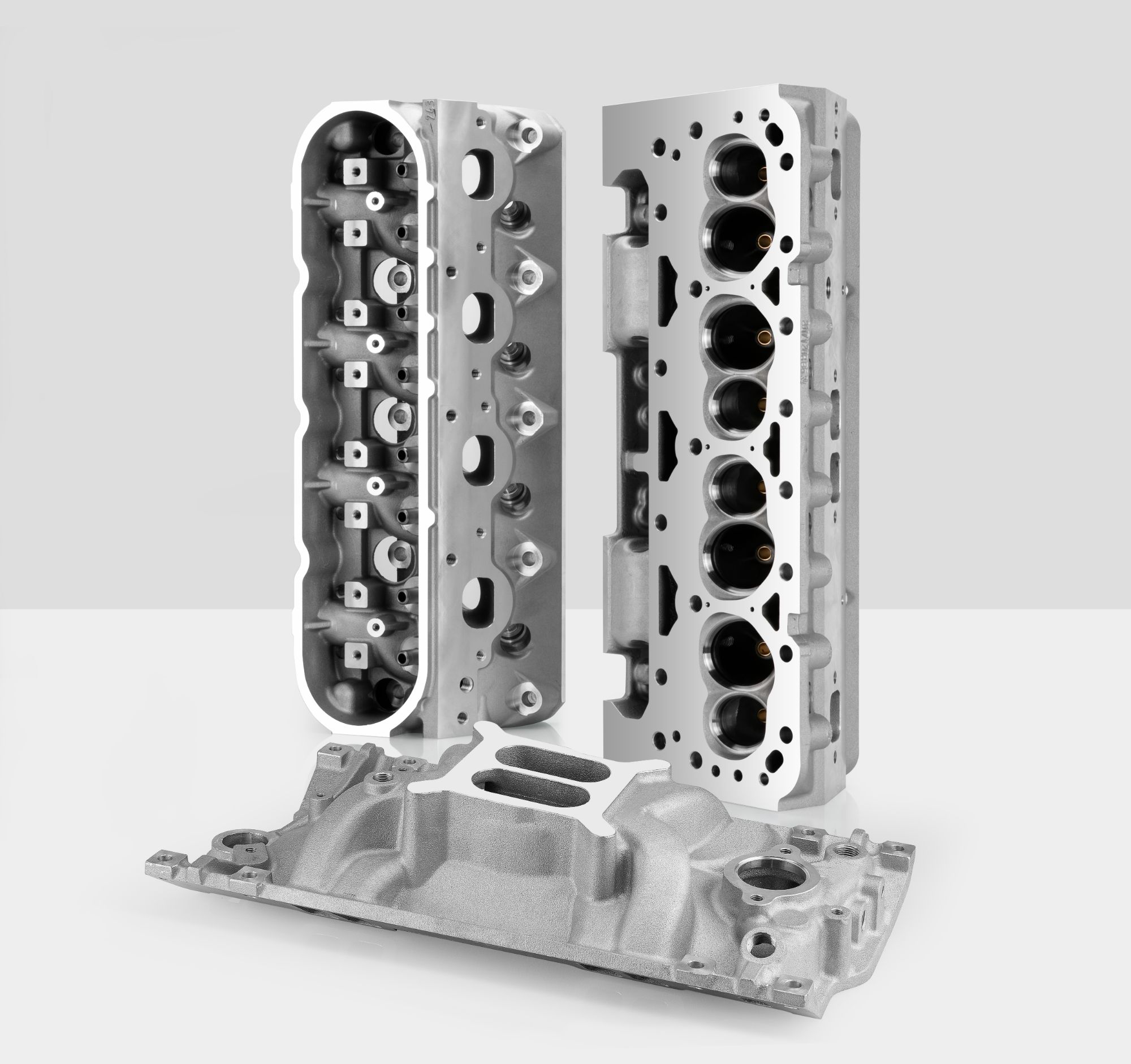
Every serious engine builder knows the fastest path to more power often starts at the top end. Swapping cylinder heads can unlock airflow, compression, and combustion efficiency that bolt-ons simply can't match. But with dozens of castings on the market, choosing the right one is anything but straightforward. That's where this list comes in. We've broken down ten standout performance cylinder heads that consistently deliver measurable gains—and we've paid close attention to real-world fitment, port design, and value. Whether you're piecing together a street/strip build or chasing every last horsepower on the dyno, options from brands like DDR prove that smart cylinder head choice is a real differentiator.
What Real Engine Builders Look for in a Cylinder Head Casting
A serious engine builder doesn't get excited by shiny marketing photos. The first thing they do is flip the casting over and look at the deck surface, then rap on the chambers with a small hammer. They're listening for dull spots that indicate porosity or core shift. Wall thickness around the valve seats and spark plug bosses gets measured, not guessed. If the casting has thin spots in the exhaust port floor or inconsistent material near the head bolt columns, it's a reject no matter how pretty the ports look.
Port shape matters less than port location and casting consistency. Builders want enough meat in the pushrod pinch area to allow reshaping without breaking through. They also check valve guide alignment—if the guides aren't centered in the bowls, no valve job will fix the turbulence. The chamber volume needs to be uniform across all cylinders, and the quench pad should be flat and properly located relative to the bore centerline. A casting that requires excessive correction cuts to equalize chambers adds cost and weakens the deck.
Finally, the water jacket isn't an afterthought. High-output builds need even coolant flow around the exhaust seats and between the center cylinders. Builders look for clean, open passages without casting flash, and they often test for core sand left behind. Head bolt boss depth and thread engagement are checked against the intended stud or bolt length. A casting that passes these checks—solid material, accurate seats, good coolant routing—will survive repeated teardowns and changes in valvetrain hardware without cracking or warping.
The Port Work That Actually Moves the Needle (and What’s Just Show)
Most port-side improvements get applause for the wrong reasons. A fresh coat of paint on a gantry crane, a wider gate lane, a new digital sign flashing ETAs — these are the equivalents of rearranging deck chairs while the real bottlenecks stay hidden below the waterline. The work that actually moves the needle is unglamorous: re-cutting the yard stack logic so containers aren't shuffled three times before they hit a chassis, re-timing the appointment windows to match actual trucker arrival curves instead of the terminal's lunch schedule, and clearing the chassis pool of dead units that clog the interchange like arterial plaque. If a change doesn't reduce the number of touches per box or the idle minutes per turn, it's theatre.
Consider the difference between adding a second gate lane and fixing the pre-gate data flow. The lane costs seven figures, gets a ribbon-cutting photo, and shaves maybe four minutes off peak-hour entry — until the queue just backs up further inside. Fixing the data flow costs a fraction of that, happens invisibly in a server room, and cuts the average transaction time at the kiosk by forty percent because drivers aren't typing in booking numbers that the terminal already has. The first is show; the second is leverage. The same logic applies to vessel operations: twin-lift spreaders make headlines, but a disciplined hatch-by-hatch stowage plan that respects actual crane cycle times does more for berth productivity than any new piece of iron.
Then there's the labour side, where the flashiest moves are often the most hollow. A terminal that touts its automated stacking cranes while still dispatching clerks to manually reconcile exceptions hasn't solved its problem — it's just hidden it behind a robot. The real needle-movers are boring: pre-advising dangerous goods paperwork before the truck arrives, training foremen to spot a bad stow on the fly instead of waiting for the lashing gang to complain, and paying attention to the five-minute delays that compound into two-hour vessel sweeps. Show is a new app on a tablet; substance is a clerk who no longer has to call three departments to release one container.
How Combustion Chamber Quench Affects Detonation Resistance
In a spark-ignition engine, the quench layer is the thin ribbon of fuel-air mixture that sits against the relatively cool surfaces of the combustion chamber—cylinder walls, piston crown, and head deck. Because these surfaces pull heat out of the mixture faster than the flame can consume it, the mixture in this boundary region never fully burns. That unburned layer acts as a thermal buffer: it absorbs energy from the propagating flame front and keeps the surrounding end gas cooler than it would otherwise be. Lower end-gas temperature directly delays the autoignition chemistry that leads to knock, so a robust quench zone can raise the detonation threshold.
The geometry of the quench region matters as much as its existence. Tight squish bands near the periphery of the bore force the mixture inward as the piston approaches top dead center, creating jets that shred the developing flame kernel and accelerate bulk gas motion. Faster burn rates shorten the time available for the remaining end gas to undergo pre-flame reactions, which is a powerful detonation suppressor. A smaller clearance between piston and head at the squish pad also reduces the volume of stagnant, heat-soaked mixture that can linger near the bore walls. Engines that rely on a more open chamber with generous piston-to-head clearance tend to exhibit slower, more knock-prone combustion because the quench layer is thicker and the turbulence generated is weaker.
There is a practical trade-off. Making the quench clearance extremely tight improves knock resistance but increases the surface-to-volume ratio, which raises heat rejection to the coolant and can hurt thermal efficiency. It also risks mechanical contact under thermal expansion or rod stretch. Modern designs often use a moderate quench clearance combined with careful attention to piston top land height and crevice volume. The top land crevice, in particular, can store unburned mixture that escapes the main combustion event and later emerges as a source of knock or hydrocarbon emissions. Balancing these factors means treating quench not as a simple fix but as one part of a chamber design that manages end-gas temperature, turbulence, and residual gas composition together.
Why Valve Sizing Is a Balancing Act, Not a Numbers Game
Valve sizing looks like a simple calculation on paper: pick a flow coefficient, plug in pressures, and you get a valve size. But real plants rarely operate at a single design point. A valve that's perfect for maximum flow may be nearly shut during normal operation, causing the plug to hover right off the seat and chatter. Open it a little too far and you lose control authority; leave it too small and you invite cavitation or erosion from high velocity. The numbers give you a starting range, not a final answer.
The real skill is weighing what happens across the entire operating envelope. You might accept a slightly oversized valve because the process occasionally runs at 110% of nameplate capacity, or because start-up conditions demand much lower pressure drops than steady state. At the same time, oversizing costs money and can make low-flow control erratic. It's a back-and-forth between capacity, controllability, and mechanical limits—very much a balancing act rather than a single solved equation.
Aluminum vs. Iron: Heat Management Changes Everything
When you grab an aluminum pan, it heats up in seconds—that's because aluminum conducts heat almost five times faster than iron. But that same property cuts both ways. Aluminum sheds heat just as quickly once the burner goes off, which can leave your food in a lukewarm limbo if you're not careful.
Iron, on the other hand, feels stubborn at first. It takes a while to get hot, but once it does, it holds onto that heat like a grudge. This makes cast iron ideal for searing steaks or keeping a stew warm long after the stove is turned down. The real difference isn't which one gets hotter—it's how each metal manages the heat you give it.
The Intake Runner Length Sweet Spot Most Kits Miss
Many off-the-shelf intake kits prioritize filter size or piping diameter while overlooking the runner length that actually determines where the torque peak lands. The factory manifold might have been designed with a specific harmonic in mind, but once you swap to a short, fat runner setup, the engine often gains peak horsepower at the expense of mid-range drivability. The sweet spot isn't a single universal number—it's tied to cylinder displacement, cam timing, and the rpm band you actually use on the street or track.
A slightly longer runner can keep the pressure wave arriving at the intake valve just as it opens, which improves cylinder filling without relying on huge cams or high compression. Most kits miss this because they're built to look good in photos or fit a dozen different chassis, not to match the engine's real airflow needs. The result is a dyno chart that spikes at redline but feels hollow in the 3,000 to 5,000 rpm range where most driving happens.
If you're chasing the sweet spot, start by measuring the existing runner length from the plenum to the valve seat, then calculate the tuned rpm with a simple wave equation. Even a 20 to 30 mm change can shift the torque peak by several hundred rpm. Rather than buying the most popular kit, consider building or modifying a manifold so the runners land in that often-ignored zone between too long for top-end and too short for low-end pull.
FAQ
A performance head typically has larger, more carefully shaped intake and exhaust ports, bigger valves, a more efficient combustion chamber, and stronger material around the valve seats. Stock heads are usually designed for low-speed torque, emissions compliance, and cost savings, so they restrict airflow once you start increasing lift and cam duration. A good aftermarket head will also have better valve spring pockets, bronze guides, and thicker deck surfaces, allowing you to run higher lift and more aggressive cam profiles without running into clearance or durability issues.
Runner volume alone doesn't tell the whole story; a well-shaped 180cc runner can outflow a poorly designed 200cc runner. Larger runners tend to move peak torque and horsepower higher in the rpm range, which is great for a race or high-rpm street engine, but too much volume on a mild engine can make throttle response sluggish and hurt low-end torque. The cross-sectional area, short-side radius, and port taper matter more than the advertised cc number. You want the smallest runner that still flows enough air for your target horsepower, because that keeps air velocity high and improves cylinder filling across a wider rpm band.
Not automatically. Aluminum dissipates heat faster, which allows a slightly higher compression ratio on pump gas before detonation becomes a problem, and it saves significant weight off the front of the car. However, a well-ported iron head can make just as much power as an out-of-the-box aluminum head, and iron is often more resistant to warping in extreme heat cycles. For most street performance builds, aluminum is the preferred route because of the weight advantage and the ability to run more compression, but you shouldn't assume an aluminum head is automatically superior just because of the material.
A modern heart-shaped or fast-burn chamber with a tight quench area is key. It promotes more complete combustion, reduces the ignition timing requirement, and makes the engine less sensitive to octane. Chamber size directly affects compression, so a smaller chamber can raise compression without changing pistons. Look for heads with a polished or CNC-machined chamber that places the spark plug near the center and leaves a flat squish pad opposite the plug. This design reduces hot spots and allows you to run 10:1 or even 10.5:1 compression on 91-93 octane fuel, which translates to broad power gains across the entire curve.
There is no universal number because it depends on the baseline engine, camshaft, intake, and exhaust. A stock small-block making 250 hp might pick up 40-60 hp from a quality set of performance heads, especially if the original heads were a major restriction. On an engine that already has a mild cam, headers, and a good intake, the gain could be 75 hp or more. But if you bolt ultra-high-flow heads onto a stock cam and stock exhaust, you'll likely see less than half the potential gain. The heads only unlock what the rest of the combination can support.
You need to address the whole induction and exhaust path. A larger throttle body or carburetor, a performance intake manifold with ports matched to the head, headers with appropriately sized primaries, and a camshaft with enough lift and duration to take advantage of the extra flow. The valve springs must match the cam's lift, and you may need upgraded pushrods and rocker arms for higher spring pressures. Ignition timing and fuel delivery also need retuning. Simply bolting on big heads while leaving the stock cam, intake, and exhaust in place usually creates a mismatch and can even make the engine feel weaker at low rpm.
In many cases yes, as long as you keep the camshaft and max rpm within the limits of the stock rotating assembly. High-flow heads do not create more stress by themselves; the danger comes when you pair them with a large cam and rev the engine beyond what the stock rods, bolts, and pistons can handle. If you keep peak rpm under the factory limit and choose a moderate cam, a bolt-on pair of aluminum heads with the correct chamber size is a safe and effective upgrade. You should still verify piston-to-valve clearance and use the right head gasket thickness to avoid any interference.
Conclusion
The best cylinder heads in any top-ten list share a common thread: they start with a casting that real engine builders trust. Thick decks, stable alloy composition, and uniform wall thickness separate a foundation worth porting from a flashy paperweight. Port work is where gains hide, but only when the short-side radius and valve throat are addressed, not just polished to a mirror shine. A generous quench pad on the combustion chamber does more for detonation resistance than a point of compression ever will, letting you run leaner mixtures and more timing on pump gas. Valve sizing is equally deceptive; a 2.02-inch intake valve can outflow a 2.08 if the throat percentage and seat angles are right, so the top heads balance curtain area against port velocity instead of chasing big numbers.
Material choice rewrites the rules once boost or sustained load enters the picture. Aluminum sheds heat faster and resists hot spots, but iron holds its shape under extreme cylinder pressure and often wins in endurance builds. The intake runner length sweet spot—usually 11 to 13 inches on a street/strip V8—gets ignored by most out-of-the-box kits, yet it dictates where torque peaks and how hard the car leaves the line. When ranking heads for maximum power gains, the real winners pair the right runner cross-section with a chamber that promotes fast burn and a port that flows at low lift, not just peak. That combination, not raw flow-bench bragging rights, separates the top ten from the also-rans.
Contact Us
Contact Person: Shelly
Email: [email protected]
Tel/WhatsApp: 8613967667688
Website: https://www.yongyu.com/