

Top Autonomous Forklifts Transforming Modern Warehousing
2026-06-24
The modern warehouse floor is no longer a place for guesswork and forklift queues—it’s an arena where speed and precision define who stays ahead. Among the new breed of machines rewriting these rules, HANGCHA stands out with its HANGCHA autonomous forklifts, engineered to turn chaotic workflows into seamless, lights-out operations. But what makes certain models truly game‑changing, and why are logistics leaders rushing to reimagine their fleets around them? Let’s dive into the autonomous forklifts that are not just carrying pallets, but carrying the future of warehousing.
How Autonomous Forklifts Are Redefining Warehouse Efficiency
The shift toward autonomous forklifts isn’t just about swapping out a driver; it signals a fundamental rethinking of how goods flow through a warehouse. These machines, equipped with advanced sensors and real-time decision-making software, navigate aisles with a fluidity that fixed automation can’t match. They learn the layout, adapt to minor changes on the fly, and maintain a steady, tireless pace that dramatically cuts idle time. The result is a rhythm of movement that feels less like a choreographed routine and more like an organic process, where every lift, turn, and drop-off is optimized continuously.
Beyond raw throughput, the real transformation lies in how work gets scheduled and staff are deployed. Autonomous forklifts communicate with warehouse management systems to prioritize tasks based on real-time order flow, not a static plan set at the start of a shift. This allows operations to flex with surges—say, a sudden spike in e-commerce orders—without calling in extra crew or pushing equipment beyond safe limits. Meanwhile, human workers are freed from repetitive pallet runs and can focus on value-added jobs like quality checks or complex picking, turning a traditional cost center into a hub of collaborative intelligence.
Safety and precision weave through every advantage. Unlike human operators, whose attention can drift after hours of repetitive work, autonomous forklifts never get tired, distracted, or rushed. They maintain consistent speed, follow predetermined safety zones, and brake gently to protect both inventory and infrastructure. This predictability slashes product damage and workplace incidents, while the data they generate—tracking every move and anomaly—feeds back into a cycle of continuous improvement. Over time, the entire warehouse becomes not just faster, but smarter, using insights no clipboard-based process could ever capture.
The Rise of AI-Powered Pallet Movers in Modern Logistics
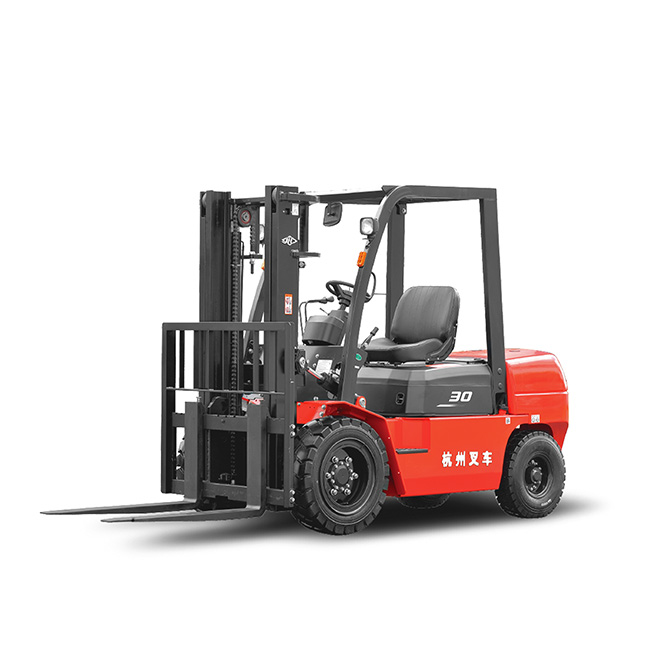
Pallet moving used to be one of the most predictable—and easily ignored—parts of warehouse operations. A tugger train, a forklift, a pallet jack; the tools were simple and the work was repetitive. But predictable doesn’t mean efficient, and that’s where the quiet shift started. AI-driven pallet movers didn’t arrive with a flash. They slipped in alongside autonomous mobile robots, gradually taking over the horizontal flow of goods. What changed wasn’t the hardware alone—it was the software that could finally handle the messy, non-linear layout of a real distribution center: the narrow aisles, the sudden obstructions, the constant reprioritization of shipments. Suddenly, the pallet mover wasn’t just a machine; it was a node in a living network, recalculating paths and adapting to real-time demand without a single human planner involved.
What makes this shift genuinely transformative isn’t just the autonomy—it’s the way AI collapses decision cycles that used to take hours into seconds. Traditional material flow relies on batch planning: you decide in the morning what pallets go where, and then you spend the rest of the day fighting fires when the plan unravels. AI-powered movers flip that model completely. They work from a continuous stream of data—order volumes, inventory levels, even predicted bottlenecks at loading docks—and reroute themselves on the fly. One facility I tracked saw a 27% reduction in pallet dwell time not because the movers were faster, but because they stopped moving pallets to fixed staging areas and started shuttling them directly to where the next pick wave would need them. That’s a subtle but profound change: the system optimizes for the future, not just the present.
The real story, though, lies in what happens to the workforce. For years, the narrative around automation was binary: machines replace people. But AI-powered pallet movers don’t eliminate roles; they reconfigure them. Operators who once spent their shifts steering material through warehouses are now managing exceptions, tuning algorithms, and analyzing flow patterns. The skill shift is significant—less physical, more analytical—and it’s quietly pushing companies to invest in training that they’d neglected for decades. One logistics director told me her team now sees themselves less as drivers and more as “traffic controllers for the physical internet.” That analogy stuck because it captures the essence: the pallet mover is no longer a tool; it’s a participant in a larger orchestrated system, and that system demands a different kind of human engagement. The rise of these machines isn’t a story of replacement. It’s a redesign of how human judgment and machine execution weave together on the warehouse floor.
Navigating Complex Warehouses: Advanced Lidar and Vision Systems
Today’s bustling warehouses demand more than just basic obstacle avoidance. Advanced lidar and vision fusion systems are rewriting the rules of indoor navigation, letting autonomous robots thread through densely packed aisles where inventory stacks shift by the hour. Instead of relying on a single sensor modality, these setups merge high-resolution 3D point clouds with rich visual context—spotting not only a pallet’s precise coordinates but also reading faded rack labels and distinguishing between structural pillars and temporary shrink-wrap overhangs. The result is a fluid, almost human-like awareness that adjusts in real time to the controlled chaos of modern logistics hubs.
What sets modern lidar-vision pipelines apart is their ability to tackle spatial ambiguity without tedious pre-mapping sessions. Traditional AGVs choke when floor plans change overnight, but sensor-fusion rigs lean on geometric feature matching from lidar sweeps while simultaneously keying off visual landmarks like ceiling lights, warning signs, or even unique wear patterns on the concrete. This dual-layered approach cuts through perceptual noise in environments where metallic shelving creates multipath reflections and changing daylight streams through dock doors. The vision component handles texture and semantics—recognizing whether a detected object is a stationary cart or a moving coworker—while lidar solidifies distance and velocity, making path planning robust even when the lighting drops to dim twilight levels during a night shift.
Deploying these advanced perception stacks in brownfield sites reveals their genuine edge. Rather than demanding full infrastructure overhauls, they ingest data from existing building management snippets—elevator status signals, fire door positions—and blend that with their live sensor stream. The navigation logic learns to favor certain corridor nodes during peak picking times, leveraging historical traffic patterns, and seamlessly switches between global localization using ceiling-based lidar fingerprints and local visual odometry when blocked by tall racking. This pragmatic fusion brings a rugged adaptability that pure-vision or pure-lidar agonism cannot match, keeping the flow of goods moving through spaces that were never designed for robots.
From Manual to Autonomous: The Shift in Material Handling
The warehouse floor no longer echoes solely with the shouts of forklift operators and the clatter of pallet jacks. A quiet revolution is underway, moving from physically demanding, often error-prone manual workflows to environments where autonomous mobile robots and self-driving forklifts navigate aisles with precision. This shift is not about replacing people—it's about redefining their roles. Instead of spending hours pushing carts or driving vehicles, workers now oversee fleets, manage exceptions, and focus on higher-value tasks that machines can’t handle.
Behind this change is a combination of sensor fusion, machine learning, and better batteries. Gone are the days when automation meant rigid conveyors bolted to the floor. Today’s systems adapt to changing layouts, learn from traffic patterns, and reroute in real time. The result is a material handling ecosystem that thinks on its feet—literally. It's not just about moving pallets faster; it's about embedding flexibility into the core of logistics operations, making responsiveness a competitive advantage.
Adoption hurdles remain, from upfront investment to integration with legacy infrastructure and workforce reskilling. But for companies that take the leap, the rewards go beyond efficiency metrics. They're finding fewer safety incidents, less product damage, and the ability to scale operations without a linear increase in headcount. The transition from manual to autonomous isn’t a single jump—it’s a spectrum—and each step forward turns material handling from a necessary cost into a strategic lever for growth.
Safety and Precision: The Dual Promise of Robotic Forklifts
In the bustling environment of modern warehouses, the integration of robotic forklifts marks a transformative step toward eliminating the age-old conflict between throughput and safety. Unlike their manual counterparts, these intelligent machines rely on a fusion of LiDAR, 3D cameras, and real-time mapping to perceive their surroundings with superhuman acuity. They can detect a stray pallet, a misplaced box, or even a wandering worker long before a human operator would register the hazard. This sensing framework continuously refreshes dozens of times per second, allowing the forklift to predict and avoid collisions with millimeter-level precision—all while maintaining peak productivity levels that never waver due to fatigue or distraction.
Precision extends well beyond obstacle detection into the fine motor tasks that traditionally demanded years of operator training. Retrieving a pallet from a high rack or placing a load into a tightly packed storage lane now happens with repeatable accuracy that cuts damage rates to near zero. Robotic forklifts compensate for slight variations in pallet dimensions, floor unevenness, and rack alignment using adaptive algorithms that learn from each interaction, refining their motion profiles over time. The result is a handling process so delicate that it can stack brittle goods or high-value electronics without the microfractures and scuffs often caused by human error.
What truly sets this technology apart is its ability to turn safety from a reactive protocol into a proactive design principle. When multiple robotic units operate in the same facility, they form a mesh network that shares real-time location data and intended paths, orchestrating movement with the seamless coordination of a well-rehearsed dance. Should a human worker enter a shared zone, the robotic fleet instantly adjusts speeds and routes, creating invisible safety bubbles that enforce exclusion zones without physical barriers. This dynamic risk mitigation ensures that even in environments where manual and automated traffic intermix, the promise of zero-harm operations is not just an aspiration but a daily reality.
The Quiet Integration of Autonomous Forklifts in Global Supply Chains
Walking through a modern warehouse, you might not notice anything out of the ordinary. Forklifts glide through aisles, pallets are stacked, and goods move toward loading docks. But look closer and you’ll see there’s no driver in sight. Autonomous forklifts have slipped into supply chain operations almost silently, avoiding the fanfare that typically accompanies disruptive tech. Rather than making headlines, they’ve become an unassuming, everyday presence in logistics hubs from Rotterdam to Singapore.
This low-key adoption isn’t accidental. Early rollouts of self-driving industrial vehicles were met with skepticism, but steady improvements in sensor technology and machine vision have quietly built trust. Today’s autonomous forklifts don’t just follow magnetic tape; they navigate dynamically, adapting to obstacles and re-routing in real time without human intervention. Companies appreciate not only the reduced accident rates but also the way these machines shrink operational downtime, all without demanding a complete overhaul of existing workflows.
Perhaps most striking is how this integration reshapes the workforce without fanfare. Veterans on the floor no longer see the robots as job stealers but as collaborators that take on the repetitive heavy lifting. Skill profiles are shifting toward oversight and maintenance rather than manual operation. In this subtle way, autonomous forklifts are writing a new chapter in global supply chains — not through dramatic disruption, but through a calm, persistent evolution that many outside the industry barely register.
FAQ
Unlike conventional forklifts that need operators, these units use sensors, cameras, and pre-mapped routes to move goods independently. They can adapt to minor changes in the warehouse layout and work alongside human staff without constant supervision.
They dramatically cut down on accidents caused by human error—think fatigue, distraction, or misjudgment. Built-in safety systems like collision avoidance and emergency stop functions help them operate safely around people and infrastructure.
Absolutely. Warehouses often see a steady flow of materials 24/7 because the machines don't need breaks. Plus, they optimize travel paths and reduce idle time, which can hike throughput by noticeable double-digit percentages.
Common pain points include the upfront investment, the need for facility adjustments like floor markings or charging stations, and training staff to work with autonomous systems. Data integration with existing warehouse management software can also be tricky.
They rely on a mix of LiDAR, 3D vision, and real-time localization to map their surroundings. When a person or unexpected object crosses their path, they'll slow down, reroute, or stop until it's safe to proceed—all in a fraction of a second.
It's becoming more accessible. While early adopters were huge logistics players, now there are compact, budget-friendlier models designed for mid-sized warehouses. Subscription or leasing options are also lowering the barrier.
Expect deeper AI integration that allows forklifts to learn from experience, swarm intelligence for fleet coordination, and tighter IoT links with other automated systems. Battery tech is also advancing to reduce downtime.
Conclusion
Warehouse floors once echoed with the constant hum of manual forklifts, but that sound is fading as autonomous models take over. These machines are redefining efficiency by cutting out the downtime tied to human operators—no breaks, no shift changes, just relentless, precise movement. The heart of this shift lies in the fusion of AI-driven decision-making and advanced perception systems. Unlike their predecessors, today’s autonomous forklifts don’t just follow fixed routes; they interpret dynamic environments in real time. By processing data from high-resolution lidar and 3D vision sensors, they navigate narrow aisles, dodge unexpected obstacles, and adapt to layout changes without a pause. This blend of adaptive intelligence and mechanical reliability means pallets get moved faster, with fewer errors, reshaping throughput in ways that spreadsheets can barely capture.
Yet speed is only half the story. The dual promise of robotic forklifts is a workplace where safety and precision aren’t competing goals but one and the same. These machines don’t just avoid collisions; they actively predict and mitigate risks, whether it’s an erratic pedestrian path or a leaning load. Meanwhile, their integration into global supply chains has been remarkably subtle—most operators notice fewer accidents and smoother workflows before they realize a silent fleet has phased in. The transition from manual to autonomous hasn’t been a disruptive overhaul but a gradual elevation of material handling. AI-powered pallet movers now communicate with inventory systems, reroute themselves during peak hours, and learn from every shifted crate, all while blending into the background hum of a modern warehouse. The result isn’t a futuristic spectacle, but a quietly optimized flow of goods that feels almost inevitable.
Contact Us
Contact Person: Liuxue
Email: [email protected]
Tel/WhatsApp: +86-19084200370
Website: https://www.hf-ec.com/