

Top PET Geotextile: Your Essential Guide to Durable and Sustainable Solutions
2026-06-03
When it comes to building resilient infrastructure, choosing the right geotextile can mean the difference between a project that lasts decades and one that fails prematurely. PET geotextiles are redefining industry standards with their exceptional tensile strength and low environmental footprint — and few manufacturers deliver this balance better than WEN FENG STONE. In this guide, we unpack the essentials of selecting, installing, and maximizing the lifespan of PET geotextiles so you can make informed decisions for roads, erosion control, and beyond.
What Makes PET Geotextiles a Smart Choice for Long-Term Projects
When engineers plan infrastructure that needs to hold up for decades, material stability becomes non-negotiable. PET geotextiles stand out here because their polyester fibers resist creep remarkably well under constant load. Unlike some alternatives that stretch and deform gradually, PET retains its structural integrity, which means reinforced soil slopes, road bases, and retaining walls keep their shape year after year without the silent, expensive drift that leads to maintenance nightmares.
The chemical backbone of PET also shrugs off most soil conditions that would eat away at other synthetics. Acids, alkalis, and the microbial activity common in wet or organic-rich ground don't trigger significant degradation. This inertness translates into fewer replacements and less digging over the project's life—something both budget managers and field crews appreciate. It's the kind of set-and-forget reliability that turns a material choice into a project's quiet success factor.
Another underrated advantage is its handling during installation. PET geotextiles combine high tensile strength with lightweight flexibility, so they lay down quickly without heavy equipment and conform tightly to irregular subgrades. Fewer wrinkles, fewer seams, and better puncture resistance during backfilling mean the protective and separation layers perform exactly as designed from day one, reducing the early-stage failures that often haunt long-term timelines.
Balancing Strength and Eco-Friendliness in Modern Geotextiles
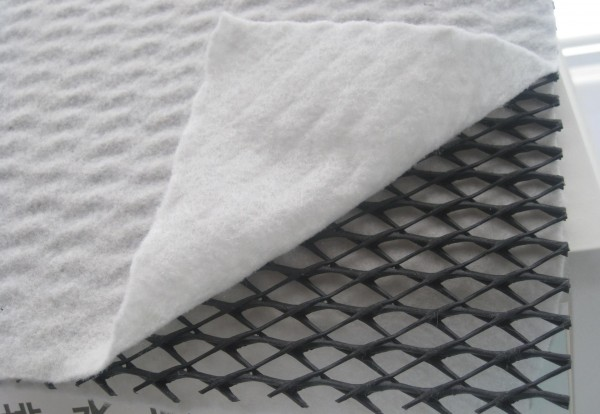
Crafting geotextiles that hold up under extreme jobsite punishment while treading lighter on the planet isn’t a simple trade-off—it’s a genuine design puzzle. For decades, relentless synthetic polymers like polypropylene and polyester ruled the scene because they deliver exactly what engineers need: high tensile strength, puncture resistance, and long-term stability in soil. But that durability comes at a cost, as conventional materials linger for centuries after their useful life ends. The push now is to rethink the polymer backbone itself, weaving in renewable feedstocks or recycled streams without letting critical mechanical properties slip. It means testing every new blend under real-world loads, not just lab conditions, to ensure that “greener” doesn’t translate to weaker when it matters most.
Some of the more promising directions lean on bio-based fibers derived from plants or waste, engineered to degrade only when exposed to specific microbial environments—not while holding back a slope. Others focus on high-recycled-content synthetics that match virgin-grade performance numbers but cut carbon footprints noticeably. The trick is that geotextile functions vary wildly: separation, filtration, reinforcement, drainage—each demands a different strength profile. A reinforcement layer buried under a highway can’t sacrifice stiffness, while a temporary erosion blanket might intentionally biodegrade once vegetation takes root. Smart manufacturers are dialing in those distinctions, pairing custom additive packages with tightly controlled manufacturing to hit targets that would’ve been dismissed as impossible a decade ago. It’s less about finding a single magic material and more about matching the right balance to the right application, often with third-party validation that keeps honest claims from drifting into greenwashing.
Real-World Applications That Showcase PET’s Versatility
Walk into any grocery store and you’ll see PET in action—those crystal-clear water bottles, soda containers, and clamshell packaging for berries are all made from it. It’s not just about clarity though; PET creates an excellent barrier against moisture and gases, keeping food fresh longer without adding much weight. This lightweight nature also cuts down on transportation costs and emissions, making it a practical choice for manufacturers trying to balance performance with sustainability.
Step into a clothing store and PET takes on a completely different form—polyester. The same polymer, spun into fibers, becomes everything from wrinkle-resistant shirts to cozy fleece jackets. It blends easily with natural fibers like cotton, adding strength and shape retention to garments. Beyond apparel, these fibers show up in curtains, upholstery, and even industrial straps, proving that a simple plastic can be just as comfortable and functional when you wear it as when you drink from it.
Away from consumer shelves, PET’s engineering side comes to life in automotive parts, electrical insulation, and 3D printing filaments. Reinforced with glass fibers, it can withstand the heat under a car hood, yet when processed into a transparent filament, it allows designers to prototype intricate models at their desks. Medical device housings, thermoformed trays, and even high-strength strapping for shipping pallets all rely on PET’s unique blend of toughness and moldability. These varied uses highlight how PET adapts to demands that go far beyond simple packaging, quietly supporting industries most people never notice.
Installation Tips That Save Time and Extend Fabric Life
Getting your fabric up quickly without sacrificing its longevity often comes down to prep work that's easy to skip. Running a lint roller or a barely damp cloth over the surface before you start removes dust that can interfere with adhesion or cause tiny abrasions over time. If you're working with a patterned fabric, take an extra minute to align the design with the edges or a focal point before securing anything—a chalk line or painter's tape can serve as a temporary guide and prevent the need for repositioning later.
The tools you use matter more than most tutorials let on. Instead of standard pins or staples, consider using fabric clips or low-tack adhesives that hold firmly without leaving permanent marks or stretched-out holes. When stretching fabric over a frame or upholstery, work in a star pattern from the center outward, alternating sides to keep tension even. This avoids the common mistake of over-tightening one corner at a time, which distorts the weave and leads to sagging months later. For drapery or loose-hanging installations, a light steaming after mounting lets the fibers relax into their natural fall without pulling or heat damage.
Thinking ahead about daily wear will add years to your installation's life. If the fabric is in a high-traffic area or near a window, treat it with a fabric protector spray after it's up, not before—this ensures the finish bonds to the exact shape and tension you've created. For wall-mounted textiles, a hidden border of acid-free paper behind the fabric edges prevents dust buildup and makes future cleaning a simple wipe-down rather than a full removal. Small fixes done early, like reinforcing a loose thread with a dot of clear fabric glue, keep a minor issue from turning into a tear that runs deep into the material.
How PET Geotextiles Stand Up to Harsh Environmental Conditions
PET geotextiles exhibit remarkable resilience when faced with aggressive environmental factors. Their molecular structure provides inherent resistance to hydrolysis, ensuring they maintain integrity even in consistently moist or chemically active soils. Unlike natural fibers that rot or degrade, these synthetic fabrics retain their mechanical properties over extended periods, making them a dependable choice for long-term infrastructure projects.
Exposure to intense UV radiation is another challenge where PET geotextiles prove their worth. The polymer is often treated with advanced stabilizers that absorb and dissipate ultraviolet energy, preventing the chain scission that leads to brittleness. This allows the material to withstand prolonged sun exposure during installation or in exposed applications without rapid deterioration, a feature that sets it apart from less durable alternatives.
Temperature extremes, from freezing cold to scorching heat, do not easily compromise PET geotextiles. They maintain flexibility in sub-zero conditions and resist softening or creep under high thermal loads. This thermal stability, combined with robust puncture and abrasion resistance, ensures that the geotextile layer continues to perform its separation, filtration, or reinforcement functions even when the surrounding environment is unforgiving.
Comparing PET with Traditional Geotextile Materials
When placed side by side with conventional geotextiles like polypropylene or polyester variants, PET stands out for its impressive tensile strength and dimensional stability. Traditional materials often soften or deform when exposed to sustained loads or moderate heat, whereas PET maintains its structure even under challenging conditions. This makes it a more reliable choice in infrastructure projects where long-term performance matters, without the need for frequent replacements or adjustments.
Durability is another area where the contrast becomes clear. Many traditional geotextiles degrade noticeably when subjected to ultraviolet radiation or chemical-rich soils. In comparison, PET exhibits robust resistance to both, retaining its integrity over years of direct sunlight and aggressive environments. Its lower creep tendency also means it doesn’t stretch excessively over time, which helps maintain the intended separation or reinforcement function in roadways and embankments.
From an environmental perspective, the shift toward PET aligns with growing sustainability goals. While most traditional geotextiles are derived from virgin polymers with a sizable carbon footprint, PET can be manufactured from recycled materials, including post-consumer bottles. This reuse not only diverts plastic waste from landfills but also reduces the overall energy input during production. As projects increasingly value green credentials, PET offers a practical way to meet both engineering and ecological requirements.
FAQ
PET geotextile is made from recycled polyester fibers, giving it high tensile strength and excellent resistance to biological degradation. Unlike polypropylene geotextiles, PET handles higher temperatures and offers better creep resistance, making it ideal for long-term reinforcement projects.
It's manufactured from recycled PET bottles, reducing plastic waste and the demand for virgin raw materials. The production process consumes less energy, and the final product is fully recyclable, supporting circular economy principles in construction.
PET geotextile performs exceptionally in road stabilization, erosion control on slopes, landfill liners, and drainage systems. Its high modulus and durability make it suitable for projects requiring long design lives under heavy loads.
By separating aggregate layers and reinforcing the soil, it prevents intermixing while allowing water to pass through. This maintains the structural integrity of the base course, reduces rutting, and extends the pavement lifespan significantly.
It resists UV radiation, chemical attack, and biological decay. The fibers maintain their strength in both alkaline and acidic conditions typical in soils, and they don't absorb moisture, eliminating freeze-thaw damage risks.
Absolutely. Its high puncture resistance and ability to filter fine particles without clogging make it ideal for revetments and underwater erosion control. The material withstands constant water flow and wave action without degrading.
The surface must be cleared of sharp objects and graded smoothly. Overlap adjacent rolls by at least 30 cm, secure with pins or staples, and avoid dragging over the ground. Cover promptly with fill material to prevent wind damage or UV exposure beyond design allowances.
Once buried, it needs virtually no maintenance. For exposed applications like temporary silt fences, periodic inspection for physical damage and sediment buildup is recommended. Repair any tears promptly with patching material to maintain functionality.
Conclusion
Choosing the right geotextile can make or break a long-term infrastructure project, and PET (polyester) fabrics consistently rise to the top for good reason. Their high tensile strength and resistance to creep mean they hold up under sustained loads without stretching out of shape, a critical factor in road bases, retaining walls, and erosion control. Beyond durability, PET geotextiles strike a practical balance between performance and environmental responsibility—many are manufactured from recycled bottles, reducing landfill waste without compromising on the robust, needle-punched structure that filters fine particles while letting water flow freely. When you compare PET to traditional polypropylene options, the difference becomes clear: PET handles higher temperatures and sharper aggregate more gracefully, and it doesn’t degrade as quickly under ultraviolet exposure when temporarily uncovered. Add in its inherent resistance to biological attack from soil microorganisms, and you have a material that genuinely thrives in harsh conditions, from acidic soils to coastal salt spray.
Real-world jobsites show just how versatile PET geotextiles can be. They’re the unsung heroes beneath highways, railway ballast, and landfill liners, but they also shine in green infrastructure like vegetated slopes and rain gardens, where the fabric’s ability to lock in soil while letting roots penetrate helps establish lasting plant cover. Smart installation practices further unlock that longevity: overlapping edges by the recommended 12 to 18 inches, avoiding dragging the fabric over sharp rocks, and promptly covering it with fill prevent the premature wear that sidelines many projects. The payoff isn’t just a stable base layer; it’s a system that keeps performing year after year, cutting down on maintenance trips and the associated fuel and material costs. That combination of immediate job-site savings and long-term resilience is what really cements PET as a go-to solution for engineers and contractors who need a fabric that works as hard as they do, without quietly costing the earth.
Contact Us
Contact Person: Jennifer LEE
Email: [email protected]
Tel/WhatsApp: 8618553418999
Website: https://vip.e-baixing.com/wenfengshitong