

Wholesale Conference Chair Buying Guide: Smart Tips for Bulk Seating
2026-11-16
Ordering conference chairs in bulk is never just about the unit price. It’s about what happens after the pallets arrive—whether the frames stay rigid, the upholstery matches across hundreds of seats, and the warranty actually means something. Most buyers learn those lessons the hard way. This guide is designed to save you from that. You’ll get practical, no-nonsense tips for evaluating wholesale seating, from stackability and weight ratings to vendor reliability. And when you need a supplier that treats bulk orders as a partnership rather than a one-time transaction, OFCJNS sets the standard we recommend watching for in every quote you review.
Skip the Spec Sheet: What Actually Holds Up in High-Turnover Venues
Most spec sheets read like a wish list written by someone who has never watched a drunk guest stumble into a table at 1 a.m. The real test of any piece in a high-turnover venue is not the lab rating for abrasion resistance or the thread count on the upholstery. It is whether the chair still looks presentable after the third weekend of spilled cocktails, stacked plates, and a bartender using the seat as a step stool to change a light bulb. That kind of wear rarely shows up in a PDF.
What actually lasts are the details nobody brags about: welded joints instead of exposed bolts that loosen after a month, feet that do not leave black scuff marks on a newly mopped floor, and tabletops with a slight texture so fingerprints and water rings do not scream for attention. You also learn fast that fabric choice matters less than how the fabric is attached. A stapled cover will betray you long before the upholstery itself gives out, usually right at the edge where servers grab the chair to slide it back into place.
And then there is the silent killer: salt. In venues with food service, the combination of salt, moisture, and friction eats through finishes faster than any foot traffic report can predict. If you want gear that holds up, ignore the marketing adjectives and go look at what the venue down the street has been using for five years without replacing. That is the only spec sheet worth reading.
The Stacking Factor That Can Wreck Your Storage Plan
Most storage plans are built around catalog pallet dimensions and a tidy assumption that every load stacks flat, square, and to full height. The stacking factor is where that assumption falls apart. Boxes settle, pallet decks bow, and mixed carton sizes leave voids between layers. Even a half-inch gap per tier accumulates fast: on a five-high stack that’s two and a half inches of lost vertical cube per bay—enough to wipe out an entire picking slot across a row of racking.
This loss rarely shows up on a layout drawing because it happens in the real stack, not in the CAD model. Uneven loads can also force you to drop a beam level for safety, and pallet overhang pushes racks further apart to keep flue spaces clear. The result is fewer pallets per square foot than the math promised, so inventory that should fit ends up staged in aisles or parked in trailers.
Before locking rack elevations or aisle widths, measure the actual stacked height of your worst mixed-SKU pallets under load—not just the tallest single carton. A quick compression test will tell you whether boxes can really hold five layers without crushing. Then set beam spacing to that measured height plus real clearance for forklift entry. Those small adjustments often recover the 10–15% of cube that the stacking factor silently steals.
Foam Density and Fabric Pairings That Avoid the 'Flat by Friday' Problem
Most people blame the fabric when a cushion goes limp, but the real culprit is usually hiding underneath. Low-density foam might feel plush on day one, yet it breaks down fast under daily use, leaving that sad pancake shape by the end of the week. A smarter move is to look for foam with a density of at least 1.8 pounds per cubic foot, though 2.0 or higher holds its shape far longer. Pair that with a tight-weave fabric like canvas, twill, or a high-rub-count polyester blend, and the cushion resists both internal collapse and surface stretching.
Density alone isn't enough if the fabric promotes sliding and bunching. Loosely woven knits or thin cotton can shift against the foam, creating friction that wears down the top layer and accelerates flattening. Instead, choose fabrics with a bit of structure and grip—think brushed microfiber, performance weaves, or even a lightly textured linen-cotton mix. These materials stay put, distribute pressure more evenly, and help the foam recover between uses. It's the combination that matters: supportive foam plus a stable cover means the cushion keeps its crown instead of developing that tired valley in the middle.
For high-use seating like family room sofas, skip super-soft memory foam alone—it tends to soften with body heat and lose resilience. A layered approach works better: a core of firm 2.2-density foam wrapped in a softer top layer, all inside a cover made from a heavy-duty woven fabric. The core handles weight without squashing, the top layer adds comfort without bottoming out, and the fabric locks everything in place. That's how you end Friday with the same silhouette you started Monday, no fluffing required.
Frame Materials That Won't Twist After a Year of Heavy Use
Plenty of riders assume any lightweight frame will stay straight, but after a season of sprinting, loaded commuting, and rough-road abuse, cheap 6061 aluminum builds often develop a faint twist you can feel through the bottom bracket. The frames that hold their line tend to use 7005 aluminum with a proper heat treatment or a well-built chromoly steel tubeset. Both materials resist torsional fatigue far better than entry-level alloy blends, especially when the down tube and chainstays are oversized just enough to avoid flex without turning the ride harsh.
Titanium is another material that rarely wanders, mostly because of its natural fatigue strength and the fact that builders don't cut corners on tube thickness just to hit a weight target. On the carbon side, it's less about the material name and more about the layup. High-modulus sheets oriented to counter twisting forces at the head tube and bottom bracket shell make a frame feel locked in after repeated hard efforts. Cheap carbon frames with random fiber orientation often start to feel vague by month ten, but a torsion-tuned layup stays crisp.
The biggest tell after a year of heavy use is whether the bike still tracks straight with your hands off the bars on a smooth descent. Frames that pass that test usually share a few details: a tapered head tube, a wider bottom bracket shell like PF86 or T47, and asymmetrical chainstays on the drive side. These features don't add much weight, but they spread twisting loads across a larger area. If you're buying a frame meant to survive daily abuse, check for those structural cues instead of just the material label on the spec sheet.
Warranty Language to Check Before You Sign a Bulk PO
A bulk purchase order can look straightforward until a defect shows up six months in. The warranty clause is where you find out whether the supplier actually stands behind their product or just wrote something vague to close the deal. Start by pinning down the exact start date of the warranty period. Some sellers start the clock when goods leave their warehouse, not when they arrive at yours. That gap can quietly eat weeks or months off your coverage, especially with overseas shipments or customs delays.
Next, look hard at the remedy language. Does the warranty promise repair, replacement, or a credit? If it only says “repair or replace at seller’s option,” you may end up waiting on parts while your own production stalls. Ask whether the seller covers labor, return shipping, and any re-installation costs. Many bulk POs exclude labor entirely, which turns a “free” replacement into a costly disruption. Also check what happens if the same defect repeats or if the product can't be fixed. A strong clause should give you the right to a full refund or a meaningful price reduction after a failed repair attempt.
Finally, scan for exclusions buried near the end. Phrases like “normal wear and tear,” “improper storage,” or “unauthorized modifications” can be stretched far enough to deny legitimate claims. If the product has a known failure mode or is sensitive to temperature, humidity, or handling, push for those conditions to be written into the warranty instead of left as implied exclusions. It is much easier to negotiate these points before the bulk PO is signed than to argue about them after a pallet of defective goods is already sitting in your warehouse.
How to Run a Real-World Sample Test with Your Own Staff
Pull together a small group of employees who actually handle your product or service on a daily basis—not the ones who helped design it, and not managers who only glance at reports. Give them a task that mirrors what a real customer would do, but leave the instructions slightly incomplete on purpose. That missing detail forces them to fill in the gap the same way an outside user would, revealing assumptions you didn’t know you had.
Watch what they do before you listen to what they say. People often click, tap, or navigate in a way they wouldn’t describe if you simply asked them. Keep the session quiet except for a few open prompts like “show me how you’d start” or “what’s confusing here?” Resist the urge to explain or defend the design. If three staff members get stuck at the same step, that’s a signal, not a coincidence.
After the test, sit down with the group and ask them to retell the experience using their own words. Don’t hand out a feedback form with rating scales—just have a conversation. Their stories will point to fixes that matter more than any polished checklist. Run the test again a week later with a different set of staff, and compare where the two groups struggled. The overlap is your real-world sample result.
FAQ
Start with the frame and upholstery. Look for a reinforced steel frame rather than lightweight plastic, and check the stitch density on the seat fabric—tighter stitching usually means it will survive daily stacking and dragging. Also ask about the weight capacity per chair and whether the manufacturer has tested for repeated use, not just initial comfort.
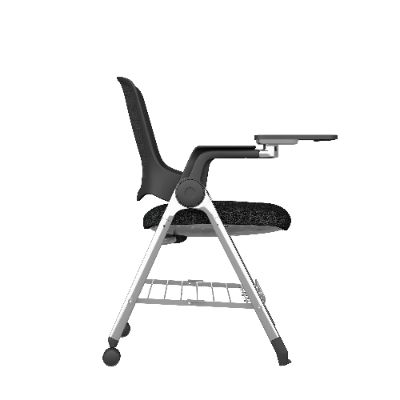
Skip the extras like built-in tablets or adjustable lumbar that drive up per-unit cost, and instead focus on the two things attendees actually feel: seat cushion thickness and back angle. A 3-inch foam cushion with a slight recline around 100 to 105 degrees gives a noticeable comfort upgrade without doubling the price.
Usually yes, if you ever need to repurpose the room. Stackable chairs mean you can clear the floor in minutes instead of wrestling with nested carts. Just make sure the stacking bumpers are thick and placed on the frame, not the fabric, otherwise you'll see wear marks after the first dozen events.
Armrest height and width. If armrests are too high, they hit the underside of tables and damage both surfaces; too wide, and chairs can't be pushed close together. Measure your existing tables first and keep at least half an inch of clearance under the table apron.
Request that chairs be delivered fully assembled unless you have a crew ready to spend hours bolting seats to frames. If you're storing them for a season, keep them off concrete floors with pallets and cover them with breathable fabric rather than plastic sheeting, which traps moisture and leads to musty upholstery.
Ask about the warranty period, replacement part availability, and whether the price includes freight or if there's a surcharge for liftgate delivery. Also ask for a sample chair shipped to your location before you commit—many suppliers will credit the sample cost toward a bulk order, and it lets you check the actual fabric color under your lighting.
Look at the joint where the seat meets the back. If it's a single molded plastic shell, fine; if it's upholstered, check whether the fabric is stapled or glued. Staples tend to loosen over time. Then test the chair's twist resistance by pushing sideways on the backrest—a quality bulk chair shouldn't flex or creak.
In commercial settings, ask for a CAL 117 or TB 133 certificate depending on your region, or the equivalent local flammability rating. Avoid chairs that only have a residential rating, because many venues and insurance policies require commercial-grade fire codes before they'll clear your room for occupancy.
Conclusion
Most conference chair spec sheets read like wishful thinking, so the first job in bulk buying is to ignore the polished numbers and look at what actually survives a venue where seats get dragged, dropped, and stacked six high every night. Start with the frame: if the steel or aluminum tubing twists under hand pressure in the showroom, it will warp after a year of heavy use. Ask about gauge and welding points, not just "commercial grade." Then check the stacking design—chairs that nest too tightly can gouge upholstery or bind when staff is moving forty at a time. You want bumpers or spacing lugs that protect both seat and back. Foam density matters more than thickness; a 1.8-pound density foam paired with a tight-weave polyester or vinyl will keep its crown long after a softer 1.2-pound pad goes flat by Friday. For high-turnover conference rooms and training halls, choose fabrics that resist pilling and stains, and avoid anything with a loose weave that snags on belt clips or badge lanyards.
Before you sign a bulk purchase order, turn the warranty clause inside out. Look for language that covers frame welds for at least ten years and fabric or foam for three to five, and confirm whether the warranty stays valid if chairs are used in a multi-shift operation—many vendors quietly exclude that. Finally, don't rely on a single demo chair in a quiet office. Run a real-world sample test: order three to five units of your top pick, put them in the busiest room you have, and let your own staff use them for two weeks. Have them stack, unstack, swivel, and slide the chairs exactly as they would during a room turnover. Then inspect the frames for flex, the casters or glides for wear, and the seat cushions for sag. If a chair survives that test without complaint, you've found something worth buying by the pallet.
Contact Us
Contact Person: Diff Wang
Email: [email protected]
Tel/WhatsApp: +8613650281199
Website: https://www.ofcmeshchair.com/